
June Lockhart Biography Quotes 3 Report mistakes
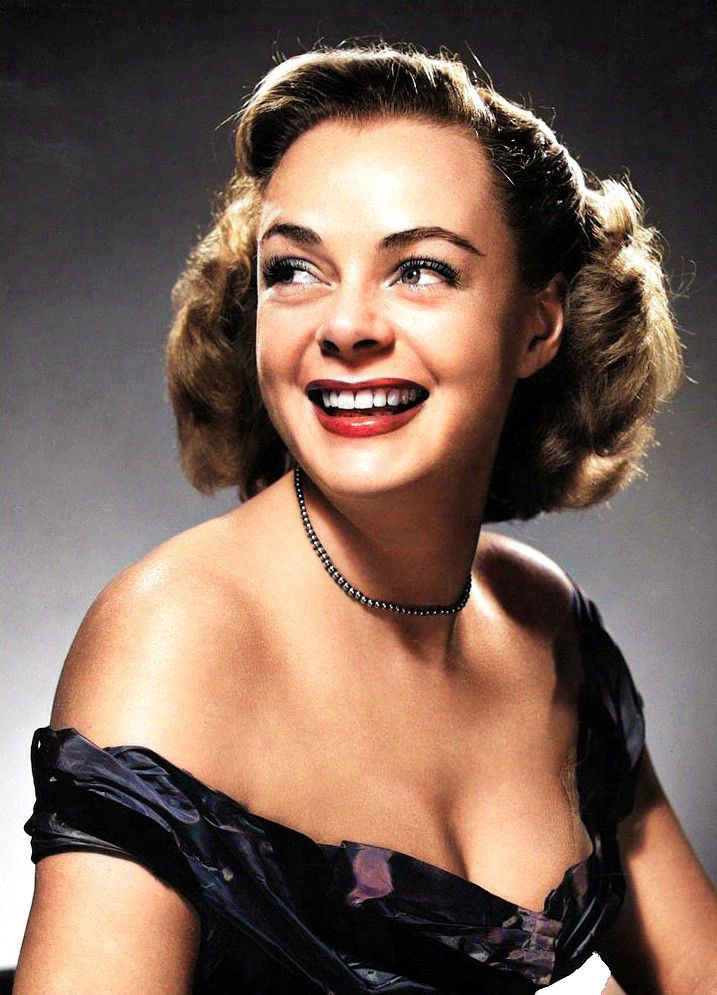
| 3 Quotes | |
| Occup. | Actress |
| From | USA |
| Born | June 25, 1925 New York City, U.S. |
| Age | 100 years |
| Cite | |
Citation Formats
APA Style (7th ed.)
June lockhart biography, facts and quotes. (2026, February 11). FixQuotes. https://fixquotes.com/actors/june-lockhart/
Chicago Style
"June Lockhart biography, facts and quotes." FixQuotes. February 11, 2026. https://fixquotes.com/actors/june-lockhart/.
MLA Style (9th ed.)
"June Lockhart biography, facts and quotes." FixQuotes, 11 Feb. 2026, https://fixquotes.com/actors/june-lockhart/. Accessed 28 Mar. 2026.
Early Life and Background
June Lockhart was born June 25, 1925, in New York City, into a family where the stage was not an aspiration but a household fact. Her father, Gene Lockhart, was a Canadian-born actor, songwriter, and later a familiar Hollywood character presence; her mother, Kathleen Lockhart, was an English-born actress. Their careers made the performing arts feel less like glamour than like craft - learned lines, rehearsed cues, trains and hotel rooms, and the quiet discipline required to repeat excellence night after night.She grew up during the lean years of the Great Depression and came of age as World War II reshaped American life, including the entertainment industry that would employ her. The Lockharts moved between New York and California as work demanded, and June learned early how public personas were built and protected. That proximity to working actors gave her a grounded sense of what fame cost and what it could not buy: steadiness, curiosity, and a private center that could survive a long run and the sudden stop of cancellation.
Education and Formative Influences
Lockhart attended the Westlake School for Girls in Los Angeles and later studied at UCLA, but her most consequential education happened in rehearsal rooms and on sets where she watched professionals solve problems under pressure. As a teenager she made a striking entrance on Broadway in 1938, sharing the stage with her parents in a revival of "A Christmas Carol" and absorbing, in real time, the rhythm of live performance and the authority of language. She carried that theater-trained attention to diction and intention into film and television, developing a clear, intelligent presence that directors could trust when schedules were tight and audiences broad.Career, Major Works, and Turning Points
Lockhart transitioned from stage to screen in the 1940s, with early film work that included "She-Wolf of London" (1946), before establishing herself as a reliable leading woman and guest star in the expanding postwar television landscape. A defining turn came with her casting as Ruth Martin on the long-running family series "Lassie" (1958-1964), where she played a widowed mother with warmth and backbone rather than syrupy idealization. In 1968 she pivoted to a different kind of American optimism as Dr. Maureen Robinson on Irwin Allen's "Lost in Space" (1965-1968), projecting competence and moral steadiness amid sci-fi spectacle. Later decades brought a second-wave of recognition through "Petticoat Junction" (1968-1970), television movies, and frequent guest appearances, while her theater roots never fully receded - she remained an actor who could anchor a scene with timing, clarity, and a calm command of attention.Philosophy, Style, and Themes
Lockhart's best performances rest on a paradox: she specialized in reassuring roles, yet she played them with a mind that never went soft. She understood that "family" television required precision, not coziness, and she described her own working method in terms of alertness and intelligence: “I guess the producers saw me and knew I was literate and I always tried to be alert and it's funny because you have to have a sharpness to do those shows, especially some of the ones I did in later years”. That sharpness shows in the way she listens on camera - registering information, recalibrating, then responding - which makes even formulaic scenes feel lived rather than recited.Just as important, Lockhart never confused cultural impact with literal conversion. Her humor about "Lassie" hints at an actor's clear-eyed separation of story from social engineering: “I did Lassie for six years and I never had anybody come up to me and say, 'It made me want to be a farmer.'”. The line reveals a psychology both practical and protective - grateful for affection, but unwilling to mythologize her own influence or pretend that television sentimentality equaled reality. In that stance sits her broader theme: decency without self-deception. She offered audiences a model of adulthood that was steady, curious, and unshowy, and she did it by treating popular entertainment as work worthy of rigor rather than a soft landing.
Legacy and Influence
Lockhart's legacy is less about a single iconic moment than about a durable template for American screen womanhood across eras: capable, articulate, and emotionally legible without being flattened into stereotype. In the 1950s and 1960s she helped define the tonal center of mainstream network television, shaping how family drama and science-fiction adventure could be played with sincerity and competence. Honors such as her star on the Hollywood Walk of Fame and a lifetime achievement award from the Television Academy reflected what audiences already sensed: she made long-running series feel trustworthy, and she proved that professionalism - the quiet kind, practiced over decades - can itself become a form of cultural memory.Our collection contains 3 quotes written by June, under the main topics: Witty One-Liners - Work Ethic - Career.
Other people related to June: Jonathan Harris (Actor)
Frequently Asked Questions
- June Lockhart daughter: June Lockhart's daughter is Anne Lockhart, who is also an actress.
- June Lockhart house: June Lockhart's house details are private, but she has lived in various homes in California.
- What is June Lockhart net worth? June Lockhart's net worth is estimated to be around $10 million.
- June Lockhart obituary: As of now, no obituary exists for June Lockhart as she is alive.
- Where is June Lockhart today: As of the latest information, June Lockhart is residing in California, enjoying her retirement.
- How old is June Lockhart? She is 100 years old
Source / external links