
Kathy Bates Biography Quotes 8 Report mistakes
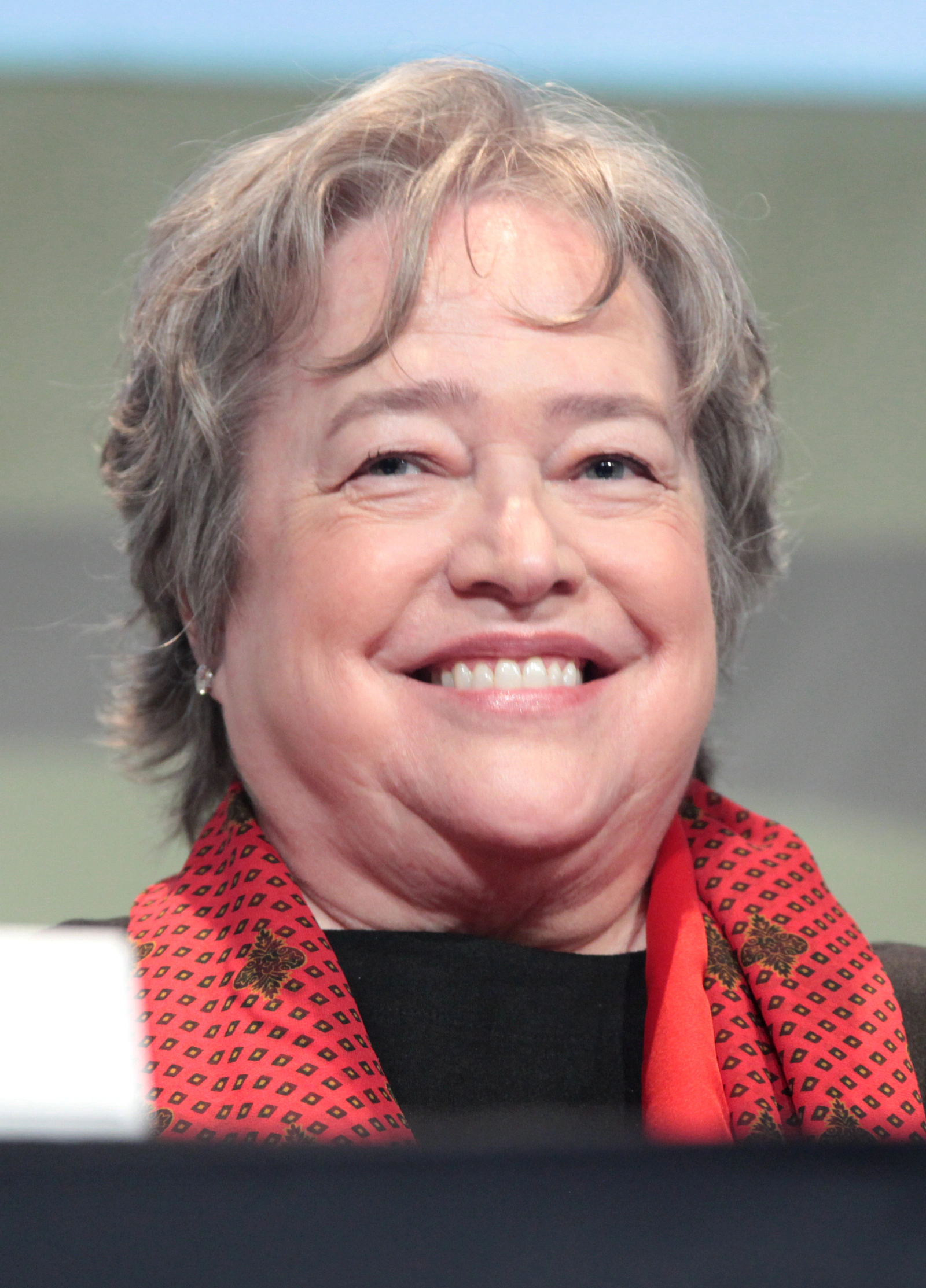
Attr: Gage Skidmore, CC BY-SA 2.0
| 8 Quotes | |
| Born as | Kathleen Doyle Bates |
| Occup. | Actress |
| From | USA |
| Spouse | Tony Campisi (1991-1997) |
| Born | June 28, 1948 Memphis, Tennessee, USA |
| Age | 77 years |
| Cite | |
Citation Formats
APA Style (7th ed.)
Kathy bates biography, facts and quotes. (2026, February 11). FixQuotes. https://fixquotes.com/actors/kathy-bates/
Chicago Style
"Kathy Bates biography, facts and quotes." FixQuotes. February 11, 2026. https://fixquotes.com/actors/kathy-bates/.
MLA Style (9th ed.)
"Kathy Bates biography, facts and quotes." FixQuotes, 11 Feb. 2026, https://fixquotes.com/actors/kathy-bates/. Accessed 20 Mar. 2026.
Early Life and Background
Kathleen Doyle Bates was born on June 28, 1948, in Memphis, Tennessee, a river city still shaped by segregation-era power structures and the aftershocks of postwar prosperity. Her family life blended Southern tradition with civic visibility: her father, Langdon Doyle Bates, was a mechanical engineer, and her mother, Bertye Kathleen, was a homemaker active in local social circles. The household was comfortable, but not insulated from the region's tensions; growing up in Memphis in the 1950s and 1960s meant witnessing public battles over race, class, and belonging that later echoed in her instinct for characters who are both products and prisoners of their communities.From early on she was drawn less to glamour than to observation - watching how people performed themselves in churches, shops, and living rooms. That attention to human contradiction became her private apprenticeship. She was not the archetypal Hollywood ingenue; her sense of self formed around craft, not image, and the feeling that excellence would have to be earned in rooms where she might not be initially invited.
Education and Formative Influences
Bates left Tennessee for Boston University, studying theater in an era when American acting was pulled between classical technique and the rawer psychological realism associated with Method traditions. The late 1960s campus climate sharpened her sense that art could be both entertainment and argument. Training emphasized voice, text, and character work, and it suited her temperament: she learned to build performances from detail and intention, preparing her for a career in which stage discipline would be her ballast during long stretches of professional uncertainty.Career, Major Works, and Turning Points
After moving to New York, Bates spent years in theater and television parts, accumulating credibility the slow way - auditions, understudy work, regional productions, and the kind of repertory stamina that makes an actor precise under pressure. Her breakthrough arrived with Rob Reiner's film adaptation of Stephen King's Misery (1990), where her Annie Wilkes fused tenderness, menace, and wounded need; the performance won the Academy Award for Best Actress and made her one of the rare performers to become a star through outright intensity rather than conventional desirability. She followed with a career defined by range and authority: Fried Green Tomatoes (1991), Dolores Claiborne (1995), Primary Colors (1998), About Schmidt (2002), and later TV triumphs that included Six Feet Under, American Horror Story (notably the Coven and Freak Show seasons), and her starring role in the legal drama Matlock (2024-). In parallel she became a respected director in television and a steady presence in ensemble films, turning character parts into centers of gravity.Philosophy, Style, and Themes
Bates acts like an engineer of emotion - not cold, but structural. She is known for arriving prepared and respecting the architecture of a script, which aligns with her preference for directors who treat the text as a finished instrument rather than a suggestion. Her work reads as a commitment to transformation without self-erasure: “I try to always stretch myself to fit the characters that have been presented”. The line is revealing because it frames acting as elasticity, not exhibition - a willingness to expand into another life, even when that life is unflattering, morally compromised, or physically unglamorous.Her characters often revolve around power in enclosed spaces: the domestic tyrant, the battered survivor, the institutional gatekeeper, the woman forced to negotiate the terms of being seen. Misery remains the key because Annie Wilkes is both monstrous and heartbreakingly human, and Bates refuses to play her as a cartoon. That approach is tied to her insistence on empathy as a technical tool rather than a sentimental pose: “I look for a role that hopefully I feel empathy with and that I can understand and love, but also that has that challenge for me to play - a different kind of role, a different type of character, a different time period”. Fame, when it came, arrived as a disruption as much as a reward, sharpening her awareness of what success costs: “The Oscar changed everything. Better salary, working with better people, better projects, more exposure, less privacy”. In her best performances you can feel that bargain - the actor using access to pursue harder material, while guarding a private self that prefers craft to spectacle.
Legacy and Influence
Kathy Bates helped expand what American stardom could look like, proving that ferocity, wit, grief, and authority could be as box-office compelling as youth or polish. She normalized the idea that a leading performance might be built from contradiction - humor edged with cruelty, vulnerability threaded through control - and she opened doors for actors whose primary instrument is truth rather than surface. Her influence is visible in contemporary character-driven film and prestige television, where complex women are allowed to be frightening, funny, damaged, and sovereign; Bates did not merely play such roles, she made them legible to mass audiences and therefore harder to deny.Our collection contains 8 quotes written by Kathy, under the main topics: Witty One-Liners - Work Ethic - Movie - Career.
Other people related to Kathy: Mike Nichols (Director), Joe Klein (Journalist), Alexander Payne (Director), Michael Chiklis (Actor)
Source / external links