
Kevin Costner Biography Quotes 37 Report mistakes
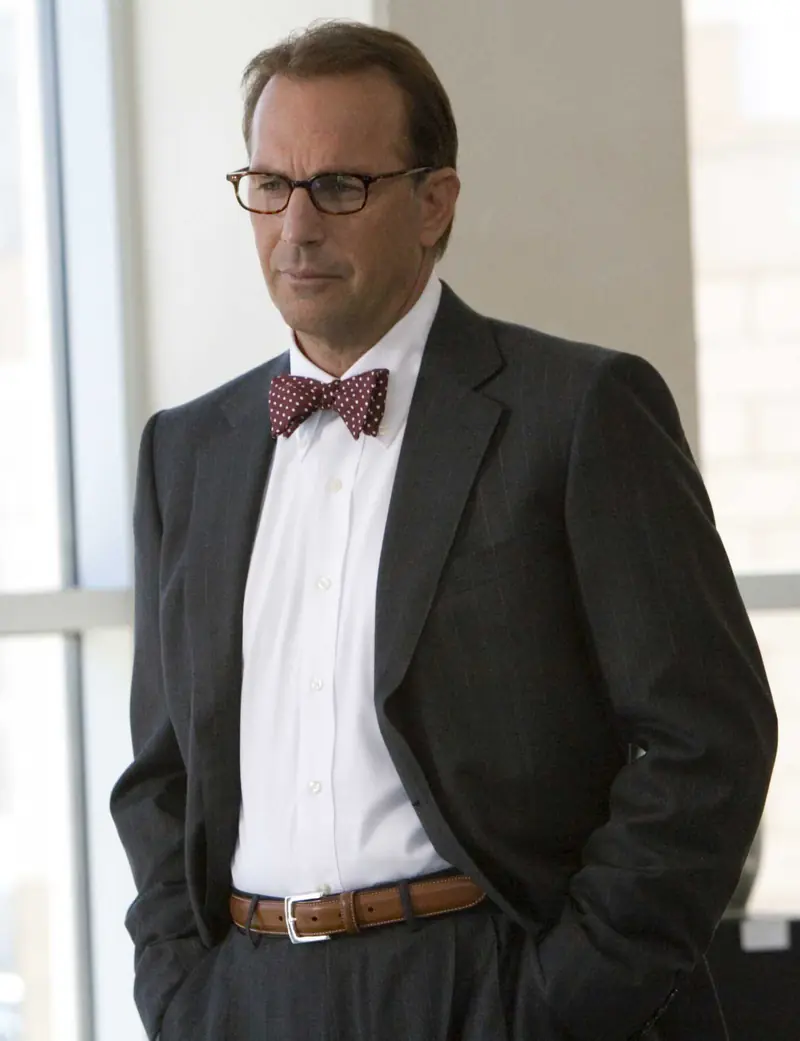
| 37 Quotes | |
| Born as | Kevin Michael Costner |
| Occup. | Actor |
| From | USA |
| Spouses | Cindy Silva (1978-1994) Christine Baumgartner (2004-2023) |
| Born | January 18, 1955 Lynwood, California, USA |
| Age | 71 years |
Kevin Michael Costner was born in 1955 in Southern California and grew up in a working-class family that moved frequently across the region as his father, William Costner, advanced in jobs connected to public utilities. His mother, Sharon Rae, worked in social services and kept a steady center for the family during those relocations. Costner was the youngest of three, with an older brother, Dan, and another brother lost at birth, a fact he has acknowledged as part of the family story that shaped his sense of resilience. After childhood years in places such as Lynwood and Compton, his parents eventually settled in Orange County, where he finished high school and found a foothold in sports and creative pursuits. He attended California State University, Fullerton, and graduated with a business degree, a practical course of study that gave him confidence even as he quietly fed an interest in storytelling and performance.
Turning Toward Acting
Costner's conversion from a conventional post-college path to a life in film is a piece of Hollywood lore he has often recounted: an encouraging conversation with actor Richard Burton on an airplane helped crystallize his ambition to act. Costner took classes, studied scene work, and accepted small theater parts while holding a string of day jobs that ranged from marketing to manual labor. He married his college sweetheart, Cindy Silva, not long after graduating, and her belief in his drive became critical in those uncertain early years. His first screen appearances were modest and included roles in independently produced projects, some of which were released years after they were filmed. A brief but notable early connection came when Lawrence Kasdan cast him in The Big Chill; although his scenes were cut, that relationship would later prove decisive.
Breakthrough Roles
Kasdan kept Costner in mind and cast him in Silverado, a lively ensemble Western that displayed Costner's athleticism and charm. From there, his momentum gathered speed. In 1987, he starred as Eliot Ness in Brian De Palma's The Untouchables, working alongside Sean Connery and Robert De Niro, and in the taut thriller No Way Out, opposite Gene Hackman. These films established him as a leading man who could carry both period drama and contemporary suspense. Bull Durham, written and directed by Ron Shelton, and Field of Dreams, directed by Phil Alden Robinson, sealed his place in American popular culture. In both, Costner drew on an unforced sincerity and a natural rapport with co-stars like Susan Sarandon, Tim Robbins, and James Earl Jones to make baseball a canvas for questions of love, regret, and possibility.
Dances with Wolves and International Recognition
Costner's ambition deepened with Dances with Wolves, an epic Western he produced, directed, and starred in as Union officer John J. Dunbar. The film's expansive depiction of landscape, attention to Lakota language and culture, and insistence on a contemplative pace stood out against the grain of mainstream releases. The industry and audiences responded. Dances with Wolves won the Academy Award for Best Picture, and Costner received the Oscar for Best Director; he was also nominated for Best Actor. Collaborators on the production, including producers and an ensemble cast, helped him navigate the scale of the project, while cinematographer Dean Semler's work and the film's musical score lent the picture its elegiac power. The film's success elevated Costner into the top rank of Hollywood creatives who could both direct and headline.
Stardom in the 1990s
In the years that followed, Costner took on marquee projects across genres. He headlined Robin Hood: Prince of Thieves, stepped into complex historical territory with Oliver Stone's JFK as New Orleans district attorney Jim Garrison, and partnered with Whitney Houston in The Bodyguard, a film that became a cultural phenomenon in part because of Houston's musical performance. He worked with Clint Eastwood on A Perfect World, with Eastwood directing and co-starring, and reteamed with Kasdan on Wyatt Earp. Some of his most ambitious ventures of the decade, such as Waterworld and The Postman, foregrounded his appetite for scale and world-building as a filmmaker, even as their critical receptions varied. Throughout, he maintained a presence in sports dramas and romantic comedies, leaning on an everyman quality that connected to mainstream audiences.
Directing and Producing
Costner's willingness to guide projects from behind the camera remained a constant. He directed and starred in Open Range, a Western steeped in character and landscape that he developed alongside Robert Duvall and a strong supporting cast. The film affirmed his belief that the Western, treated with patience and moral clarity, could still speak to contemporary viewers. As a producer, he gravitated to projects that combined classic American genres with intimate human stakes, whether in baseball dramas like For Love of the Game or in political and historical pieces such as Thirteen Days, in which he acted opposite Bruce Greenwood and others to dramatize the Cuban Missile Crisis.
Television Resurgence and Later Film Work
Costner reintroduced himself to new audiences on television with the miniseries Hatfields & McCoys, acting alongside Bill Paxton and Tom Berenger in a retelling of the notorious family feud. The series earned him a Primetime Emmy Award and a Golden Globe, confirming his appeal in long-form storytelling. He moved fluidly back into major features with Hidden Figures, joining an ensemble that included Taraji P. Henson, Octavia Spencer, and Janelle Monae to honor African American women at NASA. He co-starred with Woody Harrelson in The Highwaymen and took on darker edges in Mr. Brooks. A major new chapter opened with Yellowstone, the contemporary Western series in which he starred as ranch patriarch John Dutton under showrunner Taylor Sheridan and producer David Glasser. The series' success reestablished Costner at the center of popular culture and fostered new collaborations across a multigenerational cast.
Music, Business, and Ventures
A longtime music fan, Costner formed the country-rock band Kevin Costner & Modern West, touring internationally and recording albums that often wove together Western themes and personal reflection. The band collaborated on material inspired by Hatfields & McCoys, demonstrating how his musical and screen interests can intersect. Outside entertainment, he explored ventures that reflected both curiosity and civic-mindedness, including an investment in oil-water separation technology with his brother Dan that drew notice during the Deepwater Horizon response. He also owned a casino property in Deadwood, South Dakota, for a long stretch, and he has maintained a ranch in the Rocky Mountains, a place that has informed the authenticity of his Western work.
Personal Life
Costner's personal life has been entwined with his public career but has remained rooted in family. His marriage to Cindy Silva, who supported his early pursuit of acting, brought three children, Annie, Lily, and Joe. He later had a son, Liam, with Bridget Rooney. In 2004 he married Christine Baumgartner, a designer; they had three children, Cayden, Hayes, and Grace. The couple separated in 2023. Costner has spoken about fatherhood as a central responsibility, making room for family even as he juggled film sets, recording studios, and location shoots. He has also noted the importance of friends and creative partners who believed in him, from Lawrence Kasdan and Ron Shelton to collaborators on television and music.
Horizon and Ongoing Creative Work
In the 2020s, Costner returned to large-scale filmmaking with Horizon: An American Saga, a multi-part Western that he directed, produced, and headlined. The project reflects his ongoing commitment to the American frontier as a site for moral and communal questions. Developing Horizon required him to balance responsibilities on Yellowstone and his long-standing interest in directing. His partners on the film, including cast and crew assembled over successive chapters, point to a collaborative ethos consistent with his earlier efforts. The first chapter reached audiences in 2024, signaling that Costner remains one of the few contemporary figures willing to mount epic Western narratives at a time when they are rare.
Legacy
Kevin Costner's career, built across acting, directing, producing, and music, is defined by a consistent belief that classical American genres still have room for intimate emotion and ethical complexity. He has worked with a roster of influential figures: directors such as Brian De Palma, Oliver Stone, Clint Eastwood, and Taylor Sheridan; co-stars including Whitney Houston, Sean Connery, Robert Duvall, Gene Hackman, Susan Sarandon, and James Earl Jones; and behind-the-scenes partners who helped craft films that endure in the cultural imagination. Honors including Academy Awards for Dances with Wolves, a Primetime Emmy Award for Hatfields & McCoys, and a Golden Globe for his work on television underscore the breadth of his accomplishments. At the center of that public record is an actor-director who built trust with audiences by playing straight with emotion, whether on a windswept prairie, a baseball diamond, a tense courtroom, or a troubled modern ranch.
Our collection contains 37 quotes who is written by Kevin, under the main topics: Witty One-Liners - Motivational - Never Give Up - Leadership - Live in the Moment.
Other people realated to Kevin: David Brin (Author), Aaron Sorkin (Producer), Dennis Quaid (Actor), Gary Oldman (Actor), Jennifer Garner (Actress), Joan Allen (Actress), Danny Glover (Actor), Bill Paxton (Actor), Andy Garcia (Actor), William Hurt (Actor)
Source / external links