
Lou Ferrigno Biography Quotes 8 Report mistakes
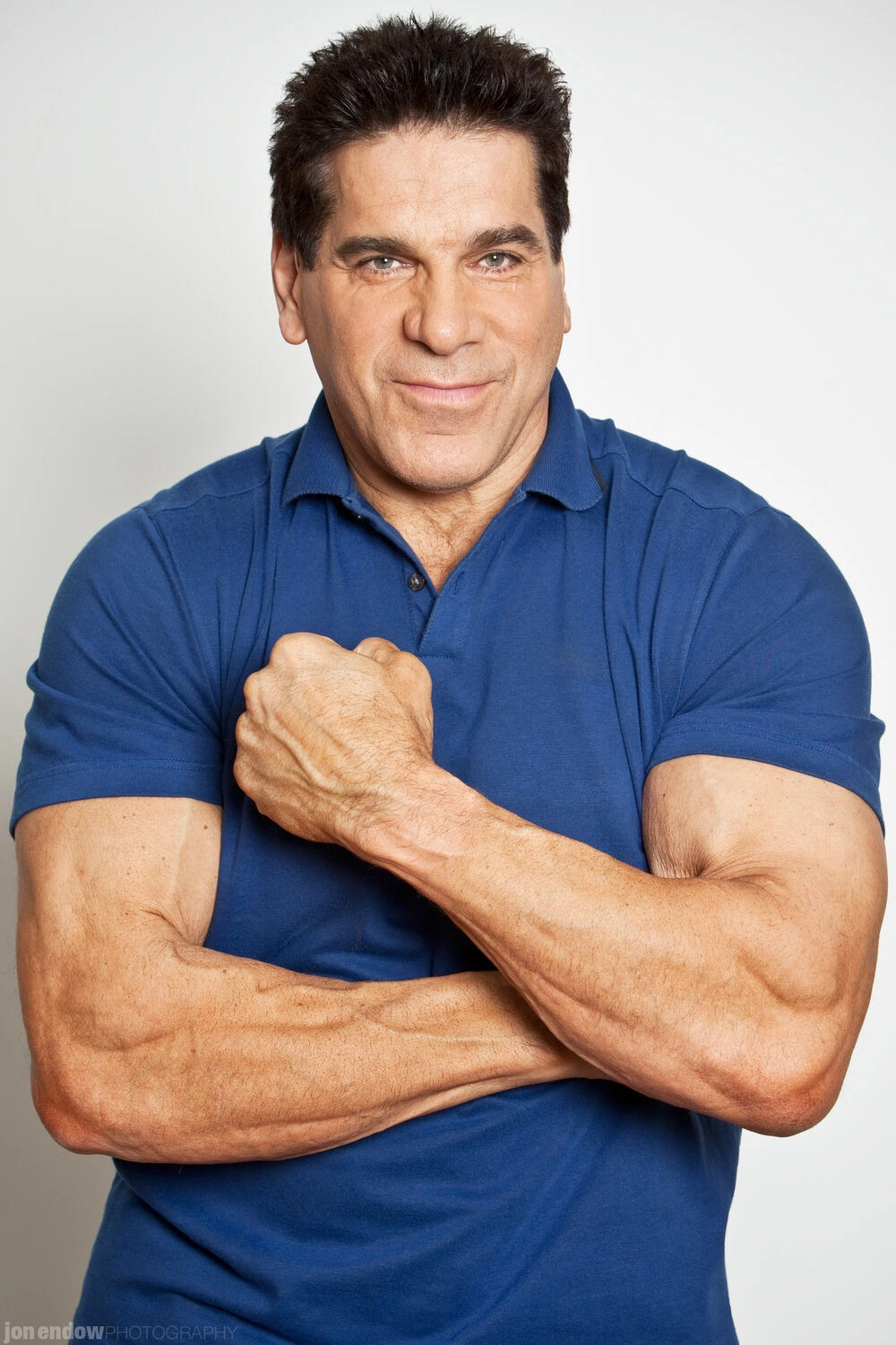
| 8 Quotes | |
| Born as | Louis Jude Ferrigno |
| Known as | Louis Jude Ferrigno Sr. |
| Occup. | Actor |
| From | USA |
| Born | November 9, 1951 Brooklyn, New York, USA |
| Age | 74 years |
| Cite | |
Citation Formats
APA Style (7th ed.)
Lou ferrigno biography, facts and quotes. (2026, February 11). FixQuotes. https://fixquotes.com/actors/lou-ferrigno/
Chicago Style
"Lou Ferrigno biography, facts and quotes." FixQuotes. February 11, 2026. https://fixquotes.com/actors/lou-ferrigno/.
MLA Style (9th ed.)
"Lou Ferrigno biography, facts and quotes." FixQuotes, 11 Feb. 2026, https://fixquotes.com/actors/lou-ferrigno/. Accessed 27 Mar. 2026.
Early Life and Background
Louis Jude Ferrigno was born on November 9, 1951, in Brooklyn, New York, into an Italian-American family in a postwar city where toughness and showmanship often traveled together. From early childhood he lived with severe hearing loss after ear infections, a condition that shaped his inner life: he became a quiet observer in crowded rooms, self-contained, keenly aware of how quickly people can underestimate what they cannot easily understand.Ferrigno later described being bullied and feeling isolated, and the theme is consistent across his life story - not a neat rise from weakness to strength, but a long negotiation with visibility. In a neighborhood culture that prized bravado, his hearing impairment could be mistaken for distance or defiance. Weight training, begun in adolescence, became both armor and language: a way to be heard without needing perfect hearing, and a place where effort was measurable, private, and under his control.
Education and Formative Influences
Ferrigno attended St. Athanasius in Brooklyn and later Brooklyn Technical High School, and he trained at local gyms during the early 1970s bodybuilding boom that bridged old-school strongman culture and a new media-driven fitness industry. He was inspired by the era's physiques and publicity - especially the orbit around Arnold Schwarzenegger and the rise of bodybuilding as a mainstream spectacle - but his motivation was intensely personal. The discipline of lifting offered structure, while early mentors and gym communities gave him a compensatory social world where consistency and grit counted more than quick wit.Career, Major Works, and Turning Points
Ferrigno became a professional bodybuilder and quickly rose to elite status, winning IFBB Mr. Universe titles (notably in 1973 and 1974) and competing for Mr. Olympia, a rivalry and friendship with Schwarzenegger that was immortalized in the 1977 documentary "Pumping Iron". That visibility led to his defining screen role as Bruce Banner's alter ego in CBS's "The Incredible Hulk" (1977-1982), where his size and physical acting conveyed emotion with minimal dialogue - an advantage for an actor who had long learned to communicate beyond sound. After the series, Ferrigno navigated the uneven terrain of typecasting and cult fame, appearing in films, television, and later Hulk-related projects, including a memorable cameo in Ang Lee's "Hulk" (2003), voice work in animated adaptations, and a self-aware turn as himself on "I Love You, Man" (2009). Across decades he also worked as a trainer and fitness advocate, periodically returning to competitive shape and to the convention circuit, where his image became both brand and biography.Philosophy, Style, and Themes
Ferrigno's public philosophy centers on effort as identity, a stance forged in a life where nothing - not confidence, not fame, not even communication - arrived effortlessly. He insists on the unromantic truth behind extraordinary bodies: “It's funny how sometimes how the public some people think I was born like this. That I maybe I sleep and I do big muscle, but its a lot of work to look like this and to be in this kind of condition”. The line is more than fitness talk; it is a rebuttal to a world that prefers myth to labor, and it reveals a psychology oriented toward proving, patiently, what others assume is impossible.That ethic shaped his acting style as well. As the Hulk, Ferrigno played power restrained by sadness - a gentle creature trapped in a form others fear - and the performance depends on discipline, not speechmaking. His resilience is pragmatic rather than inspirational-poster bright: “You are going to have bad days and have good days”. And his competitiveness reads less like aggression than refusal to rehearse defeat: “I never think about losing”. Together these ideas map a man who copes by focusing on controllables - work, attitude, repetition - and by turning a childhood vulnerability into a lifelong practice of self-command.
Legacy and Influence
Ferrigno endures as a hinge figure between bodybuilding's golden age and superhero culture's modern mainstream: a real-world physique that made comic-book scale believable before CGI could do it, and a performer whose presence helped define the visual grammar of the Hulk for generations. His influence extends beyond nostalgia; he remains a symbol of self-reinvention for people with disabilities and for anyone who has felt unheard, showing that strength can be crafted rather than granted. In fitness, television history, and fan culture, Ferrigno's story persists because it is not only about size - it is about the long, disciplined conversion of private adversity into a public, enduring identity.Our collection contains 8 quotes written by Lou, under the main topics: Motivational - Honesty & Integrity - Work Ethic - Fitness - Self-Improvement.
Source / external links