
Louise Brooks Biography Quotes 7 Report mistakes
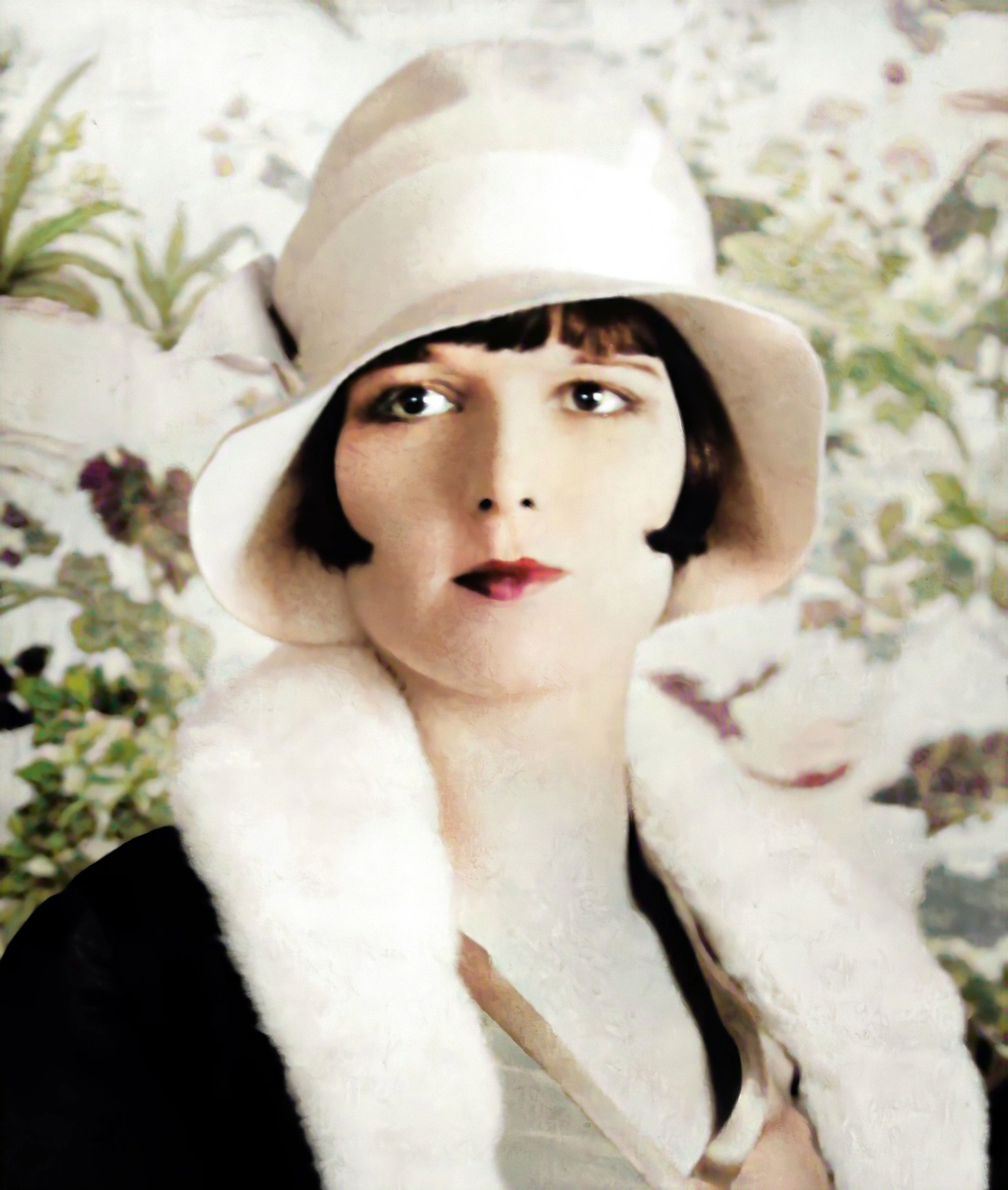
| 7 Quotes | |
| Born as | Mary Louise Brooks |
| Occup. | Actress |
| From | USA |
| Born | November 14, 1906 Cherryvale, Kansas, USA |
| Died | August 8, 1985 Rochester, New York, USA |
| Cause | Stroke |
| Aged | 78 years |
| Cite | |
Citation Formats
APA Style (7th ed.)
Louise brooks biography, facts and quotes. (2026, February 11). FixQuotes. https://fixquotes.com/actors/louise-brooks/
Chicago Style
"Louise Brooks biography, facts and quotes." FixQuotes. February 11, 2026. https://fixquotes.com/actors/louise-brooks/.
MLA Style (9th ed.)
"Louise Brooks biography, facts and quotes." FixQuotes, 11 Feb. 2026, https://fixquotes.com/actors/louise-brooks/. Accessed 27 Mar. 2026.
Early Life and Background
Mary Louise Brooks was born on November 14, 1906, in Cherryvale, Kansas, a small oil-and-rail town whose proprieties sat uneasily on a girl with swift intelligence and little patience for pretense. Her father, Leonard Brooks, practiced law; her mother, Myra Rude Brooks, was musical, socially ambitious, and exacting. Brooks later described a childhood marked less by warmth than by a cool, appraising household atmosphere, and she carried from it a lifelong suspicion of authority disguised as care.Kansas in the 1910s offered few sanctioned exits for a daughter who wanted motion more than security. Brooks found hers in dance, where discipline could be converted into freedom and attention earned without confession. A formative trauma - sexual abuse by a family acquaintance while still a child - deepened her guardedness and sharpened her sense that the body could be both instrument and battleground. The persona that later dazzled cameras - controlled, modern, unafraid of stillness - was built early as armor as much as artistry.
Education and Formative Influences
Brooks attended local schools but was effectively educated by rehearsal rooms and touring schedules. In her early teens she studied dance seriously, gravitating toward modern styles that rejected Victorian prettiness. By 1922 she was in New York, moving through the citys arts circuits at a time when jazz, Freudian talk, and the postwar appetite for novelty were reshaping American performance. The Ziegfeld Follies hired her in 1924, and soon after she joined the Denishawn company, where Ruth St. Denis and Ted Shawn demanded technique while the age demanded reinvention.Career, Major Works, and Turning Points
Film quickly recognized what theater only partly could: Brooks photographed as an idea of modernity. She entered Hollywood in the mid-1920s, working for Paramount and playing flappers with a cool, unforced wit in films such as It (1927) opposite Clara Bow and in A Girl in Every Port (1928) for Howard Hawks. The decisive turn came in 1929 when she went to Germany to work with G. W. Pabst, making Pandora's Box and Diary of a Lost Girl. As Lulu in Pandora's Box, framed by her severe bob and unreadable gaze, she became the silent eras most unsettling heroine - erotic without pleading, doomed without melodrama. Her refusal to return to Hollywood to dub dialogue for The Canary Murder Case (1929) - a choice bound up in contract disputes and personal pride - accelerated her marginalization as sound consolidated studio power. By the early 1930s she was in B pictures and intermittent stage work; by mid-decade she had effectively left filmmaking, her legend growing as her employment shrank.Philosophy, Style, and Themes
Brooks understood stardom as a paradox: the audience thinks it possesses you, the industry tries to, and yet the self remains stubbornly private. Her later remark, “There is no other occupation in the world that so closely resembled enslavement as the career of a film star”. , was not rhetorical bitterness but a clear-eyed diagnosis of a system that monetized personality, sexuality, and compliance. She resisted in the ways available to a woman without institutional power: by saying no, by leaving, by refusing the rituals of gratitude. That defiance cost her roles, but it protected the core of her self-respect, the trait that makes her screen presence feel less performed than withheld.Her acting style was built on economy learned from dance - precise lines, deliberate pauses, and a refusal to telegraph feeling. She grasped that cinema magnifies interiority, later insisting, “The great art of films does not consist of descriptive movement of face and body but in the movements of thought and soul transmitted in a kind of intense isolation”. Lulu, and even her lighter Hollywood roles, are constructed around that isolation: she listens, she considers, she lets other people project onto her. In life as in art she was ambivalent about attachment and loss, admitting, “I never gave away anything without wishing I had kept it; nor kept it without wishing I had given it away”. The line reads as a private confession of a temperament split between craving freedom and longing for permanence - a psychological tension that made her both magnetic and difficult, and that made her most famous characters feel fated rather than merely plotted.
Legacy and Influence
Brooks died on August 8, 1985, in Rochester, New York, after decades of relative obscurity, alcoholism, and eventual recovery into a late-life career as a sharp, unsentimental writer of memoir and criticism, notably the essay collection Lulu in Hollywood (published in 1982). Her reputation, rescued by postwar film historians and the rise of cinephile culture, now rests on more than the famous haircut: she became a touchstone for modern screen acting, proof that understatement can be radical and that a woman can refuse the industries bargain and still win history. Directors, photographers, and fashion alike have recycled her silhouette, but her deeper influence is ethical - an enduring example of artistic intelligence that would not pretend to be grateful for captivity.Our collection contains 7 quotes written by Louise, under the main topics: Witty One-Liners - Sarcastic - Hope - Movie - Letting Go.
Frequently Asked Questions
- How did Louise Brooks die? Louise Brooks died due to a heart attack in Rochester, New York, in 1985.
- Where was Louise Brooks born? Louise Brooks was born in Cherryvale, Kansas, United States.
- Where did Louise Brooks live? Louise Brooks lived mostly in the United States, and later in her life, she resided in New York City and Rochester, New York.
- How old was Louise Brooks? She became 78 years old
Source / external links