
Maggie Smith Biography Quotes 19 Report mistakes
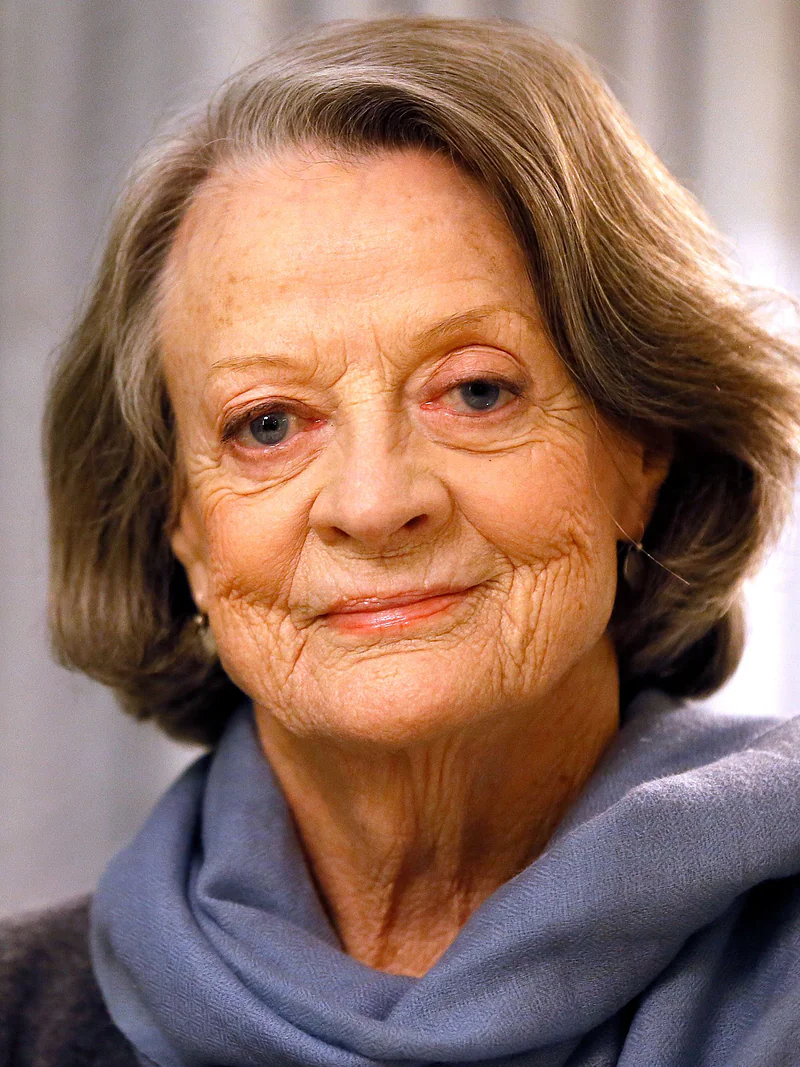
Attr: CNN
| 19 Quotes | |
| Occup. | Actress |
| From | United Kingdom |
| Born | December 28, 1934 |
| Age | 91 years |
| Cite | |
Citation Formats
APA Style (7th ed.)
Maggie smith biography, facts and quotes. (2026, February 11). FixQuotes. https://fixquotes.com/actors/maggie-smith/
Chicago Style
"Maggie Smith biography, facts and quotes." FixQuotes. February 11, 2026. https://fixquotes.com/actors/maggie-smith/.
MLA Style (9th ed.)
"Maggie Smith biography, facts and quotes." FixQuotes, 11 Feb. 2026, https://fixquotes.com/actors/maggie-smith/. Accessed 25 Mar. 2026.
Early Life and Background
Margaret Natalie Smith was born on December 28, 1934, in Ilford, Essex, and grew up as war and postwar Britain tightened and then slowly loosened its grip on daily life. Her father, Nathaniel Smith, a public health pathologist, and her mother, Margaret Hutton, a Scottish secretary, gave her a household that valued competence and plain speech more than display. She had older twin brothers and learned early to negotiate attention and space - a childhood apprenticeship for a performer who would later weaponize timing, silence, and the raised eyebrow.The austerity years and a culture of restraint shaped her early sensibility: feelings were often private, and humor became both a social lubricant and a defense. London was near enough to seem inevitable yet distant enough to feel like another country, and the young Smith developed the observational habits of a future character actress - watching people closely, noting how status, manners, and class could be worn like costumes.
Education and Formative Influences
She attended Oxford High School for Girls before training at the Oxford Playhouse School, coming of age in the 1950s when British theatre was turning toward new realism even as repertory tradition still drilled actors in diction, stamina, and transformation. That mix suited her: she absorbed classical technique while being drawn to the sharper, more contemporary edge of postwar writing, and she learned the discipline of ensemble work that would remain the bedrock of her confidence.Career, Major Works, and Turning Points
Smith rose through stage work in the 1950s and 1960s, becoming a major presence with the National Theatre and in London and New York, winning a Tony for Lettice and Lovage and later another for A Delicate Balance. On screen, she moved from prestige drama to wide public recognition: an Academy Award for The Prime of Miss Jean Brodie (1969) fixed her image as brilliant and dangerous intelligence in a classroom; a second Oscar for California Suite (1978) proved her command of comedy at high speed; and films such as The Lonely Passion of Judith Hearne (1987), A Room with a View (1985), and Gosford Park (2001) showcased her as the definitive interpreter of Englishness and its discontents. In the 2000s and 2010s she gained a new, global audience as Professor Minerva McGonagall in the Harry Potter series and as Violet Crawley in Downton Abbey, roles that distilled decades of craft into compressed authority, with late-career acclaim arriving alongside well-publicized health battles that she worked through rather than around.Philosophy, Style, and Themes
Smiths artistry was built on a paradox: she could appear formidable while revealing fragility in the same breath. Her best performances make intellect feel like instinct - quick, surgical, and unsentimental - yet they are rarely cold. She understood that life does not resolve into neat moral arcs, a view encapsulated in her frankness about time and loss: “People say it gets better but it doesn't. It just gets different, that's all”. That sentence describes the emotional weather across her work, from the wounded dignity of Judith Hearne to the brittle self-protection of aristocrats who know their world is slipping away.Comedy, for Smith, was not escape but method - a way to keep pain in frame without being consumed by it. “I tend to head for what's amusing because a lot of things aren't happy. But usually you can find a funny side to practically anything”. Her timing turned barbs into revelations, and her performances repeatedly test the line between solitude and social performance - characters who survive by controlling rooms, then betray themselves in private with a look, a pause, a suddenly softened voice. Her reverence for theatre was equally psychological: “I like the ephemeral thing about theatre, every performance is like a ghost - it's there and then it's gone”. The ghostliness appealed to a temperament wary of sentimentality, preferring the truth of the moment to the comfort of permanence.
Legacy and Influence
Smiths legacy is twofold: she is a benchmark of technique for actors trained in classical repertory, and she is a pop-cultural figure whose late roles introduced a new generation to the pleasures of precision acting. She expanded what "authority" on screen could mean - not volume, but control; not likability, but specificity - and she helped normalize the idea that a womans most powerful work can arrive in every decade, not merely in youth. For British performance culture, she remains a reference point for how to play class, intelligence, and vulnerability without melodrama, leaving behind a body of work that continues to teach audiences how to listen for the subtext inside the joke.Our collection contains 19 quotes written by Maggie, under the main topics: Witty One-Liners - Funny - Art - Nature - New Beginnings.
Other people related to Maggie: Franco Zeffirelli (Director), Kenneth Williams (Actor), Tom Courtenay (Actor), Timothy Bottoms (Actor), Julian Sands (Actor), Rupert Grint (Actor), Simon Callow (Actor), George Kennedy (Actor), Ismail Merchant (Producer), Charles Dance (Actor)