
Mary-Kate Olsen Biography Quotes 28 Report mistakes
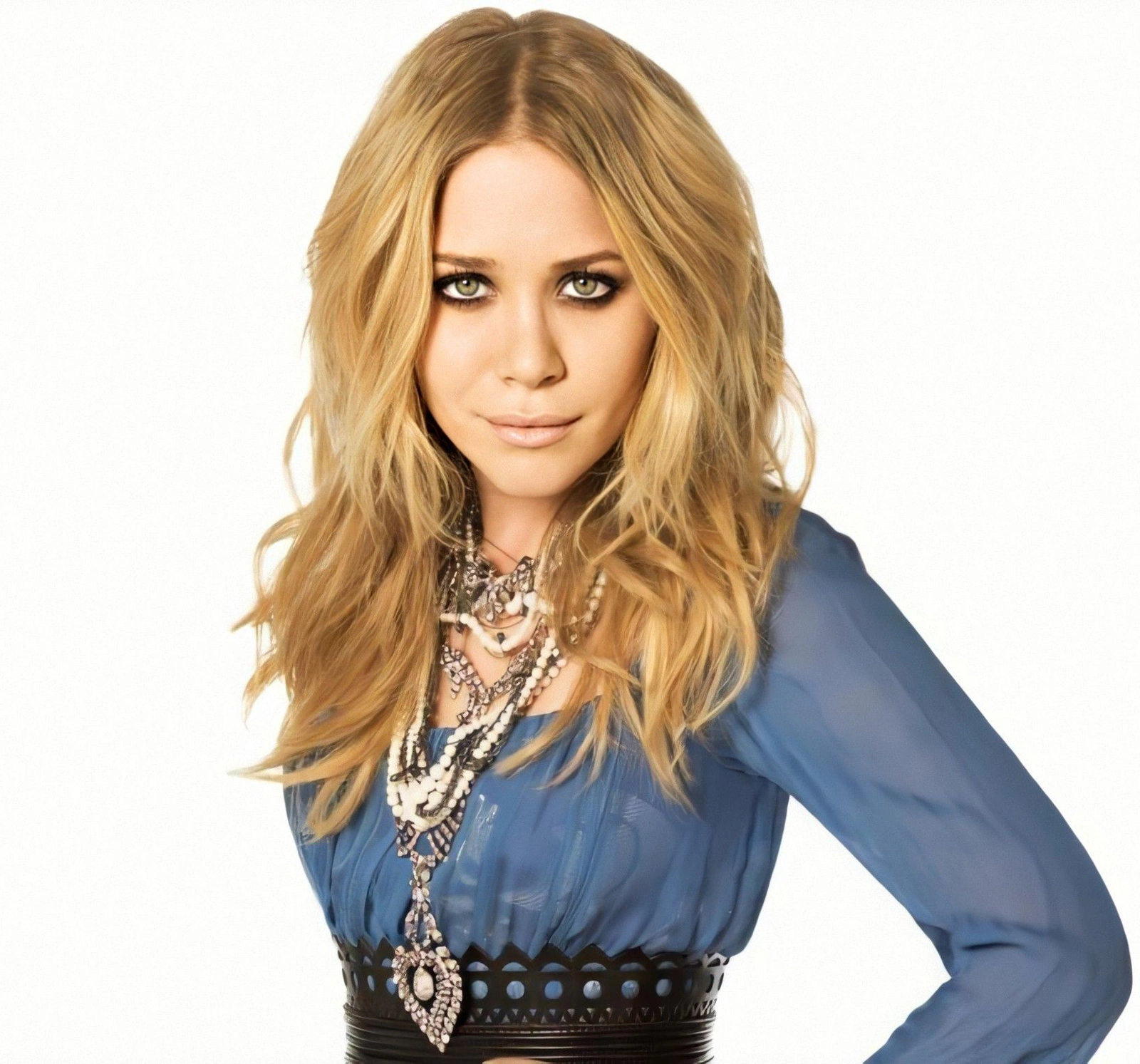
| 28 Quotes | |
| Occup. | Actress |
| From | USA |
| Spouse | Olivier Sarkozy |
| Born | June 13, 1986 Sherman Oaks, California, USA |
| Age | 39 years |
| Cite | |
Citation Formats
APA Style (7th ed.)
Mary-kate olsen biography, facts and quotes. (2026, March 14). FixQuotes. https://fixquotes.com/actors/mary-kate-olsen/
Chicago Style
"Mary-Kate Olsen biography, facts and quotes." FixQuotes. March 14, 2026. https://fixquotes.com/actors/mary-kate-olsen/.
MLA Style (9th ed.)
"Mary-Kate Olsen biography, facts and quotes." FixQuotes, 14 Mar. 2026, https://fixquotes.com/actors/mary-kate-olsen/. Accessed 24 Mar. 2026.
Early Life and Background
Mary-Kate Olsen was born on June 13, 1986, in Sherman Oaks, California, into a family that would become inseparable from one of the strangest experiments in American celebrity: children raised inside a mass-media brand. Alongside her fraternal twin sister, Ashley Olsen, she was cast before infancy in the role of Michelle Tanner on the ABC sitcom Full House, a part the sisters shared from 1987 to 1995. Their father, David Olsen, worked in real estate and banking; their mother, Jarnette Fuller, was a manager. The household also included older brother Trent, younger sister Elizabeth - later an acclaimed actress in her own right - and, after their parents' divorce, half-siblings from their father's second marriage. The family structure was both ordinary Southern California and peculiarly public: school pickups and sibling rivalries existed beside studio schedules, publicity cycles, and licensing deals.
What made the Olsens unusual was not merely early fame but the scale and discipline of its conversion into enterprise. By the early 1990s, Mary-Kate and Ashley were no longer simply child performers but the center of a vast consumer universe of direct-to-video mysteries, television specials, dolls, clothing, magazines, and books aimed at girls who matured with them. Dualstar Entertainment, the company built around the twins, transformed infant recognition into a commercial machine, and Mary-Kate grew up in the tension between selfhood and symmetry - one half of a pair marketed as both mirror and contrast. That split became central to her inner life: she was instantly recognizable yet persistently doubled, intimate to millions but difficult for the public to know as an individual.
Education and Formative Influences
Despite the industrial pace of their careers, the twins were repeatedly presented - and seem genuinely to have understood themselves - as students trying to preserve a zone of normal development. Mary-Kate attended Campbell Hall School in Los Angeles and later enrolled at New York University, though she did not complete a degree. Her adolescence unfolded under unusual pressures: relentless tabloid attention, the transition from child star to young adult, and the strain of negotiating learning differences in public. She spoke candidly about attention deficit disorder and academic anxiety, noting, “I get extra time to take the test because of my ADD. Everybody's brains works differently and I just need longer for things to register”. That remark is revealing not because it confesses fragility but because it frames difference as adaptation. School, in the Olsen story, was less a decorative credential than an assertion that identity could not be wholly absorbed by performance.
Career, Major Works, and Turning Points
Mary-Kate's screen career began with Full House and expanded through a remarkably efficient 1990s franchise apparatus: To Grandmother's House We Go, Double, Double, Toil and Trouble, How the West Was Fun, the Adventures of Mary-Kate & Ashley video series, Two of a Kind, So Little Time, and the 2004 theatrical film New York Minute, which effectively closed the twins' era as teen-screen commodities. As she matured, she sought roles less dependent on twin branding, appearing in Weeds, Factory Girl, The Wackness, and Beastly, often cultivating an offbeat, guarded, downtown presence distinct from her earlier image. The larger turning point, however, was not acting but withdrawal. After intense scrutiny of her health in the mid-2000s and the exhaustion of perpetual exposure, she and Ashley moved decisively into fashion. First with labels such as Elizabeth and James and then, more consequentially, with The Row, founded in 2006, Mary-Kate became part of one of the most successful celebrity reinventions of her generation. The Row's severe luxury, exacting construction, and refusal of loud self-promotion mirrored her own retreat from spectacle.
Philosophy, Style, and Themes
Mary-Kate Olsen's public philosophy has often been indirect, surfacing in compact remarks that reveal a person shaped by overexposure and therefore committed to control. “If they're going to write a story, they're going to write the story whether it's true or not”. That sentence captures not cynicism so much as a survival ethic learned early: when narrative is inevitable, privacy becomes an active craft. Her style evolution - oversized layers, dark palettes, expensive anonymity, the now-famous "boho-luxe" silhouette she helped popularize in the 2000s - can be read as an aesthetic answer to lifelong visibility. Clothing became armor, ambiguity a signature. She turned opacity into authority.
At the same time, her comments suggest a disciplined practicality beneath the mystique. “Our ultimate goal is to stay in business. We are not here with a specific plan. That's kind of how our entire career has evolved. We will figure things out as we go along”. That outlook helps explain the Olsen trajectory better than the usual fairy-tale language of child stardom. There was little romantic improvisation in their survival; there was adjustment, brand intelligence, and an almost unsentimental instinct for longevity. Even her insistence that “Just as we have had great working lives, we have also had good personal lives. For instance, we have made school our number one priority”. points to the same theme: normalcy was not given, it had to be defended. Psychologically, Mary-Kate appears less driven by exhibition than by calibration - work balanced against retreat, ambition against self-protection, public image against the need to remain partly unknowable.
Legacy and Influence
Mary-Kate Olsen's legacy operates on two levels. For late-20th-century popular culture, she remains one of the defining child stars of the VHS-and-sitcom era, part of a twin phenomenon that taught Hollywood how to monetize intimacy, repetition, and aspirational girlhood. For 21st-century fashion, she helped engineer one of the rare genuine second acts in celebrity history: not a licensing vanity project, but the building of a respected luxury house whose minimalism influenced contemporary American dress. Her life also stands as a case study in the costs of fame acquired before memory is fully formed. Unlike many former child performers, she did not attempt a grand confessional reinvention; she chose discretion, editing, and selective visibility. That choice, in itself, is part of her influence. Mary-Kate Olsen endures not simply as Michelle Tanner or half of a famous twin pair, but as a figure who transformed overexposure into withholding, and branding into authorship.
Our collection contains 28 quotes written by Mary-Kate, under the main topics: Witty One-Liners - Truth - Music - Friendship - Writing.
Other people related to Mary-Kate: Olivier Sarkozy (Businessman)
Source / external links