
Meghan Markle Biography Quotes 9 Report mistakes
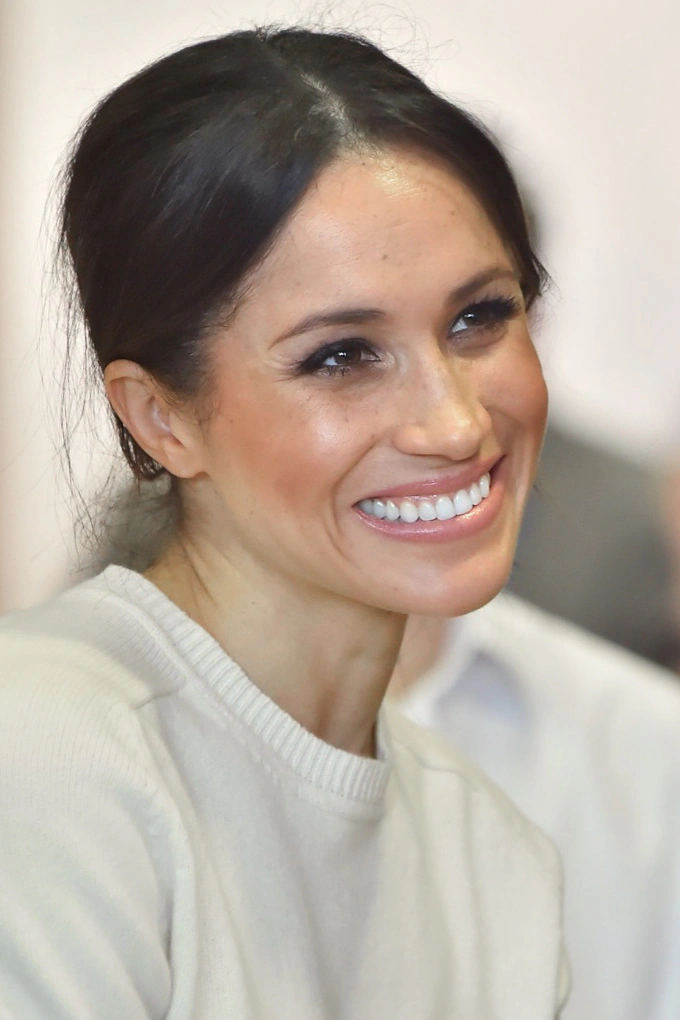
Attr: Northern Ireland Office, CC BY 2.0
| 9 Quotes | |
| Born as | Rachel Meghan Markle |
|---|---|
| Known as | Duchess of Sussex |
| Occup. | Actress |
| From | USA |
| Born | August 4, 1981 Los Angeles, California, United States |
| Age | 45 years |
| Cite | |
Citation Formats
APA Style (7th ed.)
Meghan markle biography, facts and quotes. (2026, August 13). FixQuotes. https://fixquotes.com/actors/meghan-markle/
Chicago Style
"Meghan Markle biography, facts and quotes." FixQuotes. August 13, 2026. https://fixquotes.com/actors/meghan-markle/.
MLA Style (9th ed.)
"Meghan Markle biography, facts and quotes." FixQuotes, 13 Aug. 2026, https://fixquotes.com/actors/meghan-markle/. Accessed 7 Oct. 2026.
Early Life and Background
Rachel Meghan Markle was born on August 4, 1981, in Los Angeles, California, a city where entertainment labor, celebrity fantasy, and sharp class divisions existed side by side. She was the daughter of Doria Ragland, a social worker and yoga teacher, and Thomas Markle, a television lighting director and director of photography who worked on productions including Married... with Children. Her mixed-race background - Black through her mother, white through her father - became central to both her self-understanding and to the public narratives later imposed on her. Raised largely in Southern California after her parents' separation, she grew up close enough to Hollywood to see how images were manufactured, but also close enough to ordinary working life to understand the discipline beneath glamour.
That dual inheritance shaped her early psychology. From her father she absorbed the technical, behind-the-scenes reality of television; from her mother she appears to have drawn composure, social awareness, and an ethic of service. Markle has often described feeling difficult to categorize in an America still uneasy about race, gender, and ambition, and that sense of being both visible and misread would later define her public role. Childhood anecdotes - especially her often-retold effort, at age 11, to challenge a sexist dish soap advertisement - were not merely charming origin stories. They pointed to a precocious belief that language mattered, that institutions could be confronted, and that public voice could alter private limits.
Education and Formative Influences
Markle attended private schools in Los Angeles before entering Northwestern University in Evanston, Illinois, where she studied theater and international studies, an unusually revealing pairing for her later life. Theater gave her training in performance, script analysis, and self-presentation; international studies reflected a broader curiosity about politics, development, and global systems. During college she interned at the U.S. embassy in Buenos Aires, sharpening an interest in diplomacy and public advocacy that would resurface long after her acting ascent. Her formative influences ranged from female professionalism in her own family to the post-1990s vocabulary of empowerment, diversity, and media fluency. Unlike many performers whose identities narrowed around craft alone, Markle developed in overlapping worlds - entertainment, civic idealism, fashion culture, and feminist discourse - and that breadth became both her advantage and, later, the source of tensions when audiences demanded a simpler archetype.
Career, Major Works, and Turning Points
After graduation Markle struggled through the uncertain years typical of working actors, taking small roles in series such as CSI: NY, 90210, Fringe, and General Hospital while supporting herself with freelance calligraphy and promotional work. Her breakthrough came in 2011 with the role of Rachel Zane on the legal drama Suits, filmed in Toronto, where she remained a principal cast member for seven seasons. At the same time she built a lifestyle platform, The Tig, that let her craft a more personal voice on food, travel, style, and purpose, and she expanded her humanitarian profile through work with World Vision and UN Women, including a 2015 speech on gender equality. The decisive turning point was her relationship with Prince Harry, publicly known in 2016 and formalized in marriage in 2018, which transformed a successful television actress into the Duchess of Sussex and a figure of global symbolic intensity. Life inside the British monarchy brought philanthropic opportunity but also relentless tabloid hostility, racialized scrutiny, family fracture, and constitutional constraint. In 2020 she and Harry stepped back from royal duties, moved to California, launched Archewell, signed major media deals with Netflix and Spotify, and recast themselves as hybrid figures: ex-royals, producers, campaigners, and subjects of a continuing struggle over privacy, narrative control, and legitimacy.
Philosophy, Style, and Themes
Markle's public philosophy centers on agency - especially female agency - in institutions designed to soften, aestheticize, or contain women. “I've never wanted to be a lady who lunches - I've always wanted to be a woman who works”. That line captures a defining tension in her life: she has repeatedly entered spaces coded as glamorous, ornamental, or status-driven, then tried to redirect attention toward labor, advocacy, and usefulness. Her feminism is direct rather than academic, built around representation, language, and participation. “I am proud to be a woman and a feminist”. is not a provocative declaration in itself, but in her case it also serves as resistance to traditions - Hollywood typecasting, tabloid misogyny, monarchical ritual - that reward feminine display while policing female autonomy.
Her style as a public figure combines polished accessibility with moral insistence. She has understood image as a tool, not a surrender, arguing that “You can be a woman who wants to look good and still stand up for the equality of women”. That formulation reveals a recurring feature of her psychology: refusal of the false choice between seriousness and femininity. Whether one sees this as disciplined self-possession or highly calibrated branding, it reflects a coherent theme in her career - the attempt to reconcile compassion with ambition, elegance with activism, and intimate storytelling with structural critique. Her speeches and interviews often return to voice, visibility, and the obligation to imagine better systems, suggesting someone animated not only by recognition but by the wish to convert recognition into moral leverage.
Legacy and Influence
Meghan Markle's legacy remains unsettled because she is still living inside the conflicts that define it: celebrity and duty, race and monarchy, feminism and media commodification, privacy and public symbolism. Yet her significance is already clear. She became one of the most discussed mixed-race women in the modern Atlantic world, forcing old institutions - especially the British royal household and the tabloid press - into confrontation with questions they often preferred to manage obliquely. As an actress, her work is anchored above all by Suits rather than by a vast filmography; as a public figure, her larger impact lies in how she turned biography itself into a contested political text. Admirers see resilience, strategic reinvention, and a modern language of service; critics see performance, inconsistency, and self-mythology. Both responses confirm her influence. Markle endures as a figure through whom the early 21st century argues about womanhood, race, status, and the price of speaking in one's own name.
Last updated August 2026 · Editorial standards
Our collection contains 9 quotes written by Meghan, under the main topics: Work - Hope - Equality - Vision & Strategy - Confidence.
Source / external links