
Meryl Streep Biography Quotes 55 Report mistakes
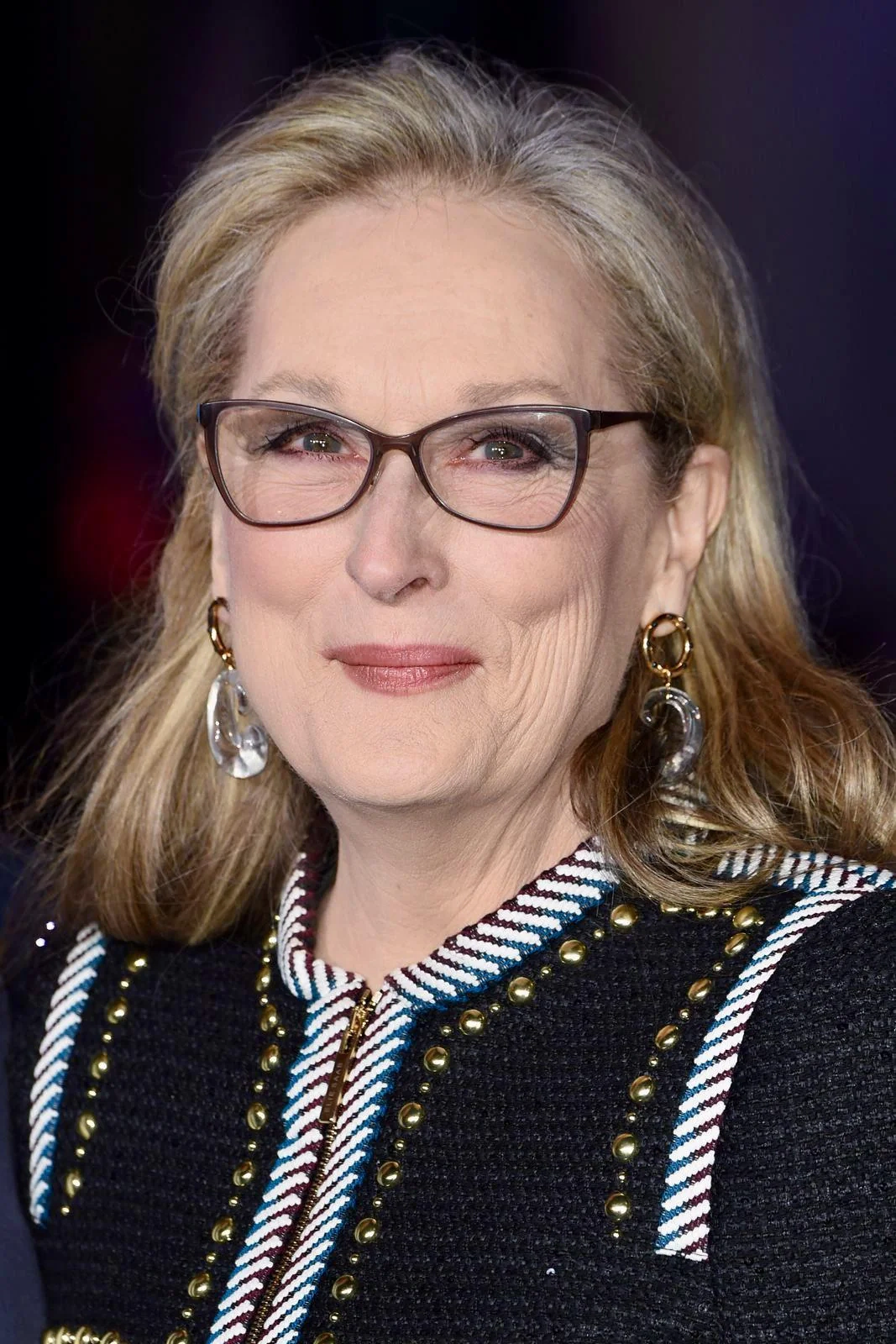
| 55 Quotes | |
| Born as | Mary Louise Streep |
| Occup. | Actress |
| From | USA |
| Born | June 22, 1949 Summit, New Jersey, USA |
| Age | 76 years |
| Cite | |
Citation Formats
APA Style (7th ed.)
Meryl streep biography, facts and quotes. (2026, February 22). FixQuotes. https://fixquotes.com/actors/meryl-streep/
Chicago Style
"Meryl Streep biography, facts and quotes." FixQuotes. February 22, 2026. https://fixquotes.com/actors/meryl-streep/.
MLA Style (9th ed.)
"Meryl Streep biography, facts and quotes." FixQuotes, 22 Feb. 2026, https://fixquotes.com/actors/meryl-streep/. Accessed 25 Mar. 2026.
Early Life and Background
Mary Louise "Meryl" Streep was born on June 22, 1949, in Summit, New Jersey, and raised largely in nearby Bernardsville, a commuter-belt America being reshaped by postwar prosperity, suburban aspiration, and second-wave feminism waiting in the wings. Her father, Harry William Streep Jr., worked in pharmaceutical sales; her mother, Mary Wilkinson Streep, had trained as a commercial artist and carried an unfulfilled performance itch that she redirected into her daughter's poise, diction, and sense that excellence could be practiced into existence. The household was comfortable but not gilded - a setting that made Streep's later mastery of class codes on screen feel less like mimicry than memory, tuned by observation.
As a teenager she sang, acted, and studied the mechanics of appearing confident, then tested that confidence against auditions, rejection, and the reality that beauty standards and regional expectations were quietly policed. The late 1960s offered both permission and pressure: youth culture insisted on authenticity while mass media rewarded a narrower set of faces and voices. Streep's early clue to her future power was that she could shift registers - social, vocal, emotional - and still keep a private center, a trait that would later let her inhabit extremes without turning herself into a spectacle.
Education and Formative Influences
Streep attended Vassar College, graduating in 1971, where rigorous campus theater gave her both repertory range and a taste for craft over celebrity; she then earned an MFA at the Yale School of Drama in 1975, absorbing a methodical, text-first discipline and the belief that technique is not the enemy of truth. Yale's environment - competitive, classically rooted, and saturated with future luminaries - trained her to treat acting as a lifelong practice: voice work, dialects, behavioral research, and the humility to serve the play, not the performer.
Career, Major Works, and Turning Points
After stage work and early screen roles, Streep broke through in the late 1970s with The Deer Hunter (1978) and the Oscar-winning Kramer vs. Kramer (1979), followed by Sophie's Choice (1982), which fused technical daring with harrowing emotional logic and sealed her reputation for transformations. Through the 1980s and 1990s she alternated prestige drama and sharper mainstream vehicles - Out of Africa (1985), Ironweed (1987), A Cry in the Dark/Evil Angels (1988), Postcards from the Edge (1990), The Bridges of Madison County (1995) - expanding her authority in an industry where leading roles for women narrowed with age. Reinvention followed in the 2000s: The Devil Wears Prada (2006) reframed her as a pop-cultural force; Mamma Mia! (2008) turned her into a global musical draw; and The Iron Lady (2011) brought a third Academy Award. Later work - August: Osage County (2013), Into the Woods (2014), The Post (2017), Big Little Lies (2019), Only Murders in the Building (2023) - shows a career built not on a single peak but on recalibration across decades.
Philosophy, Style, and Themes
Streep's style is often described as "disappearing", but the engine is closer to precision than vanishing: she builds a character from voice placement, physical tempo, social strategy, and the tiny negotiations people make to stay loved, safe, or in control. Her best performances refuse simplification - whether the bruised dignity of Sophie, the guarded intelligence of Miranda Priestly, or the burdened resolve of Katharine Graham - because she treats every person as internally argued with themselves. That empathy is not sentimental; it is investigative. “The great gift of human beings is that we have the power of empathy”. For Streep, empathy becomes a technical mandate: learn the character's world so thoroughly that judgment falls away and behavior becomes inevitable.
Her psychology as an artist is defined by high standards, restlessness, and an unsparing awareness of how power works in public life. “If I am not confident that I can portray the character perfectly on screen, I won't even try”. That perfectionism is less vanity than fear of falseness, a protective ethic in an industry that can reward approximation. Yet she also insists that imagination can outrun biography: “I believe in imagination. I did Kramer vs. Kramer before I had children. But the mother I would be was already inside me”. The line reveals a private confidence - that the self contains multitudes - and a professional creed: preparation unlocks inner resources, and inner resources, shaped by curiosity, can make lived experience unnecessary as proof.
Legacy and Influence
Streep's legacy is twofold: a body of work that redefined what American screen acting could look like - intellectually muscular, emotionally exact, and commercially viable - and a career model for longevity in a youth-driven business. With a record-setting run of Academy Award nominations, she became a benchmark against which peers are measured, while her dialect work and character architecture set new expectations for seriousness in mainstream film. Just as enduring is her cultural role in widening the imaginative space for women on screen, portraying ambition, motherhood, authority, fragility, and moral compromise as parts of one human spectrum, and proving that craft - sustained over decades - can itself be a form of influence.
Our collection contains 55 quotes written by Meryl, under the main topics: Witty One-Liners - Ethics & Morality - Art - Sarcastic - Writing.
Other people related to Meryl: Robert Benton (Director), Isabella Rossellini (Actress), Wes Craven (Director), Robert James Waller (Writer), Robert Brustein (Educator), Christopher Durang (Playwright), Albert Brooks (Actor), Jonathan Demme (Director), Sam Neill (Actor), Adrian Grenier (Actor)
Source / external links