
Michael B. Jordan Biography Quotes 7 Report mistakes
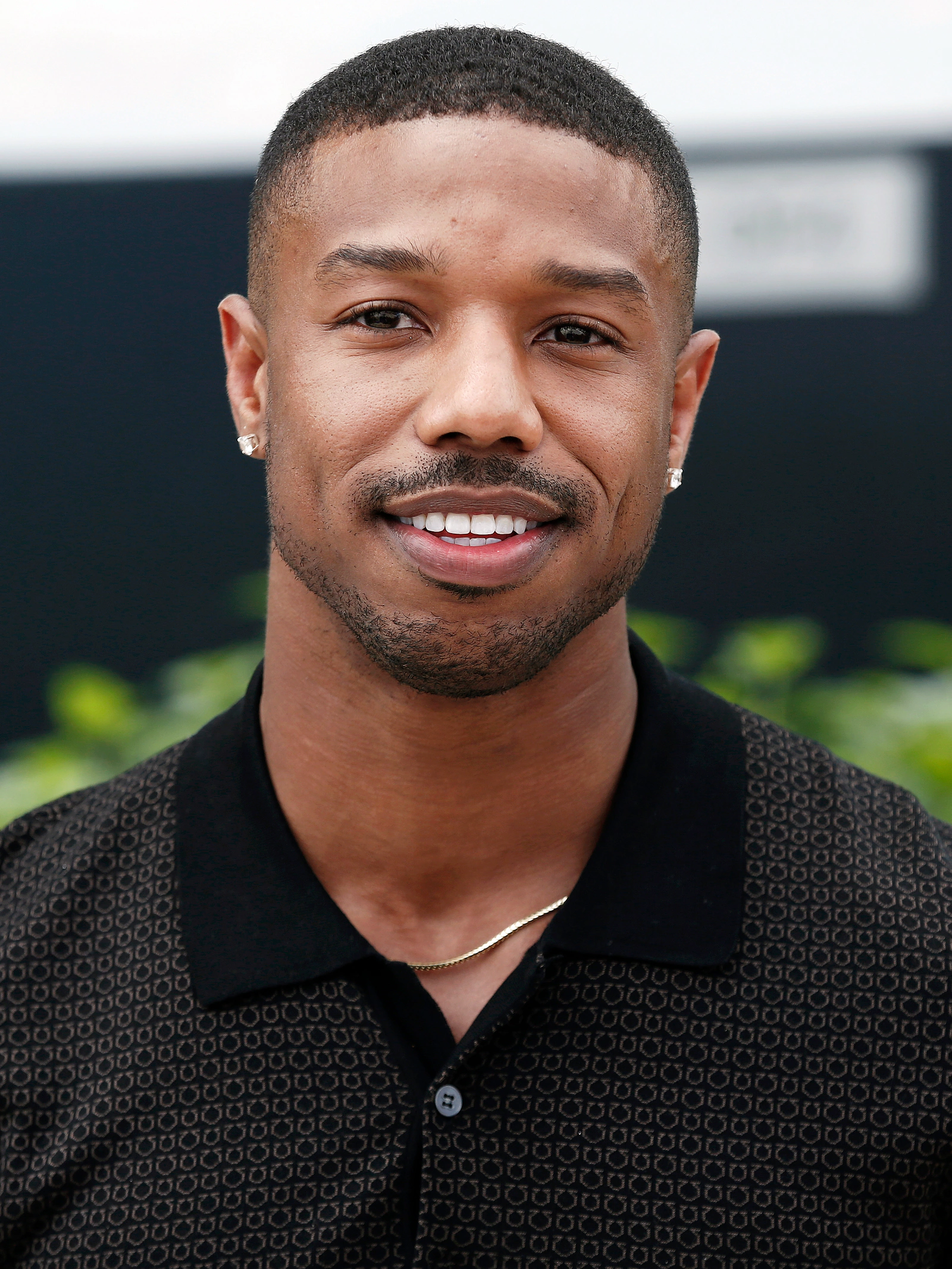
Attr: Head in the Game
| 7 Quotes | |
| Born as | Michael Bakari Jordan |
| Occup. | Actor |
| From | USA |
| Born | February 9, 1987 Santa Ana, California, USA |
| Age | 39 years |
| Cite | |
Citation Formats
APA Style (7th ed.)
Michael b. jordan biography, facts and quotes. (2026, March 2). FixQuotes. https://fixquotes.com/actors/michael-b-jordan/
Chicago Style
"Michael B. Jordan biography, facts and quotes." FixQuotes. March 2, 2026. https://fixquotes.com/actors/michael-b-jordan/.
MLA Style (9th ed.)
"Michael B. Jordan biography, facts and quotes." FixQuotes, 2 Mar. 2026, https://fixquotes.com/actors/michael-b-jordan/. Accessed 22 Mar. 2026.
Early Life and Background
Michael Bakari Jordan was born February 9, 1987, and raised in Newark, New Jersey, before his family settled in nearby Linden. The son of Donna Jordan, a high school guidance counselor, and Michael A. Jordan, a caterer, he grew up in a household that prized steadiness and responsibility more than glamour - a grounding that later helped him navigate an industry that often confuses attention with achievement.Newark and its orbit in the late 1980s and 1990s offered a mix of working-class realism and cultural ambition: church, school, sports, and the constant pressure to prove yourself. Jordan played basketball and ran track, absorbing the discipline of training and the quiet math of incremental improvement. That early environment shaped a public persona that reads as confident but not careless - a performer who treats charisma as craft, not accident.
Education and Formative Influences
Jordan attended Newark Arts High School, a setting that placed performance beside daily life rather than above it, and later spent time at specialized programs while already auditioning and working. Modeling work (including early print campaigns) sharpened his camera awareness, but television acting became his true apprenticeship: repetition, timing, and emotional truth under tight schedules. He also absorbed the example of actors who used stardom as leverage for authorship - learning, gradually, that longevity comes from controlling narrative, not just appearing in it.Career, Major Works, and Turning Points
Jordan moved from child and teen roles into visibility with HBOs The Wire (2002), where he played Wallace with a vulnerability that made consequence feel personal, then proved his range on Friday Night Lights (Vince Howard) and daytime television on All My Children. His breakthrough as a film lead came through Fruitvale Station (2013), a reunion with director Ryan Coogler that fused intimacy with political weight; Creed (2015) transformed him into a global star by turning franchise muscle into a character study of inheritance and self-definition. As Erik Killmonger in Black Panther (2018), he helped reset blockbuster villainy as ideological conflict, not mere menace. In the 2020s he broadened his authority: producing via Outlier Society, making his directorial debut with Creed III (2023), and investing in projects that align stardom with infrastructure - the ability to create lanes for others, not just run in one.Philosophy, Style, and Themes
Jordan acts with a controlled intensity that often reads like pressure held behind the eyes - a style built for characters whose identities are contested by institutions: the street economy of The Wire, the surveillance of celebrity boxing in Creed, the world-historical arguments over ancestry and power in Black Panther. His best performances balance warmth with guardedness, suggesting men who learned early that tenderness can be used against you. The physicality is never merely aesthetic; it is narrative, a visible ledger of sacrifice, rehearsal, and the loneliness of ambition.He speaks about ambition less as wish than as architecture: “Everybody talks about chasing dreams. Nobody really talks about how to build them”. That builder mindset explains his pivot toward producing and directing - the desire to design conditions rather than wait for permission. It also reveals an inner life oriented around endurance rather than adrenaline: “When you have an opportunity to not do that, you go for it, and you keep going. You see how far you can go. You run your race”. Even his public statements about legacy carry a private edge, as if respect must be earned repeatedly, never assumed: “I want to be respected forever, who has an amazing body of work, who affected these kids and these people. That's my greatness”. In psychological terms, Jordan channels anxiety into regimen - a self-imposed standard that turns fear of being disposable into a drive to become foundational.
Legacy and Influence
Jordan emerged in an era when Hollywood both expanded and contested the space for Black leading men, and his career tracks that shift from exception to engine. He helped make earnest, emotionally articulate masculinity commercially viable in mainstream action drama, while his collaborations with Coogler demonstrated how auteur intimacy can coexist with franchise scale. Through Outlier Society and his moves behind the camera, he has pressed the industry toward inclusion as practice - hiring, mentorship, and ownership - not just representation on screen. His enduring influence lies in how he reframed stardom as workmanship: a modern leading man who treats legacy as something built, brick by brick, in public and in private.Our collection contains 7 quotes written by Michael, under the main topics: Art - Work Ethic - Goal Setting - Legacy & Remembrance - Perseverance.
Other people related to Michael: Peter Berg (Actor), Phylicia Rashad (Actress)
Source / external links