
Michael J. Fox Biography Quotes 27 Report mistakes
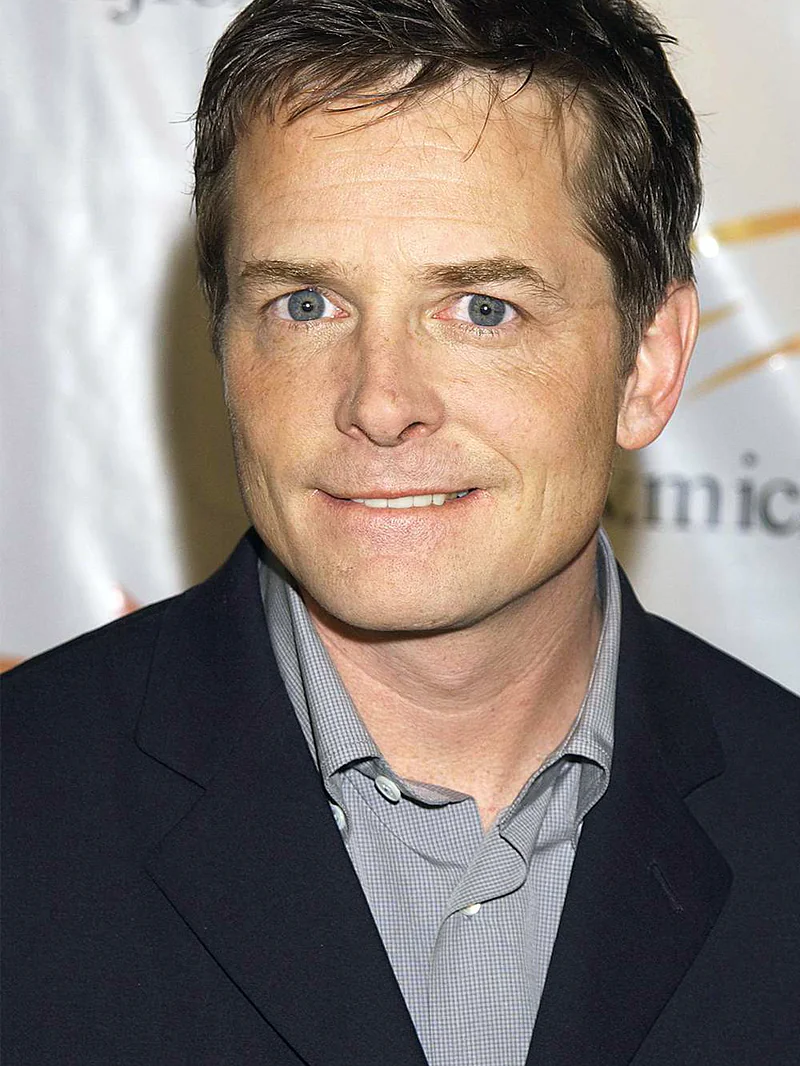
Attr: people.com
| 27 Quotes | |
| Occup. | Actor |
| From | Canada |
| Born | June 9, 1961 |
| Age | 64 years |
| Cite | |
Citation Formats
APA Style (7th ed.)
Michael j. fox biography, facts and quotes. (2026, February 11). FixQuotes. https://fixquotes.com/actors/michael-j-fox/
Chicago Style
"Michael J. Fox biography, facts and quotes." FixQuotes. February 11, 2026. https://fixquotes.com/actors/michael-j-fox/.
MLA Style (9th ed.)
"Michael J. Fox biography, facts and quotes." FixQuotes, 11 Feb. 2026, https://fixquotes.com/actors/michael-j-fox/. Accessed 27 Mar. 2026.
Early Life and Background
Michael Andrew Fox was born June 9, 1961, in Edmonton, Alberta, into a Canada shaped by postwar mobility and a growing mass media that piped American sitcom rhythms into prairie living rooms. His father, William Fox, was a Canadian Forces signalman whose postings moved the family repeatedly; his mother, Phyllis (nee Piper), worked as a payroll clerk. The relocations made Fox observant and quick with impressions - a child learning how to enter new rooms, read moods, and win an audience fast.After years of moving, the family settled in Burnaby, British Columbia. Fox was a small, energetic kid drawn to hockey and mimicry, and the compactness that might have been a social handicap became a performer s advantage: speed, timing, and a face that could flip from earnestness to mischief in a beat. Local casting for television found him early, and by adolescence he was already living the odd double life of school days and set days, practicing professionalism before he had much say in his own mythology.
Education and Formative Influences
Fox attended Burnaby Central Secondary School, but his real education came from working sets and from the comedic grammar of 1970s television: sitcom pacing, reaction shots, and the moral reset at the end of an episode. He began acting professionally in Canada, notably on the CBC series Leo and Me (1976-1981), then set his sights on the larger American market; the period rewarded those who could be both wholesome and sharp, and Fox learned to project sincerity without losing edge. When he joined U.S. productions, he adopted the middle initial "J" (not standing for anything) to distinguish himself from another actor in the union - a small decision that foreshadowed his knack for shaping a public identity without seeming manufactured.Career, Major Works, and Turning Points
Fox moved to Los Angeles as a teenager and broke through as Alex P. Keaton on NBC s Family Ties (1982-1989), turning a young Reagan-era conservative into a lovable comic engine and winning multiple Emmys. Stardom detonated when he replaced Eric Stoltz as Marty McFly in Back to the Future (1985), shot on a punishing schedule while he continued filming Family Ties; the performance fused boyish panic, physical comedy, and emotional grounding, anchoring a blockbuster trilogy (1985, 1989, 1990). He widened his range in The Secret of My Success (1987), Casualties of War (1989), and Doc Hollywood (1991), then pivoted to adult romantic comedy and prestige roles - with a major private turning point: he noticed symptoms of Parkinson s disease in 1990, was diagnosed in 1991, and kept it largely private for years. After returning to television with Spin City (1996-2000), he disclosed his diagnosis publicly in 1998, reorienting his career toward advocacy while continuing acting in guest arcs and voice work, including Stuart Little (1999) and later appearances on shows such as The Good Wife and Curb Your Enthusiasm.Philosophy, Style, and Themes
Fox s screen persona is built on velocity - fast speech, elastic gestures, and a refusal to let sentimentality congeal. Yet beneath the zip is an ethic of workmanship rather than mystique: “I am careful not to confuse excellence with perfection. Excellence, I can reach for; perfection is God's business”. That distinction maps onto his career choices, where risk and uneven outcomes were treated as tuition, not shame, and where the best work often comes from craft under pressure - the very conditions of Back to the Future s famously compressed production.Parkinson s forced an inward reframe that became central to his public psychology: the need to protect mental bandwidth, to keep other people s judgments from colonizing his limited energy. “What other people think about me is not my business”. In his memoirs - including Lucky Man (2002) and Always Looking Up (2009) - he describes optimism not as cheerfulness but as a discipline, an active choice to interpret setbacks as information. That private practice echoes the themes audiences loved in his roles: ordinary people thrown into extraordinary problems who survive by improvising, asking for help, and keeping humor as a tool, not a mask.
Legacy and Influence
Fox occupies a rare cultural position: a defining 1980s star who converted fame into long-term civic leverage without losing warmth. As an actor, he set a template for the modern leading man-comedian - intelligent, vulnerable, physically precise - and Back to the Future remains a global reference point for time-travel storytelling and pop timing. As an advocate, his Michael J. Fox Foundation for Parkinson s Research (founded 2000) became one of the most influential funders in the field, pressing the case that organized resources accelerate breakthroughs. His enduring influence is therefore double: a body of work that still plays as pure entertainment, and a public life that turned personal adversity into a sustained, pragmatic campaign for scientific progress and dignity.Our collection contains 27 quotes written by Michael, under the main topics: Witty One-Liners - Motivational - Dark Humor - Sarcastic - Nature.
Other people related to Michael: Tina Yothers (Actress), Jeffrey Combs (Actor), Eric Stoltz (Actor), David Naughton (Actor), Claudia Christian (Actress), Barry Sonnenfeld (Producer)
Source / external links