
Mickey Rourke Biography Quotes 19 Report mistakes
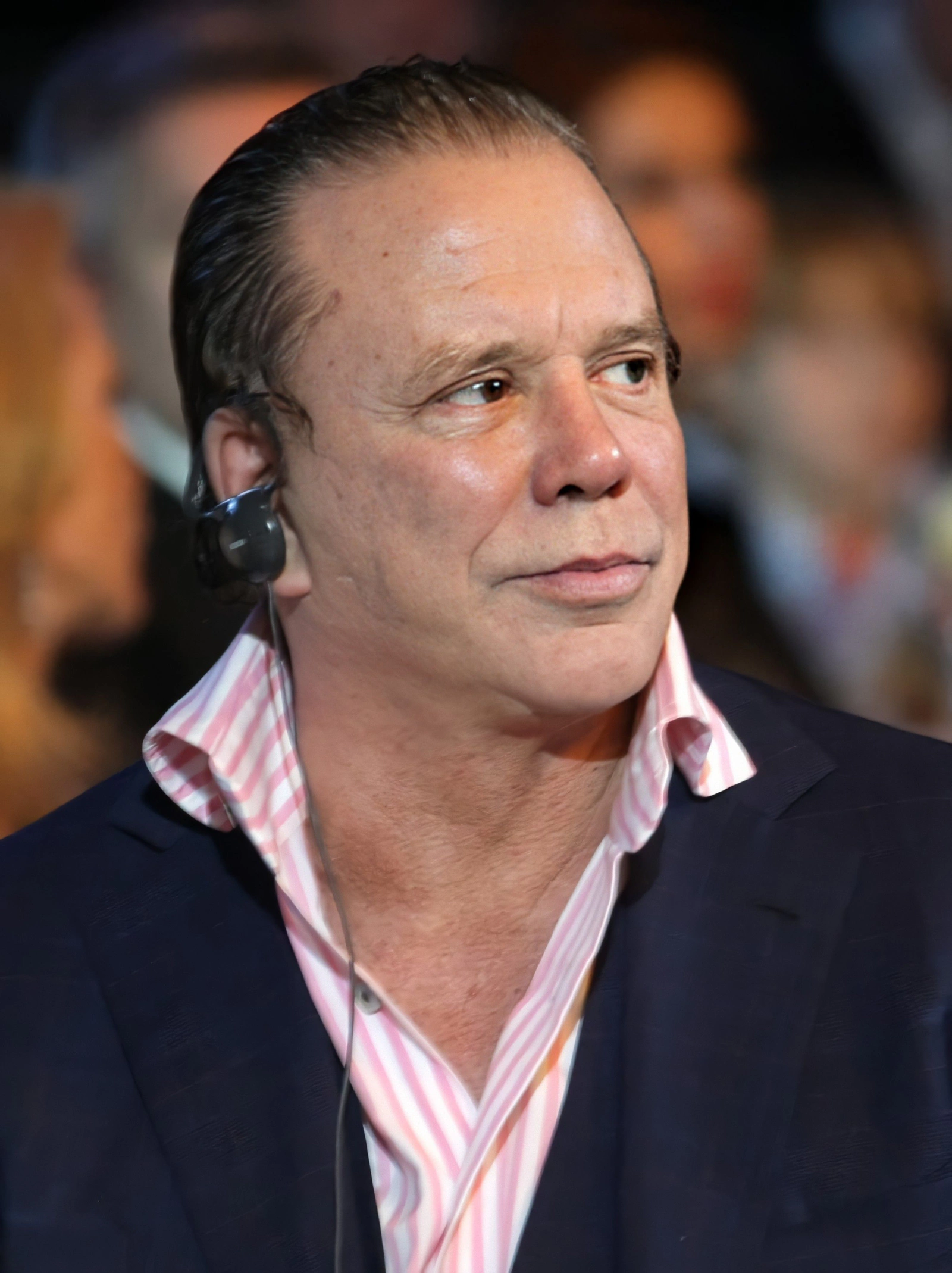
Attr: premier.gov.ru, CC BY 4.0
| 19 Quotes | |
| Born as | Philip Andre Rourke Jr. |
| Occup. | Actor |
| From | USA |
| Born | September 16, 1956 Schenectady, New York, USA |
| Age | 69 years |
| Cite | |
Citation Formats
APA Style (7th ed.)
Mickey rourke biography, facts and quotes. (2026, February 11). FixQuotes. https://fixquotes.com/actors/mickey-rourke/
Chicago Style
"Mickey Rourke biography, facts and quotes." FixQuotes. February 11, 2026. https://fixquotes.com/actors/mickey-rourke/.
MLA Style (9th ed.)
"Mickey Rourke biography, facts and quotes." FixQuotes, 11 Feb. 2026, https://fixquotes.com/actors/mickey-rourke/. Accessed 13 Feb. 2026.
Early Life and Beginnings
Philip Andre Rourke Jr., known worldwide as Mickey Rourke, was born in Schenectady, New York, and raised in a working-class, Irish Catholic family. After his parents separated, his mother, Annette, moved the children to Florida and later remarried, a shift that left a lasting imprint on him. Growing up in Miami, he split his energies between sports and the arts. At the famed 5th Street Gym he learned to box, absorbing the discipline and swagger of fighters he idolized. The ring offered a sense of identity, but acting promised a different kind of intensity. He gravitated toward theater classes and, determined to take it seriously, eventually made his way to New York. There he honed his craft via the Actors Studio tradition and credited influential teachers such as Sandra Seacat with unlocking his emotional range and sense of risk.Breakthrough and 1980s Stardom
Rourke's screen presence announced itself before he had top billing. A small but electric turn in Body Heat put him on the industry's radar. Barry Levinson's Diner then caught fire with audiences and critics, his sly, charismatic performance suggesting both danger and vulnerability. In rapid succession he aligned himself with filmmakers who prized fearless, idiosyncratic actors: Francis Ford Coppola in Rumble Fish, Michael Cimino in Year of the Dragon, Adrian Lyne in 9 1/2 Weeks, Alan Parker in Angel Heart, and Barbet Schroeder in Barfly. These films, paired with memorable co-stars like Kim Basinger, Robert De Niro, Lisa Bonet, Faye Dunaway, and Eric Roberts, cemented his image as a magnetic outsider, someone who seemed to live at the edge of the frame as much as in it.The Pope of Greenwich Village expanded his reputation for intensity and street-level authenticity, while roles like Johnny Handsome showcased a self-destructive romanticism. His choices skewed toward characters who bled for what they believed: poets, grifters, damaged lovers, and men haunted by fate. The persona resonated with a generation of directors and audiences who saw in him a throwback to actors shaped by the Method, but with a contemporary volatility all his own.
Boxing Detour and Career Turbulence
At the peak of his acting fame, Rourke returned to professional boxing, a decision driven by personal need as much as career calculation. The comeback scratched an old itch but came with a price: injuries, concussions, and facial damage that required reconstructive surgeries. The ring sharpened his resolve yet complicated his path in Hollywood, where his reputation for being uncompromising, sometimes combustible, already made him a difficult fit for the studio system.The 1990s were uneven. Projects such as Wild Orchid, Desperate Hours, and Harley Davidson and the Marlboro Man kept him visible, but the momentum of the 1980s ebbed. He endured legal and personal struggles and navigated intense media scrutiny over his changing appearance and choices. Through it all he kept training, often under the guidance of renowned coach Freddie Roach, whose influence helped steady him. He also leaned on a small circle of supporters, including the Times Square priest Father Peter Colapietro, who became a confidant during difficult years.
Personal Relationships and Private Anchors
Rourke's life has been marked by passionate attachments and public relationships. He married actress Debra Feuer early in his rise; later, his marriage to model and actress Carre Otis became tabloid fodder as they co-starred on screen and struggled off it. He has been candid about mistakes and about the emotional fallout from fame, fights, and the pressure to live up to a mythic image. Throughout, he famously doted on his dogs, especially his beloved Loki, and often said they helped him survive when human connections felt precarious. The tenderness he showed for his animals softened the public picture of a brawler and hinted at the vulnerability that informed his most affecting performances.Reinvention and The Wrestler
A gradual resurgence began in the 2000s as directors who valued his singularity brought him back into challenging material. Robert Rodriguez tapped him for Sin City, where his turn as the battered, relentless Marv reminded audiences of the actor's sculpted physicality and offbeat wit. Tony Scott cast him in Man on Fire and Domino, and the visibility helped pave the way for a full-scale reappraisal.Darren Aronofsky's The Wrestler delivered that breakthrough. Playing Randy "The Ram" Robinson, Rourke drew on his own scars, physical and psychic, to portray a man whose body has become both temple and prison. The performance, opposite Marisa Tomei and Evan Rachel Wood and supported by producer Scott Franklin, earned a Golden Globe and BAFTA, along with an Academy Award nomination. In acceptance speeches he thanked not only the filmmakers and cast but also the people who steadied his life in the wilderness years, a public acknowledgment that the comeback belonged to a community as much as to one man's will.
Later Roles and Mainstream Visibility
After The Wrestler he alternated between art-house grit and pop-culture spectacle. He played the villain Ivan Vanko in Jon Favreau's Iron Man 2 opposite Robert Downey Jr., sparred and reminisced on set about craft and reinvention, and joined Sylvester Stallone's ensemble in The Expendables. He returned to Rodriguez's noir world in Sin City: A Dame to Kill For and took on mythic menace in Immortals. The projects varied in size and reception, but each reaffirmed his appetite for risk and a relish for big, stylized characters.Craft, Image, and Legacy
Rourke's career maps a jagged line through American film culture, from the post, New Hollywood hunger of the early 1980s to the franchise era. He learned from Strasberg-descended teachers and collaborators who prized authenticity, and he often credited Sandra Seacat for helping him mine private experience without breaking himself. His best directors, Levinson, Coppola, Cimino, Lyne, Parker, Schroeder, Rodriguez, and Aronofsky, channeled that intensity into roles that balanced danger with ache. Co-stars like Kim Basinger, Faye Dunaway, Robert De Niro, Marisa Tomei, Evan Rachel Wood, Don Johnson, and Eric Roberts became part of the tapestry of a life spent playing men on the brink.Outside the frame, mentors and allies such as Freddie Roach and Father Peter Colapietro offered structure when he needed it most. In interviews he returned again and again to gratitude, for the filmmakers who took chances on him, for the friends who stayed close, and for the animals that calmed the storms. The result is a legacy that refuses simple categorization: a matinee idol who chased the truth even when it hurt, a fighter who protected a fragile core, and an actor whose greatest performances carry the bruised music of a hard-won second act.
Our collection contains 19 quotes written by Mickey, under the main topics: Witty One-Liners - Sports - Movie - Mental Health - Training & Practice.
Other people related to Mickey: Steve Guttenberg (Actor), John Lone (Actor), Barbet Schroeder (Director), Matt Dillon (Actor), Clive Owen (Actor), Todd Barry (Comedian), Mena Suvari (Actress), Nick Stahl (Actor), Jaime King (Actress), Angie Everhart (Model)
Source / external links