
Micky Dolenz Biography Quotes 2 Report mistakes
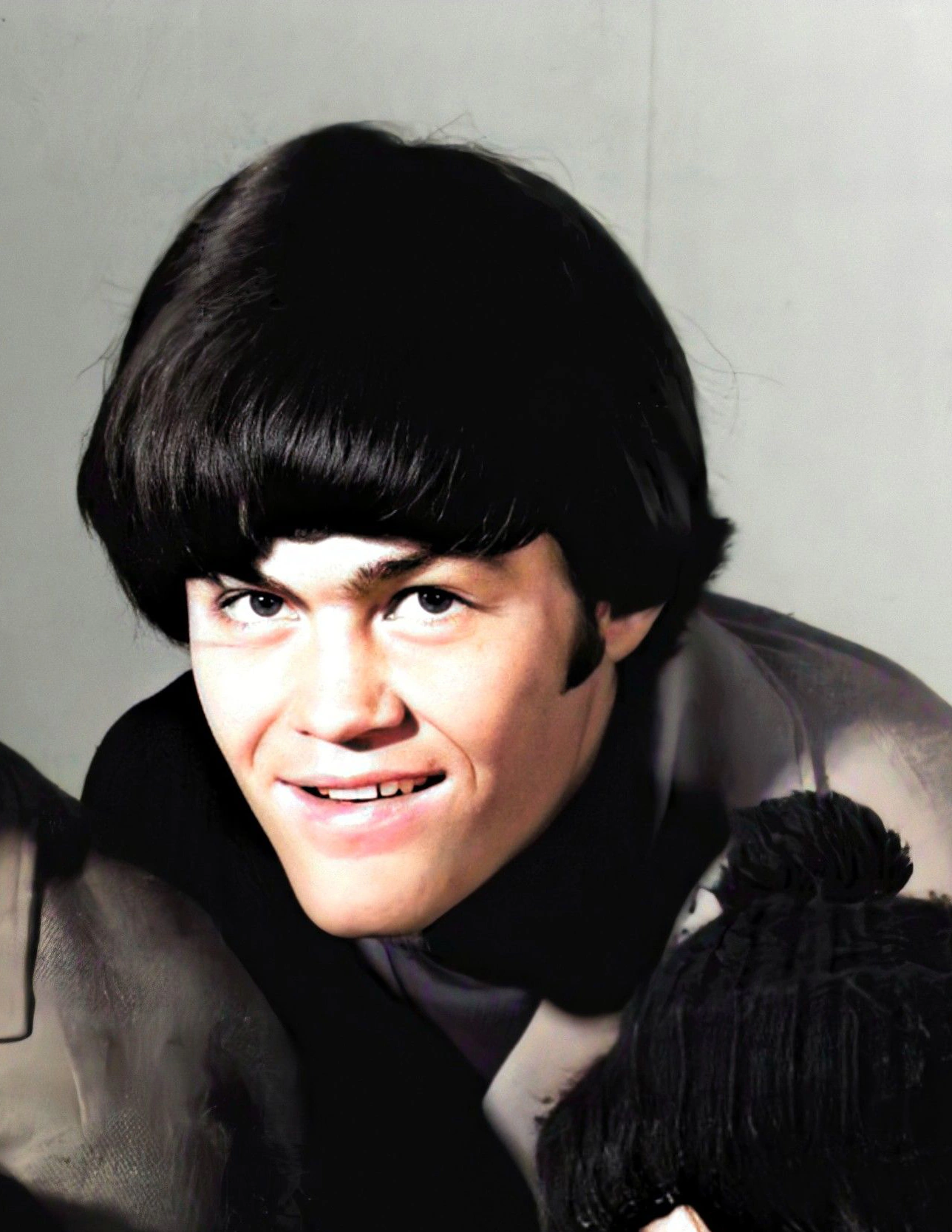
Attr: NBC Television
| 2 Quotes | |
| Born as | George Michael Dolenz Jr. |
| Occup. | Actor |
| From | USA |
| Born | March 8, 1945 Los Angeles, California, USA |
| Age | 80 years |
| Cite | |
Citation Formats
APA Style (7th ed.)
Micky dolenz biography, facts and quotes. (2026, February 11). FixQuotes. https://fixquotes.com/actors/micky-dolenz/
Chicago Style
"Micky Dolenz biography, facts and quotes." FixQuotes. February 11, 2026. https://fixquotes.com/actors/micky-dolenz/.
MLA Style (9th ed.)
"Micky Dolenz biography, facts and quotes." FixQuotes, 11 Feb. 2026, https://fixquotes.com/actors/micky-dolenz/. Accessed 11 Feb. 2026.
Early Life and Background
George Michael Dolenz Jr. was born March 8, 1945, in Los Angeles, California, into a working family already steeped in the precarious rhythms of show business. His father, George Dolenz, was a stage-and-screen actor of Slovenian heritage who had emigrated from Trieste; his mother, Janelle Johnson, was also an actor. Growing up in postwar Southern California, Dolenz absorbed the practical lessons of auditions, call sheets, and the quiet anxiety behind a profession built on being chosen.The child in that household learned early that performance was both craft and camouflage. In the 1950s, television was rapidly becoming the center of American domestic life, and Dolenz came of age as studios industrialized youth culture - turning teen taste into programming, records, and merchandising. He was personable, curious, and quick with voices and impressions, a natural mimic whose humor worked as a shield against the scrutiny that comes with being watched, even before one understands why.
Education and Formative Influences
Dolenz attended Ulysses S. Grant High School in the San Fernando Valley and later studied at Los Angeles Valley College, but his true education was piecemeal and professional: acting classes, rehearsal rooms, and sets where timing mattered more than theory. His first major break came as a teenager with the title role in the circus adventure series "Circus Boy" (1956-1958), credited as Mickey Braddock. Working alongside performers such as Noah Beery Jr., he learned the unglamorous mechanics of television - hitting marks, sustaining energy through retakes, and staying psychologically nimble while playing a character for strangers.Career, Major Works, and Turning Points
After "Circus Boy", Dolenz navigated the uneven terrain of young actors aging out of child roles, taking parts and building musicianship, then colliding with the 1960s pop-industrial machine at exactly the right moment. In 1965 he auditioned for a new TV project that would become "The Monkees" (1966-1968), and as the drummer-singer with the wide-eyed grin, he helped define an era of televised rock fantasy. His voice drove signature hits including "Last Train to Clarksville" and, most memorably, his lead on "I'm a Believer". The show won an Emmy and became a flashpoint in debates about authenticity, yet Dolenz used the spotlight to broaden, not narrow, his identity - moving into stage work ("Grease", "Pippin"), directing (including episodes of "The Monkees" and later TV such as "Boyce and Hart"), voice acting, and periodic Monkees reunions that reframed the phenomenon as both nostalgia and a living repertoire.Philosophy, Style, and Themes
Dolenz has often treated performance less as a mask than as an instrument one learns to tune. His comic timing - buoyant, slightly anarchic, with a knack for undercutting sincerity and then restoring it - carried the Monkees' surreal, jump-cut style and kept it human amid the gag-driven chaos. Under the zaniness was an actorly intelligence: he could play the innocent and let the audience see the calculation behind the innocence, a duality that became a survival skill in a culture that demanded constant likability.He has spoken with unusual candor about the porous boundary between persona and self, admitting, "I'm now learning how to distinguish when I'm acting and when I'm not acting - offstage as well as onstage". That line reads like a private meditation made public: the child actor who never fully exits the scene, the pop idol who must decide what to keep for himself. Even his account of being cast emphasizes craft over myth: "They were looking for actors - real actors - who could play instruments. There was a lot of improvisation and scene work involved in addition to the music. The auditions went on for a long time". In Dolenz's telling, the Monkees were not an accident but an experiment - a deliberately assembled troupe - and his pride lies in the work: improvisation, ensemble chemistry, and the discipline required to make spontaneity look effortless.
Legacy and Influence
Dolenz endures as one of the rare figures to bridge early television, 1960s pop, and late-career reinvention without denying any phase of the journey. With the Monkees, he helped pioneer the modern template of the televised band - a direct ancestor to music video grammar, meta-comedy in pop branding, and the performative intimacy of contemporary celebrity. Yet his longer legacy is quieter: a case study in how an entertainer can outlive a manufactured label by treating acting as a lifelong practice, returning again and again to the question of who is speaking - the character, the persona, or the person who has learned to hold both.Our collection contains 2 quotes written by Micky, under the main topics: Music - Self-Improvement.
Other people related to Micky: Michael Nesmith (Musician), Peter Tork (Musician)
Source / external links