
Mischa Barton Biography Quotes 11 Report mistakes
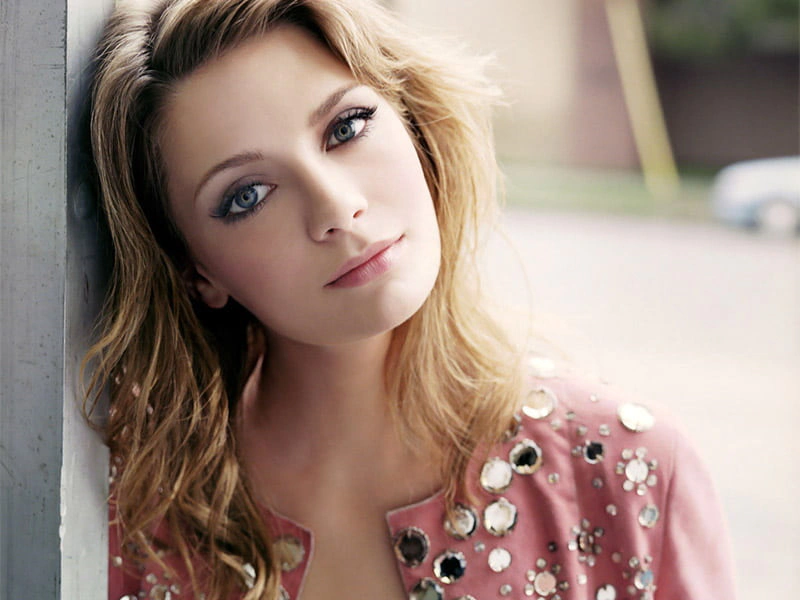
| 11 Quotes | |
| Born as | Mischa Anne Marsden Barton |
| Occup. | Actress |
| From | USA |
| Born | January 24, 1986 London, England, United Kingdom |
| Age | 40 years |
| Cite | |
Citation Formats
APA Style (7th ed.)
Mischa barton biography, facts and quotes. (2026, March 24). FixQuotes. https://fixquotes.com/actors/mischa-barton/
Chicago Style
"Mischa Barton biography, facts and quotes." FixQuotes. March 24, 2026. https://fixquotes.com/actors/mischa-barton/.
MLA Style (9th ed.)
"Mischa Barton biography, facts and quotes." FixQuotes, 24 Mar. 2026, https://fixquotes.com/actors/mischa-barton/. Accessed 27 Mar. 2026.
Early Life and Background
Mischa Anne Marsden Barton was born on January 24, 1986, in London, to an English mother, Nuala, and a father, Paul Barton, a Manchester-born foreign exchange broker. Her family background was transatlantic and cosmopolitan from the start: her mother was of Irish descent, her father worked in finance, and the household moved in rhythms set by international business rather than a single rooted local world. Barton spent part of her childhood in London and briefly in New York before the family settled more fully in the United States, a shift that placed her between accents, class codes, and cultural expectations. That in-between quality - British-born, American-made, at once polished and restless - would later become central to her screen image.
She was drawn early to performance and was noticed young, reportedly after entering a summer camp acting program in New York. Unlike child performers produced wholly by studio systems, Barton emerged from a mix of parental support, urban opportunity, and the 1990s independent-film ecosystem that still made room for unusual adolescent presences. Her look brought immediate attention, but from the beginning there was also something cooler and less easily categorized in her demeanor: self-possession edged with distance. As a child actor growing up under adult scrutiny, she developed quickly in public, and that acceleration - glamorous on the outside, destabilizing underneath - would shape both her career and her struggles.
Education and Formative Influences
Barton was educated partly through private schooling in New York while working professionally, and her real apprenticeship came in rehearsal rooms, film sets, and the downtown theater scene. She appeared in stage productions while still very young, including work at the New York Shakespeare Festival, where text, rhythm, and psychological shading mattered more than celebrity. Film roles soon followed: Lawn Dogs (1997) gave her an early showcase as a perceptive, isolated girl; Pups (1999), Notting Hill (1999), The Sixth Sense (1999), and especially the quietly unsettling Lost and Delirious (2001) placed her in stories about alienation, class tension, and emotional secrecy. These parts mattered because they trained audiences to read her not as a generic teen star but as someone legible in moods of melancholy, precocity, and estrangement.
Career, Major Works, and Turning Points
Barton's decisive breakthrough came in 2003 with The O.C., in which she played Marissa Cooper, the affluent, wounded California teenager whose beauty and volatility became one of the defining images of early-2000s youth television. The series turned Barton into a global celebrity and fashion fixation at the precise moment tabloids, paparazzi culture, and internet gossip were beginning to fuse into a harsher machine of exposure. Marissa's arc - privilege, loneliness, addiction, rebellion, collapse - drew on Barton's ability to suggest fragility beneath composure, and when she left the show in 2006, the role had already fixed her in popular memory. She worked steadily afterward in independent films, thrillers, and international productions, including Closing the Ring, St Trinian's, Assassination of a High School President, and later television and reality appearances, but the post-O.C. years were also marked by legal troubles, health crises, and invasive press coverage. Her career became a case study in how quickly the entertainment industry could elevate and then punish a young woman whose public image blurred with the troubled characters she portrayed.
Philosophy, Style, and Themes
Barton's own remarks reveal an actress who resisted being flattened into ornament. “I do intelligent roles. I don't want to be labeled as doing silly movies. I'm more mature than kids my age because I'm constantly surrounded by adults”. That statement is more than youthful self-definition; it exposes the psychology of a performer who understood early that adulthood had been forced upon her and who sought seriousness as a defense against trivialization. Her strongest work often came when that seriousness met contradiction: innocence mixed with knowledge, glamour with injury, privilege with psychic drift. She was especially effective in roles where stillness carried threat or sadness, and where a young woman's social visibility masked profound inward solitude.
Just as revealing is her resistance to the celebrity apparatus that consumed her. “I'm not really sure what people's preconceived notions are. I don't look at the gossip websites - it's unhealthy and I think it's a large part of what drives people in L.A. crazy”. That instinct to turn away from the mirror of public chatter suggests both self-protection and fatigue. Likewise, “It kind of irritates me that I'm seen as this pretty face. People also say I'm too thin. The truth is pretty people aren't as accepted as other people. It comes with all these stigmas”. Beneath the defensiveness is a lucid complaint about how beauty can become a trap, converting a performer into a surface onto which culture projects envy, desire, and blame. Her artistic preference followed naturally: she gravitated, by temperament and by casting logic, toward characters who were dark, brittle, off-center, and difficult to summarize.
Legacy and Influence
Mischa Barton remains inseparable from a particular cultural moment: the early 2000s, when television melodrama, celebrity fashion, and tabloid surveillance merged into a new form of fame. As Marissa Cooper she helped define the emotional weather of that era - glamorous, wounded, self-destructive, endlessly watched - and influenced later teen dramas built around similarly tragic, hyper-visible young women. Her biography also carries a cautionary force. Long before the entertainment industry fully reckoned with the damage of paparazzi culture and body shaming, Barton had lived through both in plain view. That history has led to a reevaluation of her not simply as a fallen ingenue, but as a talented actress shaped and scarred by the machinery that made her famous. Her legacy endures in reruns, fashion memory, and a broader cultural sympathy for young performers asked to become symbols before they have had the chance to become adults in private.
Our collection contains 11 quotes written by Mischa, under the main topics: Witty One-Liners - Art - Love - New Beginnings - Equality.
Other people related to Mischa: Piper Perabo (Actress), Ben McKenzie (Actor)
Source / external links