
Morgan Freeman Biography Quotes 50 Report mistakes
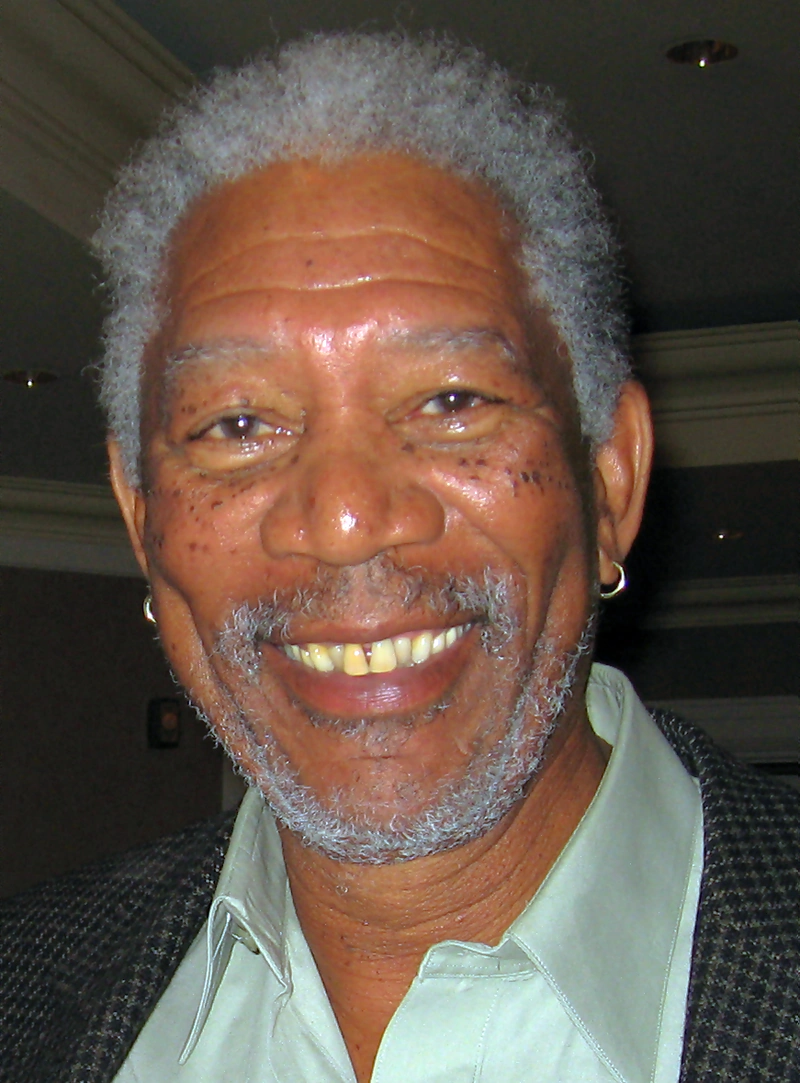
| 50 Quotes | |
| Occup. | Actor |
| From | USA |
| Born | June 1, 1937 |
| Age | 88 years |
| Cite | |
Citation Formats
APA Style (7th ed.)
Morgan freeman biography, facts and quotes. (2026, February 11). FixQuotes. https://fixquotes.com/actors/morgan-freeman/
Chicago Style
"Morgan Freeman biography, facts and quotes." FixQuotes. February 11, 2026. https://fixquotes.com/actors/morgan-freeman/.
MLA Style (9th ed.)
"Morgan Freeman biography, facts and quotes." FixQuotes, 11 Feb. 2026, https://fixquotes.com/actors/morgan-freeman/. Accessed 25 Mar. 2026.
Early Life and Background
Morgan Freeman was born on June 1, 1937, in Memphis, Tennessee, the youngest of five children in a working-class Black family whose fortunes were shaped by the Great Migration and the rigid boundaries of Jim Crow. His mother, Mayme Edna, worked as a teacher; his father, Morgan Porterfield Freeman, was a barber whose employment could be irregular. Freeman spent portions of his childhood moving through Mississippi and Tennessee, including time in Charleston, Mississippi, where everyday life carried the quiet pressure of segregation, limited opportunity, and the constant need to read a room before speaking.He found early refuge in performance. By his own recollection, he began acting as a child in school plays, discovering that a stage could be both sanctuary and amplifier: a place to be seen on his own terms. That appetite for voice and presence developed alongside the era's social upheavals - the postwar economy, the rise of television, and the accelerating civil rights struggle - all of which would later inform how he chose roles that made dignity visible without requiring speeches about dignity.
Education and Formative Influences
Freeman attended Broad Street High School in Greenwood, Mississippi, where he won a statewide drama contest and drew attention for a calm command that would become his signature. He declined a partial drama scholarship to Jackson State University and instead enlisted in the United States Air Force in 1955, serving as a radar technician. The discipline of military life and the technical focus of his job sharpened his patience and timing - qualities crucial for film acting - but also clarified what he was not: he did not want a career defined by hierarchy. After discharge, he pursued acting and dance training in Los Angeles, including study at the Pasadena Playhouse, absorbing both craft and the practical realities of auditioning in an industry that still typecast Black performers.Career, Major Works, and Turning Points
Freeman worked for years in theater and television before national audiences recognized him, notably through PBS's The Electric Company (1971-1977), which made him a familiar face even as serious film roles remained scarce. His first major film breakthrough arrived with Street Smart (1987), earning an Academy Award nomination and marking him as an actor capable of menace and vulnerability in the same glance. Roles that followed deepened his range: Driving Miss Daisy (1989) made him an emblem of restrained moral authority, Glory (1989) placed him inside the Civil War memory struggle, and Unforgiven (1992) proved his strength in revisionist American myth. He became a bankable lead with The Shawshank Redemption (1994), Se7en (1995), and Amistad (1997), later pairing gravitas with mainstream spectacle in Bruce Almighty (2003) and Christopher Nolan's Dark Knight trilogy (2005-2012). In Million Dollar Baby (2004), he won the Oscar for Best Supporting Actor, a late-crowning moment for a performer who had learned to outlast the industry's short attention span.Philosophy, Style, and Themes
Freeman's screen persona - composed, attentive, unhurried - is often mistaken for effortless charisma, but it is better understood as a cultivated ethic: listen first, then speak so that every word costs something. He has described his method in plain terms, rejecting mystification in favor of a craftsman's directness: “My approach to acting is that I am totally intuitive. I read the script and I get it. If I don't get it, I can't do it”. That statement doubles as psychology. Intuition, for him, is not whim; it is a hard-won internal compass built from decades of being evaluated, overlooked, and finally trusted, so that when comprehension clicks, he can inhabit a character without vanity.Money and prestige never seem to be the center of his public narrative, yet he speaks candidly about the labor economy of art and the long middle stretch of not being chosen. “Life doesn't offer you promises whatsoever so it's very easy to become, 'Whatever happened to... ?' It's great to be wanted. I spent a few years not being wanted and this is better”. The remark explains his calm intensity: gratitude without illusion. It also illuminates his recurring attraction to stories about endurance, confinement, and moral choice - from Shawshank's slow-motion hope to Million Dollar Baby's fatal tenderness. Beneath the iconic voice is an actor who treats representation as lived history, not slogan, insisting on continuity between the past and the present: “Black history is American history”. That conviction sits behind his most resonant performances, where individual dignity is framed as national evidence.
Legacy and Influence
Freeman's enduring influence rests on how he widened the possibilities for Black leading men in American cinema without narrowing himself to a single archetype. He proved that authority could be quiet, that warmth could coexist with threat, and that narration and presence are not substitutes for complexity but vehicles for it when earned. As co-founder of Revelations Entertainment, he also pursued projects with social conscience and historical reach, while his late-career ubiquity - from prestige dramas to blockbusters to documentary hosting - made him a cultural reference point for trust, skepticism, and humane intelligence. His legacy is less a single role than a template: longevity built on craft, patience, and an insistence that American stories expand when they include the full weight of American lives.Our collection contains 50 quotes written by Morgan, under the main topics: Witty One-Liners - Art - Never Give Up - Music - Life.
Other people related to Morgan: Luc Besson (Director), Wolfgang Petersen (Director), Mary Elizabeth Mastrantonio (Actress), Frank Darabont (Director), Matthew Broderick (Actor), Piper Perabo (Actress), Jim Caviezel (Celebrity), James McAvoy (Actor), Hilary Swank (Actress), Thomas Kretschmann (Actor)