
Natalie Portman Biography Quotes 42 Report mistakes
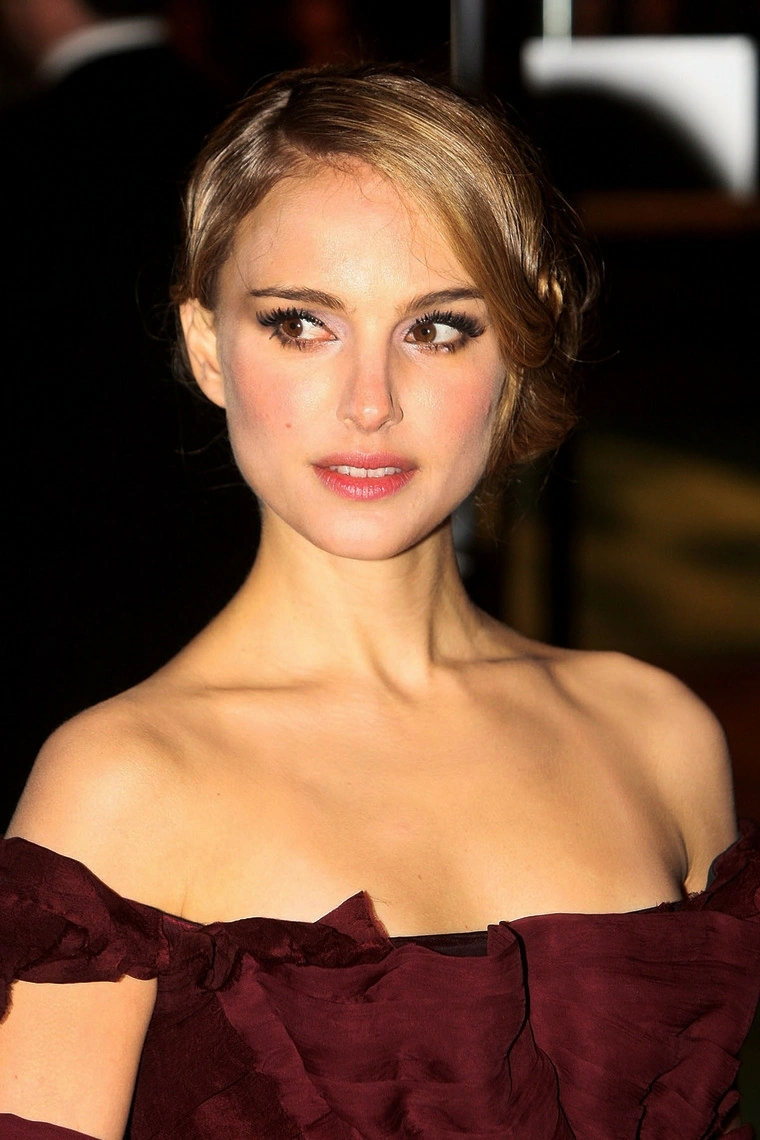
| 42 Quotes | |
| Born as | Natalie Hershlag |
| Occup. | Actress |
| From | USA |
| Born | June 9, 1981 Jerusalem, Israel |
| Age | 44 years |
| Cite | |
Citation Formats
APA Style (7th ed.)
Natalie portman biography, facts and quotes. (2026, February 11). FixQuotes. https://fixquotes.com/actors/natalie-portman/
Chicago Style
"Natalie Portman biography, facts and quotes." FixQuotes. February 11, 2026. https://fixquotes.com/actors/natalie-portman/.
MLA Style (9th ed.)
"Natalie Portman biography, facts and quotes." FixQuotes, 11 Feb. 2026, https://fixquotes.com/actors/natalie-portman/. Accessed 21 Mar. 2026.
Early Life and Background
Natalie Portman was born Natalie Hershlag on June 9, 1981, in Jerusalem, then a city shaped by the long shadows of conflict and migration. Her parents were Jewish-Israeli and Jewish-American; her father, Avner Hershlag, became a physician, and her mother, Shelley Stevens, would later act as her manager. When she was still young, the family relocated to the United States, settling in the New York region, where immigrant ambition and American entertainment culture coexisted in daily life.That early dual belonging - Hebrew roots and American reinvention - helped form the quiet intensity audiences would later read on her face. As a child she trained in dance and was noticed for her poise; the discovery narrative often told about her is true in outline, but the deeper story is of a family that treated work as serious and education as non-negotiable. From the start she learned to move between rooms that demanded different versions of herself: student, performer, daughter, public image-in-the-making.
Education and Formative Influences
Portman attended public and selective schools in the New York area and became known for academic discipline even as acting opportunities multiplied. The 1990s culture that made child performers into tabloid property also made her cautious; she guarded privacy, chose projects that signaled intelligence rather than scandal, and built a self-concept anchored in study. She later enrolled at Harvard University and graduated with a psychology degree, an unusually public decision in an industry that often punishes interruption and rewards constant visibility.Career, Major Works, and Turning Points
Her screen debut in Luc Besson's "Leon: The Professional" (1994) announced a rare combination of vulnerability and steel, and she followed it with "Heat" (1995) and "Beautiful Girls" (1996) as she navigated adolescence under scrutiny. Global fame arrived with Padme Amidala in George Lucas's "Star Wars" prequel trilogy (1999-2005), a role that made her omnipresent and, paradoxically, more guarded. In the 2000s she sought directors who would reframe her: Mike Nichols in "Closer" (2004) earned her an Oscar nomination, "V for Vendetta" (2005) turned her into a political icon, and "Black Swan" (2010) - a portrait of perfectionism and self-erasure - won her the Academy Award for Best Actress. She broadened into producing and directing ("A Tale of Love and Darkness", 2015) while alternating between prestige dramas ("Jackie", 2016) and blockbuster returns, keeping a career defined by deliberate oscillation rather than a single lane.Philosophy, Style, and Themes
Portman's public persona is often described as cerebral, but the more accurate throughline is intentionality: she treats acting less as confession than as craft and inquiry. She has repeatedly articulated a preference for interior complexity over moral certainty, and her best performances locate feeling in restraint - the held breath, the sentence not said, the sudden fracture. That sensibility suits characters who are watched, measured, or mythologized: Padme as political symbol, Nina in "Black Swan" as vessel for perfection, Jacqueline Kennedy in "Jackie" as a person forced to become an image while still grieving.Her psychology surfaces in the way she talks about learning and labor. “I don't love studying. I hate studying. I like learning. Learning is beautiful”. The distinction is revealing: she resists performative achievement but craves understanding, which helps explain her repeated returns to roles that feel like case studies in identity. The same anti-ornamental ethic appears in her aesthetic bluntness: “Breast implants gross me out. I don't think they're attractive at all”. It reads less as provocation than as a refusal of the industry's pressure to treat the body as a product upgrade. And she frames her project choices as cultural intervention rather than career maintenance: “I tend to lean toward strong female stories. I want to make things that don't already exist out there”. That drive - to add rather than repeat - is why she gravitates to women written as complicated agents, not decorative proof of a male hero's depth.
Legacy and Influence
Portman's enduring influence lies in the model she offers: a globally famous actor who insists on intellectual adulthood, privacy, and selective ambition while still mastering mainstream stardom. In an era that commodified young women and rewarded compliance, she made seriousness marketable - not by renouncing celebrity, but by refusing to let it set her values. Her performances continue to shape how contemporary cinema imagines female interiority, and her career remains a reference point for artists trying to balance art, education, activism, and the long, patient work of becoming.Our collection contains 42 quotes written by Natalie, under the main topics: Witty One-Liners - Ethics & Morality - Art - Friendship - Love.
Other people related to Natalie: Hayden Christensen (Actor), Matt Dillon (Actor), Timothy Hutton (Actor), Clive Owen (Actor), Mike Nichols (Director), Mila Kunis (Actress), Stellan Skarsgard (Actor), Anthony Daniels (Actor), Jean Reno (Actor), Rainn Wilson (Actor)
Source / external links