
Noomi Rapace Biography Quotes 13 Report mistakes
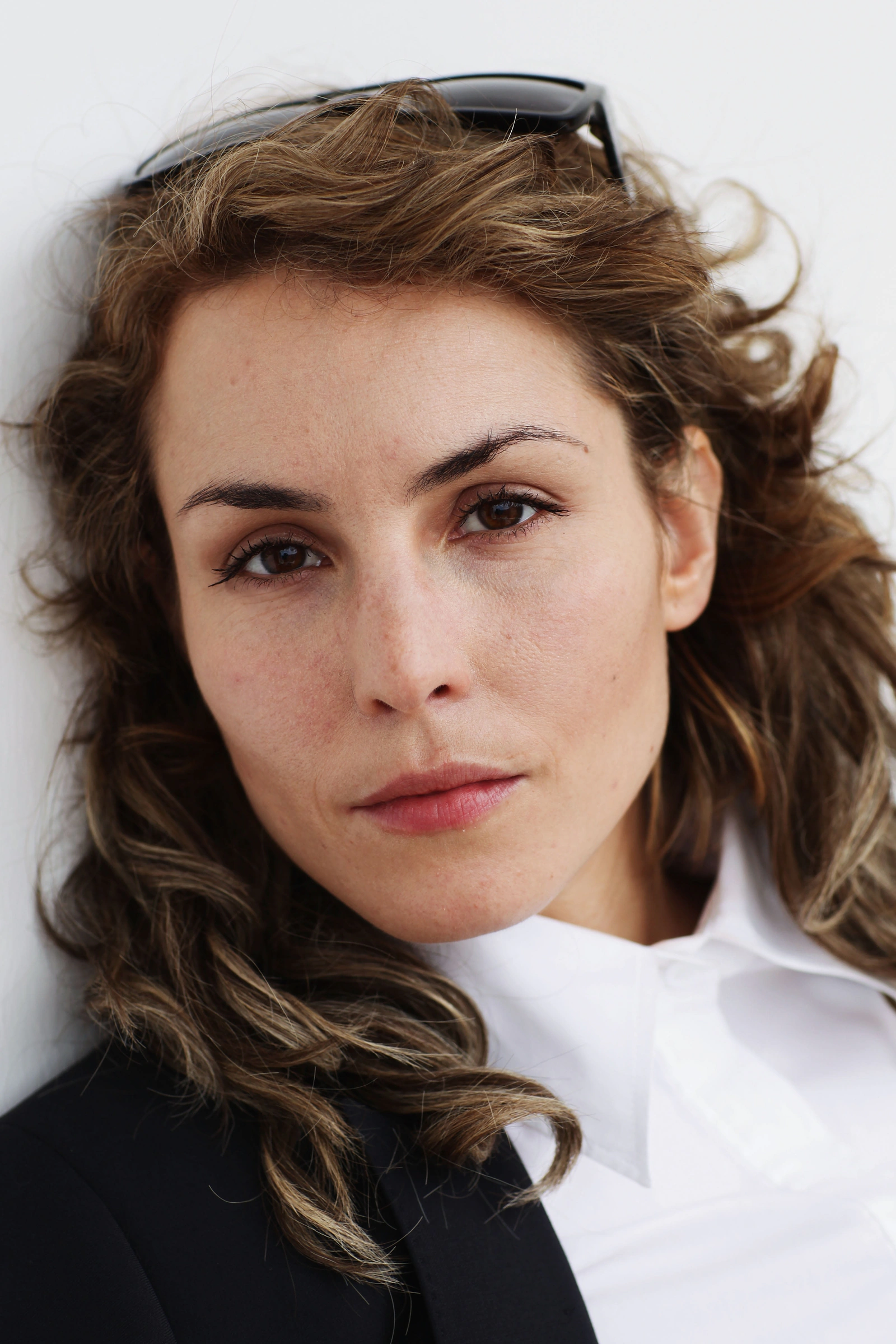
| 13 Quotes | |
| Born as | Noomi Norén |
|---|---|
| Occup. | Actress |
| From | Sweden |
| Spouse | Ola Rapace (2001-2011) |
| Born | December 28, 1979 Hudiksvall, Gävleborg, Sweden |
| Age | 46 years |
| Cite | |
Citation Formats
APA Style (7th ed.)
Noomi rapace biography, facts and quotes. (2026, August 13). FixQuotes. https://fixquotes.com/actors/noomi-rapace/
Chicago Style
"Noomi Rapace biography, facts and quotes." FixQuotes. August 13, 2026. https://fixquotes.com/actors/noomi-rapace/.
MLA Style (9th ed.)
"Noomi Rapace biography, facts and quotes." FixQuotes, 13 Aug. 2026, https://fixquotes.com/actors/noomi-rapace/. Accessed 11 Oct. 2026.
Early Life and Background
Noomi Rapace was born Noomi Noren on December 28, 1979, in Hudiksvall, Sweden, into a family marked by artistic aspiration, movement, and fracture. Her mother, Nina Noren, was a Swedish actress; her father was the Spanish flamenco singer Rogelio Duran. She grew up largely without him, and the absence mattered. Rapace's childhood was divided between Sweden and Iceland, where her mother moved with her and her stepfather, an Icelandic horse breeder. That early crossing of borders - linguistic, emotional, cultural - gave her a restless identity long before fame did. She has often seemed less like a performer who entered roles than someone formed by instability into a person capable of living inside them.
At seven, after appearing in a small role in the Icelandic film In the Shadow of the Raven, she discovered both the intoxication of performance and the possibility of self-invention. Yet her youth was not orderly. By her own account, adolescence brought rebellion, drifting, and proximity to self-destruction. The intensity that later electrified audiences was first a survival mechanism. She has described a teenager who had to choose between disintegration and purpose, and that choice became central to her public image: not the polished Scandinavian star, but a woman who made discipline out of chaos and turned injury into force.
Education and Formative Influences
Rapace returned to Sweden in her teens and enrolled at the Sodra Latin school in Stockholm, one of the country's notable arts-oriented institutions, before continuing her acting training in Skara. Formal education mattered, but less as genteel cultivation than as a way to harness instinct. Her formative influences were unusually mixed: Icelandic saga severity, Swedish emotional restraint, her mother's working actor's life, and the raw physicality of a youth spent around animals, weather, and conflict rather than refinement. She entered the profession without the decorative distance that often separates actors from the lives they depict. The result was a style built early on from observation, bodily commitment, and a willingness to inhabit people who were damaged, desperate, or socially difficult.
Career, Major Works, and Turning Points
After work in Swedish television and film through the early 2000s, Rapace became widely known in Scandinavia with Daisy Diamond (2007), in which her fearless portrayal of a young mother on the edge announced an actor of uncommon risk tolerance. Her breakthrough to international prominence came with Stieg Larsson's Millennium adaptations - The Girl with the Dragon Tattoo, The Girl Who Played with Fire, and The Girl Who Kicked the Hornets' Nest - where her Lisbeth Salander was not merely a victim-avenger but a compact storm of intelligence, trauma, sexuality, and contempt for power. The role made her bankable and globally legible, yet she avoided settling into repetition. She moved into English-language cinema with Sherlock Holmes: A Game of Shadows, then took a decisive leap by playing Elizabeth Shaw in Ridley Scott's Prometheus (2012), carrying a large-scale science-fiction film through vulnerability, terror, and ferocious resolve. She followed with Dead Man Down, The Drop, Child 44, Unlocked, Bright, What Happened to Monday, and You Won't Be Alone, among others, often choosing women under siege, in disguise, or in metamorphosis. Personally, too, turning points were stark: marriage to actor Ola Rapace, the birth of their son, divorce, and the adoption of Rapace as her professional surname. Across these shifts, she built a transnational career without smoothing away the severity that first defined her.
Philosophy, Style, and Themes
Rapace's acting philosophy begins in refusal: refusal of predictability, vanity, and emotional safety. “I hate when you see a film and after one scene you know what's going to happen and you can predict the whole story”. That impatience with formula explains both her attraction to psychologically unstable material and her resistance to ornamental stardom. She does not project neutrality; she courts abrasion. “I'm interested in people's darker side, the ones that aren't easy and well balanced. The cracks”. The remark is practically a key to her filmography. From Salander to Shaw to the many fugitives, impostors, mothers, killers, and survivors she has played, Rapace is drawn to characters whose brokenness is not incidental but revelatory. She treats damage as narrative truth.
Her style is intensely physical, sometimes animalistic, grounded in the belief that psychology is carried in muscle, breath, and impact. “I like doing fight scenes. I always have, and I insist on doing as much of that action as they'll let me do. I think that's easy for me”. The line is not bravado so much as biography: action is easy because bodily extremity has always been one of her native languages. Yet the larger pattern in her work is existential rather than athletic. Again and again she plays women who deny passivity and force identity into being under pressure. That preference reflects a private ethic visible in interviews - stoicism without coldness, will without sentimentality. Even when her characters are wounded, Rapace plays them from the inside out, as if agency begins with the refusal to narrate oneself as defeated.
Legacy and Influence
Noomi Rapace altered the international image of the Scandinavian screen actor. She arrived from Swedish and Icelandic contexts often stereotyped abroad as cool, minimalist, and decorous, and instead offered volatility, danger, and flesh-and-blood contradiction. Her Lisbeth Salander remains one of the defining performances of 21st-century European crime cinema, but her larger legacy is the proof that a non-English-language breakthrough need not end in assimilation. She carried her accent, severity, and taste for difficult material into global production without becoming generic. For younger actors, especially women, she stands as an example of how to convert personal turbulence into artistic method while resisting typecasting through intensity rather than reinvention for its own sake. Her career suggests that the most durable screen presence is not polish but pressure - the feeling that, in every role, something genuinely at stake is being lived rather than performed.
Last updated August 2026 · Editorial standards
Our collection contains 13 quotes written by Noomi, under the main topics: Art - Deep - Humility - Movie - Writing.
Source / external links