
Orlando Bloom Biography Quotes 47 Report mistakes
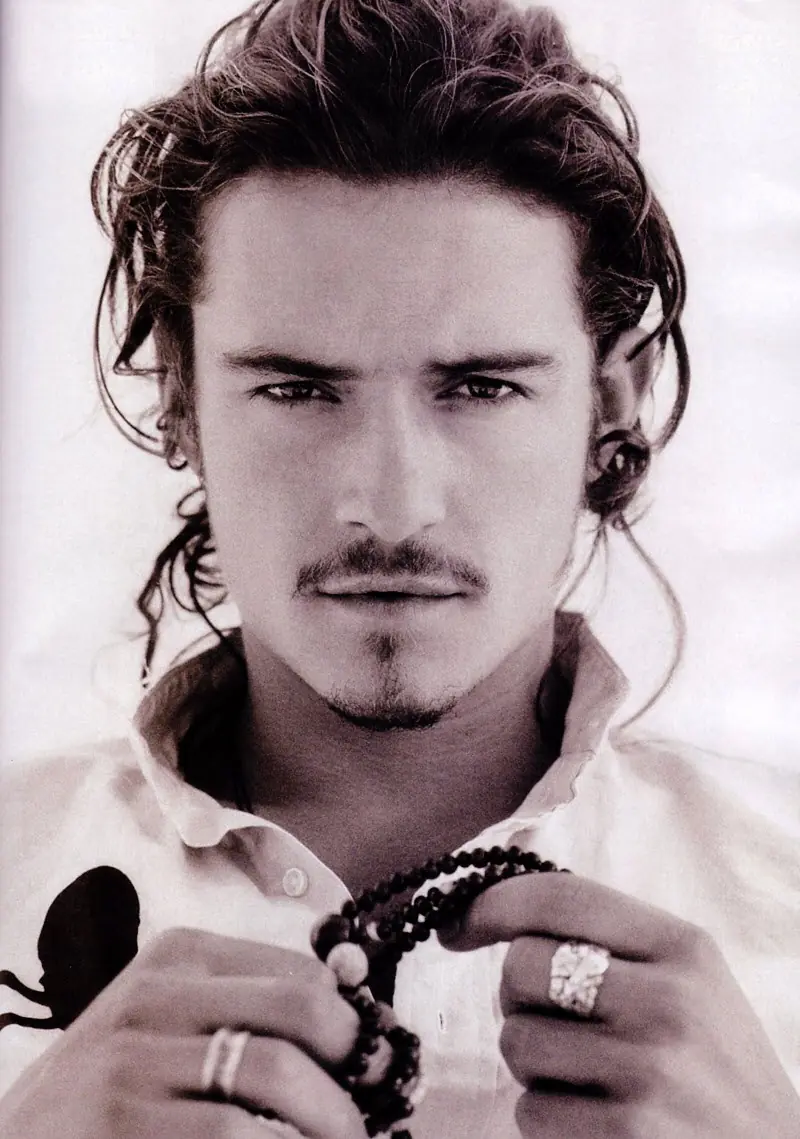
| 47 Quotes | |
| Occup. | Actor |
| From | England |
| Born | January 13, 1977 |
| Age | 49 years |
Orlando Jonathan Blanchard Copeland Bloom was born on January 13, 1977, in Canterbury, Kent, and grew up in a quietly complicated household that later shaped his public openness about identity and resilience. His mother, Sonia Constance Josephine Bloom, ran the home with a determination that friends often described as purposeful and ethically serious. The man Orlando believed to be his father, South African-born novelist Harry Bloom, died when Orlando was four.
Only later did Bloom learn that his biological father was Colin Stone, a family friend and political activist. That fact did not simply revise a family tree - it deepened his sense that a life can be both constructed and chosen, a theme that would recur in his work and philanthropic identity. Raised with his sister, Samantha, he also confronted dyslexia, an early challenge that pushed him toward physical expression and performance as an alternate literacy.
Education and Formative Influences
Bloom attended St Edmund's School in Canterbury and then trained at the National Youth Theatre in London, where stage discipline and ensemble culture refined what had begun as a boyhood attraction to movement, costumes, and story. He continued at the British American Drama Academy and entered the Guildhall School of Music and Drama, graduating in 1999. At Guildhall he internalized the craft-first ethic of British classical training, including voice and text work, while also learning to manage vulnerability as a tool rather than a liability - crucial for an actor who would quickly be asked to embody mythic poise under intense commercial scrutiny.
Career, Major Works, and Turning Points
Bloom's breakthrough arrived almost immediately: cast as Legolas in Peter Jackson's The Lord of the Rings trilogy (2001-2003), he became a global face of modern fantasy, translating athletic grace into emotional legibility within a sprawling ensemble. He followed with Pirates of the Caribbean: The Curse of the Black Pearl (2003) and its sequels as Will Turner, a romantic lead tasked with anchoring spectacle with sincerity. Bloom then tested range in Troy (2004) as Paris and in Kingdom of Heaven (2005) as Balian of Ibelin, later gaining critical reassessment through the film's director's cut. After a period of selective choices - including Elizabethtown (2005), The Three Musketeers (2011), and the indie-oriented The Good Doctor (2011) - he returned to Middle-earth in The Hobbit films (2013-2014) and later reentered franchise television with Carnival Row (2019-2023). Parallel to screen work, he maintained a stage reputation, notably on Broadway in Romeo and Juliet (2013), where the boyish icon had to earn his authority in real time.
Philosophy, Style, and Themes
Bloom's screen persona is built on a tension between stillness and velocity: the calm gaze of the romantic hero and the kinetic body of the stunt-ready adventurer. That duality reflects a psychology shaped by early uncertainty - a desire to prove reliability through craft, and to find belonging inside ensembles large enough to absorb personal ambiguity. He tends to play characters who are defined not by cynicism but by the pressure to remain decent when history, war, or supernatural fate tries to reclassify them as expendable.
His interviews often reveal an actor trying to domesticate fame by framing it as gratitude and effort rather than destiny: "I'm amazed that things have panned out the way they have. I always say I'm so lucky, though my mum always says, "You make your own luck."" . The line is telling - he values providence, but he clings to agency. He also returns to an ethic of surrender that reads less like passivity than a practiced counterweight to anxiety: "Whatever happens in life is fine - just trust in that". Even his self-mythologizing about Legolas emphasizes balance and rootedness as a discipline: "Elves are like trees, grounded and focused from the trunk down but graceful and agile on top". Across roles and public life, Bloom's themes converge on romantic idealism, bodily mastery, and the search for inner steadiness amid the machinery of global entertainment.
Legacy and Influence
Bloom belongs to the cohort that proved British classical training could scale into 21st-century franchise culture without abandoning sincerity. His Legolas helped set the template for the modern fantasy archetype - elegant, lethal, emotionally restrained - while Will Turner modeled a different kind of masculinity: principled, yearning, and willing to be overshadowed by louder eccentrics to serve the story. He has also used visibility for advocacy, including long-running work as a UNICEF Goodwill Ambassador, aligning his public image with humanitarian concern rather than purely celebrity branding. In the longer view, his influence is less about a single masterpiece than about a durable screen language: romantic gravity plus physical precision, offered with an earnestness that helped make two defining blockbuster universes feel human enough to endure.
Our collection contains 47 quotes who is written by Orlando, under the main topics: Witty One-Liners - Wisdom - Learning - Nature - Free Will & Fate.
Other people realated to Orlando: Mark Ruffalo (Actor), Johnny Depp (Actor), Diane Kruger (Model), Katy Perry (Musician), Elijah Wood (Actor), Rose Byrne (Actress), Karl Urban (Actor), Michael Apted (Director), Wolfgang Petersen (Director), Mackenzie Crook (Actor)
Source / external links