
Peter Ustinov Biography Quotes 35 Report mistakes
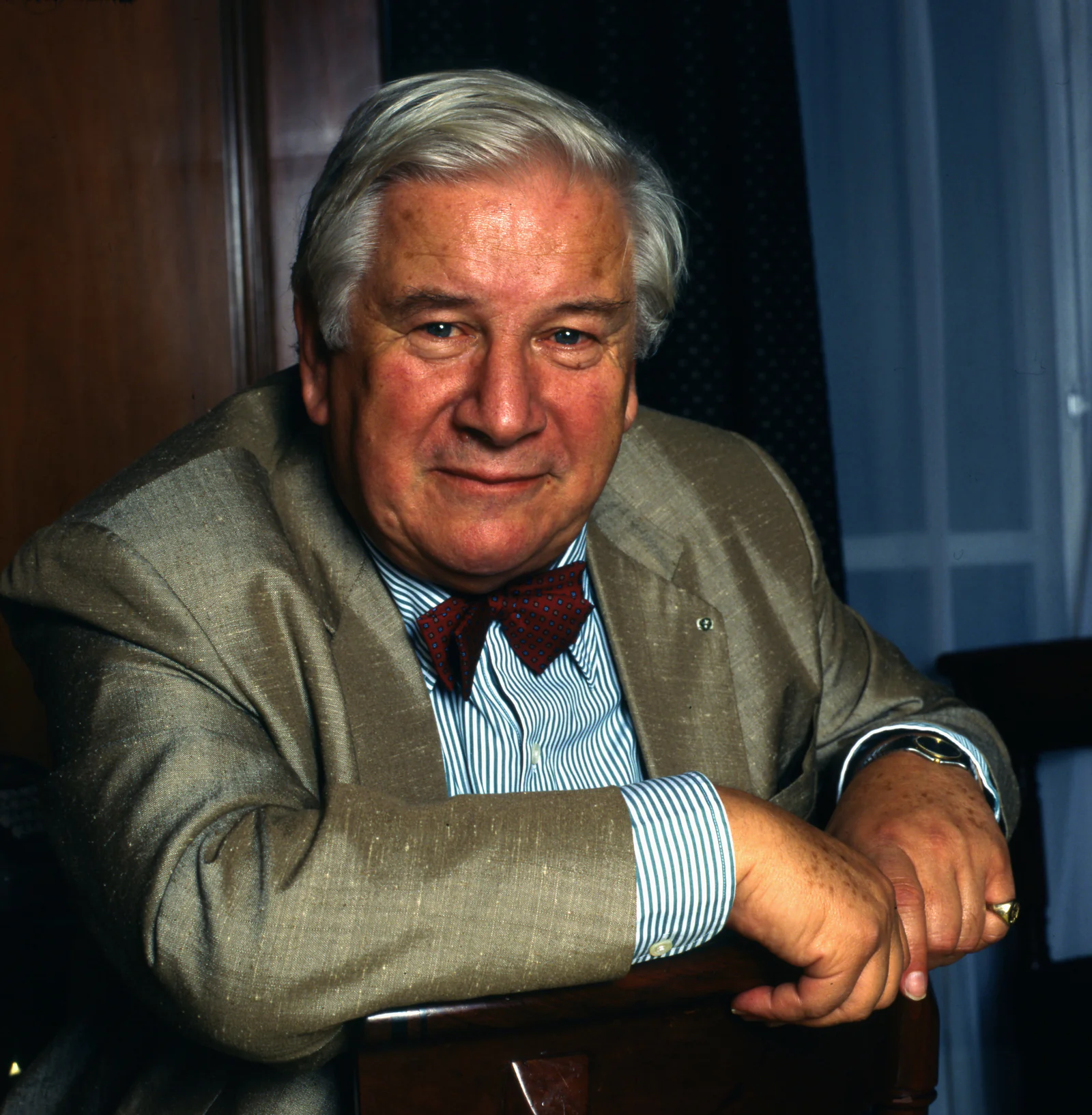
| 35 Quotes | |
| Born as | Peter Alexander von Ustinov |
| Known as | Sir Peter Ustinov |
| Occup. | Actor |
| From | United Kingdom |
| Spouses | Isolde Denham (1940-1950) Suzanne Cloutier (1954-1971) Helene du Lau d'Allemans (1972) |
| Born | April 16, 1921 London, England, United Kingdom |
| Died | March 28, 2004 Genolier, Vaud, Switzerland |
| Cause | heart failure |
| Aged | 82 years |
| Cite | |
Citation Formats
APA Style (7th ed.)
Peter ustinov biography, facts and quotes. (2026, February 2). FixQuotes. https://fixquotes.com/actors/peter-ustinov/
Chicago Style
"Peter Ustinov biography, facts and quotes." FixQuotes. February 2, 2026. https://fixquotes.com/actors/peter-ustinov/.
MLA Style (9th ed.)
"Peter Ustinov biography, facts and quotes." FixQuotes, 2 Feb. 2026, https://fixquotes.com/actors/peter-ustinov/. Accessed 12 Feb. 2026.
Early Life and Background
Peter Alexander von Ustinov was born on 16 April 1921 in London, United Kingdom, into a cosmopolitan, many-tongued household that seemed to condense the upheavals of 20th-century Europe into one dinner table. His father, Jona (Iona) von Ustinov, a German-born journalist of Russian and Ethiopian ancestry, and his mother, Nadia Benois, came from the Russian artistic world; the Benois name carried the prestige of painters, designers, and theater innovators who had moved between St. Petersburg, Paris, and London. The young Ustinov absorbed accents, manners, and assumptions as if they were props waiting to be repurposed.Interwar London gave him both distance from continental violence and constant proximity to its refugees, rumors, and arguments. That collision of safety and anxiety helped form his lifelong double vision: the ability to treat solemnity as performance without denying its stakes. From early on he was less drawn to a single identity than to the act of translation itself - between classes, nations, temperaments, and the public masks people wore to survive.
Education and Formative Influences
He attended Westminster School briefly and trained at the London Theatre Studio under Michel Saint-Denis, whose emphasis on ensemble discipline and psychological truth offered a counterweight to Ustinov's natural flamboyance. He grew up listening to Russian, German, French, and English, and the ear he developed for cadence became a private tool for empathy: to imitate was not merely to mock but to inhabit. The approach suited a wartime generation that learned, early, how quickly certainty could become costume.Career, Major Works, and Turning Points
Ustinov moved rapidly from stage actor to writer-director, debuting on the West End before serving during World War II in British military film and propaganda units. The war honed his understanding of persuasion and spectacle, later visible in his satirical intelligence. In film he became internationally prominent with vivid supporting roles, winning Academy Awards for Spartacus (1960) and Topkapi (1964). His range ran from the subversive Nero of Quo Vadis (1951) to the warm authority of Logan in The Life and Death of Colonel Blimp (in which he also acted, 1943) and the dignified diplomacy of Billy Budd (1962), which he wrote, produced, directed, and starred in. From the 1970s he turned a gift for observation into enduring popular fame as Agatha Christie's Hercule Poirot in Death on the Nile (1978) and Evil Under the Sun (1982), while also becoming a widely heard public intellectual, humanitarian spokesperson, and raconteur whose one-man performances made biography, politics, and comedy share the same spotlight. He was knighted in 1990 and died on 28 March 2004 in Switzerland.Philosophy, Style, and Themes
Ustinov's inner life revolved around a paradox: he distrusted grand seriousness, yet believed moral attention was the only subject worthy of art. That tension shaped his performances, which often looked expansive and improvisational while being tightly controlled - a smile masking a scalpel. He framed humor as a method of truth-telling rather than escape, insisting that "Comedy is simply a funny way of being serious". The line is less a quip than a key to his psychology: laughter, for him, was a socially acceptable form of candor, a way to smuggle critique past the defenses of audiences and authorities.His characters repeatedly expose the theater of power - emperors, con men, detectives, bureaucrats - figures who survive by reading others. Ustinov read them with the eyes of someone raised amid displaced elites and democratic modernity, sympathetic to human weakness but unsparing about self-deception. Responsibility, not self-display, became his ethical anchor; he argued that "It is our responsibilities, not ourselves, that we should take seriously". Even his famous optimism was hard-earned rather than naive, defined against the century's wreckage: "I am an optimist, unrepentant and militant. After all, in order not to be a fool an optimist must know how sad a place the world can be. It is only the pessimist who finds this out anew every day". In that stance you can hear the child of emigres and the veteran of wartime messaging - a man who understood despair's seductions and chose, deliberately, performance as a form of civic hope.
Legacy and Influence
Ustinov left a model of the artist as multilingual mediator: actor, author, director, and public moralist who could move from epic cinema to intimate satire without losing his human scale. Later performers of character comedy and literary screen acting drew on his example of intelligence that never needed to sneer, while his Poirot helped define the screen detective as a comic instrument capable of ethical clarity. His lasting influence lies in the permission he gave audiences to think while laughing, and to treat culture - like identity - as something you build by listening closely, then speaking with precision and mercy.Our collection contains 35 quotes written by Peter, under the main topics: Witty One-Liners - Ethics & Morality - Wisdom - Friendship - Love.
Other people related to Peter: David Niven (Actor), Terence Stamp (Actor), Jane Birkin (Actress), Melina Mercouri (Actress), Maximilian Schell (Actor), Deborah Kerr (Actress), Guy Hamilton (Director), George Kennedy (Actor), Romain Gary (Novelist), Herbert Lom (Actor)
Frequently Asked Questions
- Peter Ustinov Spartacus: He played Lentulus Batiatus in Spartacus (1960) and won the Oscar for Best Supporting Actor
- What did Peter Ustinov die of: Heart failure (2004)
- Peter Ustinov Poirot: He played Hercule Poirot in Death on the Nile (1978), Evil Under the Sun (1982), and Appointment with Death (1988)
- How old was Peter Ustinov? He became 82 years old
Source / external links