
Robert De Niro Biography Quotes 12 Report mistakes
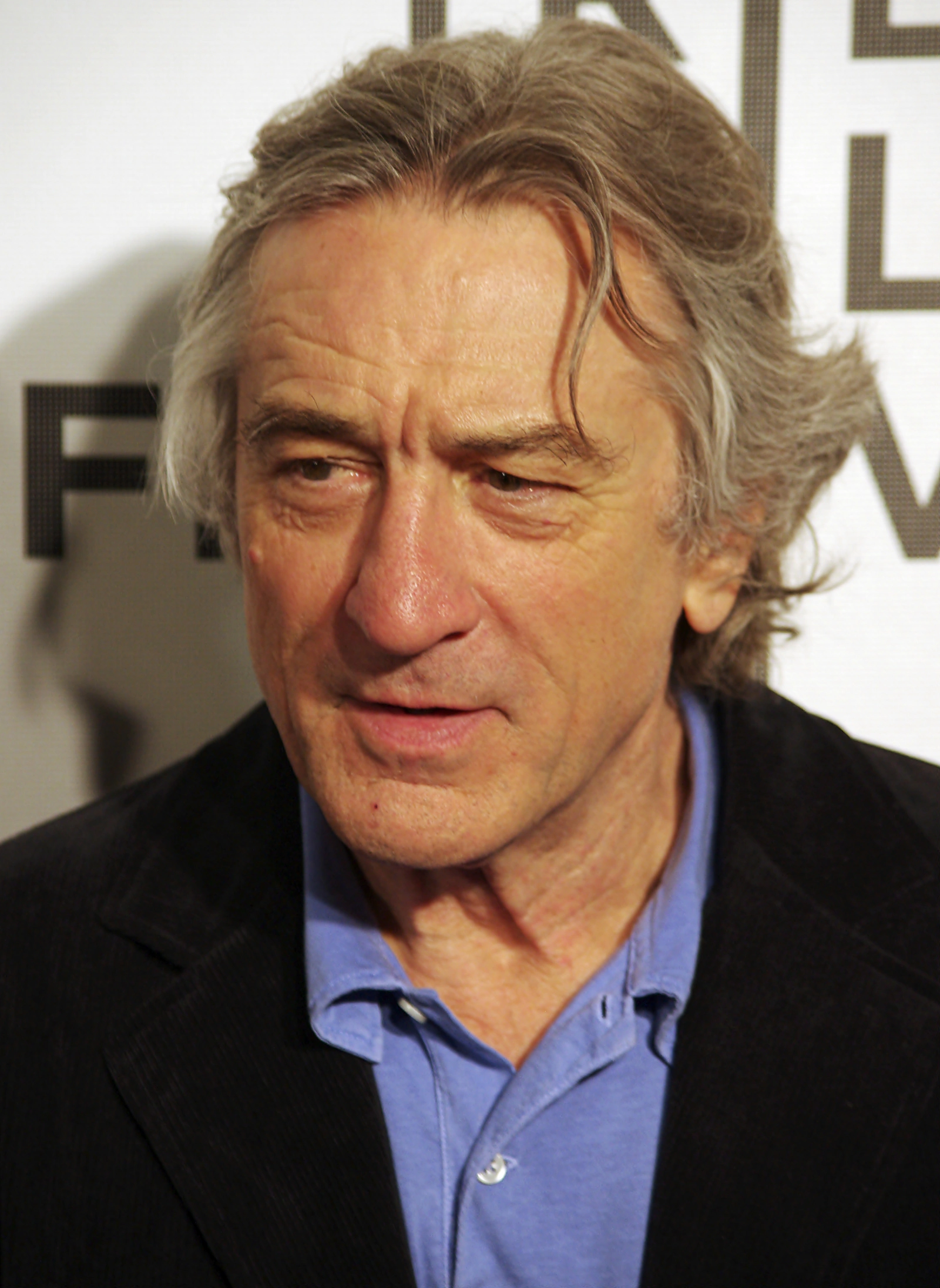
Attr: David Shankbone, CC BY 3.0
| 12 Quotes | |
| Occup. | Actor |
| From | USA |
| Born | August 17, 1943 New York City |
| Age | 82 years |
| Cite | |
Citation Formats
APA Style (7th ed.)
Robert de niro biography, facts and quotes. (2026, February 11). FixQuotes. https://fixquotes.com/actors/robert-de-niro/
Chicago Style
"Robert De Niro biography, facts and quotes." FixQuotes. February 11, 2026. https://fixquotes.com/actors/robert-de-niro/.
MLA Style (9th ed.)
"Robert De Niro biography, facts and quotes." FixQuotes, 11 Feb. 2026, https://fixquotes.com/actors/robert-de-niro/. Accessed 26 Mar. 2026.
Early Life and Background
Robert Anthony De Niro Jr. was born on August 17, 1943, in Manhattan, New York City, and raised primarily in Greenwich Village and Little Italy - neighborhoods where street-level performance and guarded self-presentation were daily arts. His parents, Virginia Admiral and Robert De Niro Sr., were painters associated with the postwar New York art world; their marriage ended when he was young, leaving him close to his mother while still absorbing the presence of his father as a brilliant, complicated figure on the margins of domestic life.Asthma and shyness pushed him inward, yet the city pushed back: stoops, storefronts, and hard-edged talk offered a schooling in posture and subtext. Friends nicknamed him "Bobby Milk" for his pallor, but the name also hints at the era's pressure to harden quickly. In a New York that prized toughness and quick reading of motives, De Niro learned to watch more than he spoke, training the quiet intensity that later made his stillness feel like action.
Education and Formative Influences
He began acting young, appearing as the Cowardly Lion in a school production of "The Wizard of Oz", then pursued craft over celebrity through a sequence of serious teachers and studios: the Stella Adler Conservatory, Lee Strasberg's Actors Studio, and instruction with Sanford Meisner. From Adler he took an insistence on imagination and detail; from Method-derived practice he took the discipline of emotional truth rooted in behavior. The 1950s-1960s New York theater scene, the afterglow of neorealism, and the rise of American independent filmmaking collectively formed his sensibility: acting as research, listening as technique, and character as a lived environment rather than a pose.Career, Major Works, and Turning Points
De Niro's early film work included Brian De Palma collaborations ("Greetings", 1968; "Hi, Mom!", 1970), but his defining ascent came with Martin Scorsese, beginning with "Mean Streets" (1973), which fused Catholic guilt, neighborhood codes, and explosive tenderness. He won his first Academy Award for playing young Vito Corleone in "The Godfather Part II" (1974), then hardened his reputation with extreme preparation: physical transformation and a boxer's regimen for "Raging Bull" (1980), which earned him a second Oscar and set a benchmark for embodied performance. Across the 1970s-1990s he became a central face of American masculinity under stress - "Taxi Driver" (1976), "The Deer Hunter" (1978), "Once Upon a Time in America" (1984), "The Untouchables" (1987), "Goodfellas" (1990), "Cape Fear" (1991), "Casino" (1995), and "Heat" (1995) - while also proving comic timing and cultural reach in "Midnight Run" (1988), "Analyze This" (1999), and later studio hits. He expanded into producing and civic-cultural entrepreneurship, co-founding the Tribeca Film Festival in 2002 as a statement about New York's artistic resilience after 9/11, and remained active in prestige projects well into later life, including "The Irishman" (2019) and "Killers of the Flower Moon" (2023).Philosophy, Style, and Themes
De Niro's artistry is built on choices that hide their labor. He is famous for preparation, but what registers on screen is the opposite of display: the sense that a character is thinking around the words, protecting something. That aligns with his own maxim, “It's important not to indicate. People don't try to show their feelings, they try to hide them”. In psychological terms, his performances treat emotion as contraband - smuggled through micro-gestures, pauses, averted eyes, a sudden tightening of the jaw. The result is a tension between inner life and public mask, a tension that suits stories about men who confuse control with safety.His method is not mere immersion but selection, the severe editing of behavior until only the inevitable remains. “The talent is in the choices”. That sentence captures why his characters feel overdetermined - not because they are simple, but because every visible action implies a history of invisible decisions. Even at his most violent or expansive, he plays contradiction as the baseline, a worldview summarized by “There's nothing more ironic or contradictory than life itself”. This is why his iconic figures - Travis Bickle, Jake LaMotta, Jimmy Conway, Neil McCauley - can be both frightening and oddly intimate: they are built from recognizable defenses, not exotic evil, and the camera becomes a place where repression speaks.
Legacy and Influence
De Niro helped redefine late-20th-century screen acting toward behavioral realism and moral complexity, shaping how filmmakers write masculinity, criminality, and interior conflict. His collaborations with Scorsese set an American benchmark for actor-director symbiosis, while his transformations and restraint influenced generations from character actors to blockbuster leads. Beyond performance, his role in building Tribeca into a global festival showed a sustained commitment to the ecology of film, not just its spotlight. In an era that increasingly rewards personality, his enduring impact lies in the opposite wager: the actor as craftsman, letting the work - and the silences within it - carry the biography.Our collection contains 12 quotes written by Robert, under the main topics: Witty One-Liners - Wisdom - Art - Friendship - Sarcastic.
Other people related to Robert: Stella Adler (Actress), Jay Roach (Director), David O. Russell (Director), Brian De Palma (Director), Roger Corman (Producer), Leonardo DiCaprio (Actor), Jean Reno (Actor), Nick Nolte (Actor), Cybill Sheperd (Actress), Kim Basinger (Actress)
Source / external links