
Robert De Niro Biography Quotes 12 Report mistakes
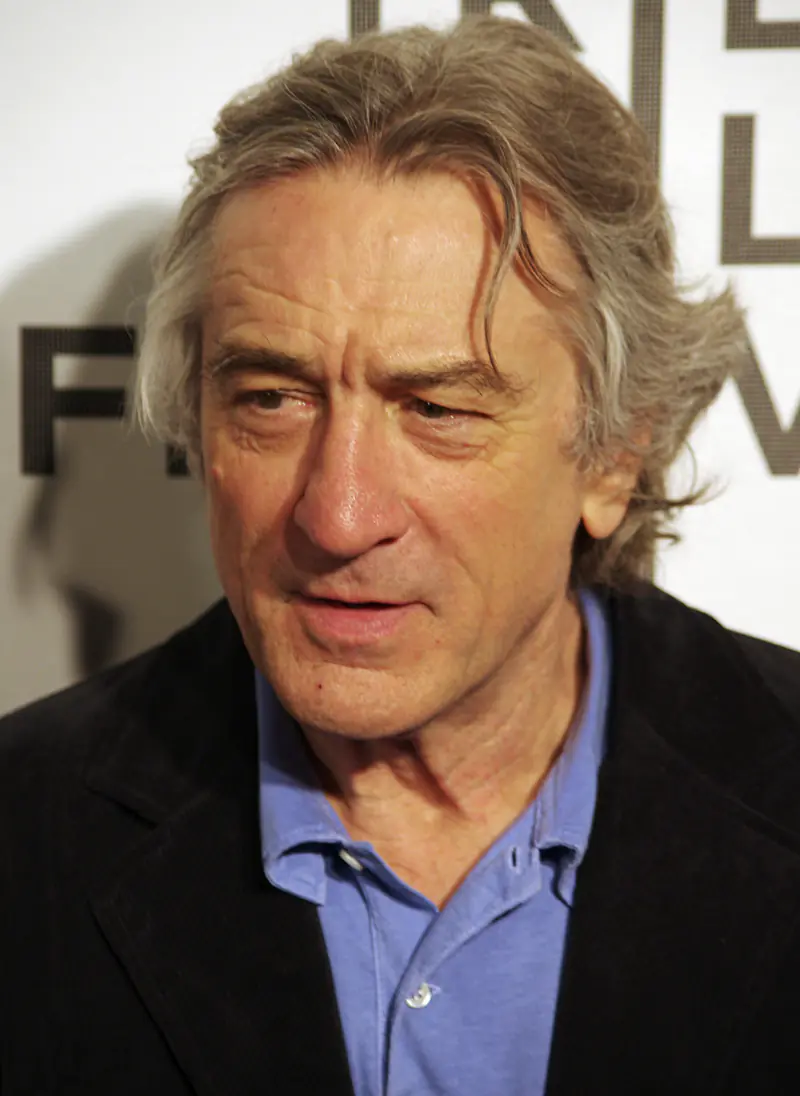
Attr: David Shankbone, CC BY 3.0
| 12 Quotes | |
| Occup. | Actor |
| From | USA |
| Born | August 17, 1943 New York City |
| Age | 82 years |
Robert De Niro was born on August 17, 1943, in New York City to painter and sculptor Robert De Niro Sr. and painter and poet Virginia Admiral. Raised primarily in Manhattan, particularly in Greenwich Village and Little Italy, he grew up surrounded by artists, writers, and performers. His parents separated when he was young, but both remained influential presences. As a boy, he acquired the nickname Bobby Milk, a reference to his pallor, and he found early escape and expression in school productions, including a childhood turn as the Cowardly Lion in a local staging of The Wizard of Oz.
De Niro attended several schools in New York before committing fully to acting. He began formal study with Stella Adler, whose emphasis on imagination and text complemented his disciplined approach, and he later worked at the Actors Studio, where Lee Strasberg encouraged detailed character preparation. Those formative years cemented habits that would define his career: rigorous research, transformation, and a willingness to vanish into a role.
Training and Stage Beginnings
De Niro appeared in off-Broadway productions and small film parts while honing his craft. He collaborated early with Brian De Palma on low-budget features, including The Wedding Party (shot in the early 1960s and released later), Greetings, and Hi, Mom!, work that introduced him to a circle of young filmmakers and actors in New York. These experiences taught him the resourcefulness of independent film and the value of improvisation, lessons that would prove essential as his ambitions grew.
His first major attention came with Bang the Drum Slowly, in which he played a vulnerable baseball player, revealing a delicacy and emotional openness that contrasted with the toughness often associated with his later roles. Around the same time, he began a creative partnership that would shape modern American cinema.
Breakthrough and Collaboration with Martin Scorsese
De Niro's long affiliation with director Martin Scorsese began with Mean Streets, sharing the screen with Harvey Keitel. The film's raw energy and street-level authenticity announced a new voice in American filmmaking. Their work together soon produced some of the era's most indelible characters: Travis Bickle in Taxi Driver, Jake LaMotta in Raging Bull, and later Jimmy Conway in Goodfellas, Sam Ace Rothstein in Casino, and Frank Sheeran in The Irishman. Scorsese's meticulous direction and De Niro's exhaustive preparation set a standard for director-actor collaborations, often joined by performers like Joe Pesci and, later, Leonardo DiCaprio.
De Niro's performance as young Vito Corleone in Francis Ford Coppola's The Godfather Part II brought him widespread recognition and an Academy Award. For the role, he studied Italian dialect and mannerisms to inhabit a character already made iconic by Marlon Brando, crafting a portrayal that felt both original and continuous with the Corleone mythos.
Range and Iconic Roles
Beyond crime dramas, De Niro explored a broad range of genres. He starred in Michael Cimino's The Deer Hunter, in Sergio Leone's Once Upon a Time in America alongside James Woods, and in The King of Comedy as Rupert Pupkin opposite Jerry Lewis and Sandra Bernhard, a performance that presaged later explorations of celebrity culture. In Terry Gilliam's Brazil, he delivered a memorable turn that underscored his taste for eccentric, risk-taking roles.
He proved adept at comedy, playing against his tough-guy image in Midnight Run with Charles Grodin, Analyze This opposite Billy Crystal, and the Meet the Parents series with Ben Stiller. Dramatic highlights continued with Awakenings alongside Robin Williams, Cape Fear directed by Scorsese with Juliette Lewis and Nick Nolte, and Heat, a Michael Mann crime saga that paired him with Al Pacino in a celebrated face-off. Collaborations with strong ensembles remained a hallmark, whether with Sharon Stone in Casino, Jodie Foster in Taxi Driver, or Meryl Streep in Falling in Love.
Director and Producer
De Niro moved behind the camera with A Bronx Tale, adapted from Chazz Palminteri's play, which he also starred in, capturing the moral tensions and neighborhood textures of 1960s New York. He later directed The Good Shepherd, a chronicle of the early CIA featuring Matt Damon and Angelina Jolie. Both films drew on his fascination with discipline, loyalty, and the costs of secrecy.
In 1989 he co-founded Tribeca Productions with Jane Rosenthal, producing both his own vehicles and projects for other filmmakers. After the September 11 attacks, he, Rosenthal, and Craig Hatkoff helped launch the Tribeca Film Festival to support lower Manhattan's cultural and economic recovery, turning it into a prominent platform for filmmakers worldwide.
Business Ventures and Philanthropy
Outside film sets, De Niro has been a visible New York entrepreneur. He co-founded Tribeca Grill with restaurateur Drew Nieporent and became a partner in the Nobu restaurant group with chef Nobu Matsuhisa and producer Meir Teper, growing it into a global hospitality brand. He also invested in the Greenwich Hotel, reinforcing his long-standing commitment to the vitality of downtown Manhattan. Through Tribeca and other initiatives, he has supported arts education, film preservation, and community revitalization.
Later Career and Recognition
De Niro remained prolific into the 21st century. He appeared in Ronin, Wag the Dog with Dustin Hoffman, and Jackie Brown for Quentin Tarantino. Working with David O. Russell, he earned renewed acclaim in Silver Linings Playbook with Bradley Cooper and Jennifer Lawrence, followed by roles in Joy and American Hustle's orbit of collaborators. He headlined The Intern with Anne Hathaway, displaying gentle comic timing.
The Irishman reunited him with Scorsese, Al Pacino, and Joe Pesci, with De Niro also serving as a producer as the film reached new audiences via streaming. He later starred in Joker for Todd Phillips, a project that echoed themes from The King of Comedy. In Killers of the Flower Moon, he rejoined Scorsese and acted opposite Leonardo DiCaprio, earning major awards recognition once again. Over the decades, he accumulated multiple Academy Award nominations and wins, as well as honors including Kennedy Center recognition and, in later years, a lifetime achievement award from the Screen Actors Guild. He received the Presidential Medal of Freedom from President Barack Obama, acknowledging his cultural impact.
Personal Life
De Niro's personal life has included marriages to actor and singer Diahnne Abbott, with whom he shares a son and who had a daughter he adopted, and to philanthropist Grace Hightower, with whom he has two children. He also had twins with model Toukie Smith. In recent years he welcomed a child with partner Tiffany Chen. He has spoken publicly about family, privacy, and the importance of balancing craft with responsibility. In 2003 he underwent successful treatment for prostate cancer, afterward returning quickly to work. He also helped honor his father's artistic legacy through an HBO documentary, Remembering the Artist: Robert De Niro, Sr., a personal tribute to the painter's life and work.
De Niro holds American and Italian citizenship, reflecting his heritage and lifelong ties to New York and to the broader traditions that shaped him. He remains an advocate for the arts and for New York City's cultural life, often collaborating with producers like Jane Rosenthal to support new talent.
Legacy
Robert De Niro's legacy rests on an uncommon blend of intensity, precision, and curiosity. His collaborations with Martin Scorsese reshaped possibilities for character-driven cinema, while work with filmmakers such as Francis Ford Coppola, Sergio Leone, Michael Mann, Brian De Palma, Quentin Tarantino, David O. Russell, and Todd Phillips showcased adaptability across styles and eras. Whether transforming physically for Raging Bull, studying dialect for The Godfather Part II, or riding the rhythms of comedy in Analyze This and Meet the Parents, he demonstrated that immersion and nuance could coexist with popular appeal.
As an actor, director, producer, and cultural entrepreneur, he helped build institutions that outlast any one performance, from Tribeca Productions and the Tribeca Film Festival to restaurants and hotels that anchor neighborhoods. Surrounded by peers and collaborators including Al Pacino, Joe Pesci, Harvey Keitel, Liza Minnelli, Jerry Lewis, Sharon Stone, Meryl Streep, Charles Grodin, and Leonardo DiCaprio, he has maintained a standard of commitment that influenced generations. His body of work, stretching from the streets of 1970s New York to contemporary global cinema, continues to define what audiences expect from serious screen acting.
Our collection contains 12 quotes who is written by Robert, under the main topics: Witty One-Liners - Wisdom - Art - Friendship - Work Ethic.
Other people realated to Robert: Robert Bolt (Playwright), Natalie Portman (Actress), David Mamet (Dramatist), Martin Scorsese (Director), Sean Connery (Actor), John Frankenheimer (Director), Elia Kazan (Director), Sylvester Stallone (Actor), Robert Duvall (Actor), Joe Pantoliano (Actor)
Source / external links