
Ron Moody Biography Quotes 9 Report mistakes
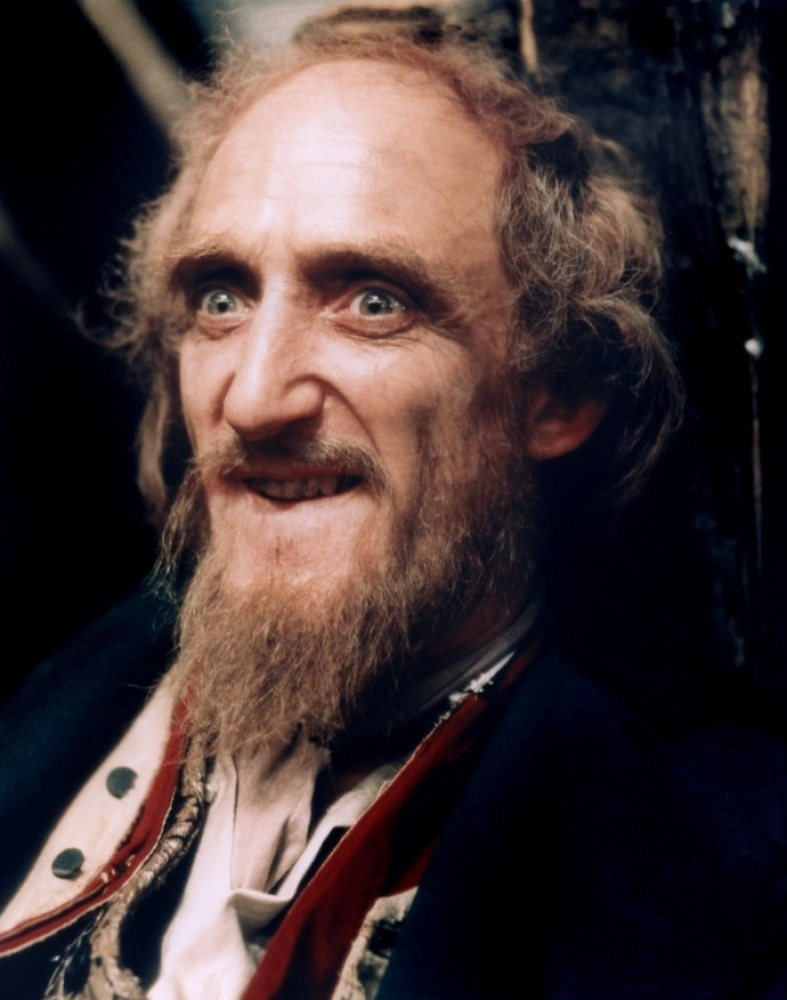
| 9 Quotes | |
| Occup. | Actor |
| From | United Kingdom |
| Born | January 8, 1924 |
| Age | 102 years |
| Cite | |
Citation Formats
APA Style (7th ed.)
Ron moody biography, facts and quotes. (2026, February 11). FixQuotes. https://fixquotes.com/actors/ron-moody/
Chicago Style
"Ron Moody biography, facts and quotes." FixQuotes. February 11, 2026. https://fixquotes.com/actors/ron-moody/.
MLA Style (9th ed.)
"Ron Moody biography, facts and quotes." FixQuotes, 11 Feb. 2026, https://fixquotes.com/actors/ron-moody/. Accessed 29 Mar. 2026.
Early Life and Background
Ronald Moodnick was born on January 8, 1924, in London, England, to Eastern European Jewish immigrant parents whose working-class pragmatism sat beside a love of music-hall wit and London street talk. He grew up in a city still marked by the aftershocks of the First World War, then reshaped by the Depression years - a place where entertainment offered both escape and a vocabulary for survival. From an early age he learned how quickly people could be read by voice, stance, and timing, skills that later made his performances feel at once theatrical and intimately observed.The Second World War arrived in his young adulthood and darkened the London he knew with blackout routines, bomb damage, and the constant reckoning of identity in an era of mass suspicion and mass heroism. For a Jewish Londoner, the war sharpened the moral stakes of caricature, belonging, and public perception; Moody would spend much of his career navigating how to make a character vivid without flattening the human being inside it. That tension - showmanship versus responsibility - became part of his private calculus as much as his public craft.
Education and Formative Influences
After wartime service in the British armed forces, Moody pursued acting seriously and trained at the Royal Academy of Dramatic Art (RADA), where classical technique, diction, and ensemble discipline met his instincts for comic elasticity. He absorbed Shakespeare and repertory tradition while also carrying a parallel education from variety and revue - the old British school in which laughter is earned beat by beat in front of a crowd that can turn cold in seconds. The collision of those worlds, "straight" acting and performer-led invention, became his lifelong method.Career, Major Works, and Turning Points
Moody built his postwar career through theatre and revue before his defining break: Fagin in Lionel Bart's Oliver! He originated the role on stage and then carried it into Carol Reed's 1968 film adaptation, a rare double claim that anchored his fame internationally and earned him an Academy Award nomination for Best Actor. That success did not lock him into one lane; he continued to work in British and American film and television, often playing outsiders, eccentrics, or cultivated villains with a comedian's ear for rhythm. Later credits ranged from high-profile screen roles - including the Bond film The Spy Who Loved Me (1977) - to television appearances that leaned on his distinctive voice and quick-switch intelligence, but Oliver! remained the gravitational center of his public identity.Philosophy, Style, and Themes
Moody understood acting as a living negotiation with an audience rather than a sealed museum piece. “For me, making the show work was getting belly laughs - like most variety artists. But the straight actor believes you fix your performance in rehearsal and that's it”. The remark is more than a preference for comedy; it reveals a psychology of alertness, a performer who mistrusted comfort and treated each performance as a test of connection. His best work carries that risk: the willingness to revise, to sharpen, to chase the exact contour of a laugh or a hush - and to accept that the audience, not the actor, has final authority.His Fagin embodied this philosophy. “My portrayal of Fagin was all to do with my experience in comedy and revue”. Instead of playing Fagin as pure menace or pure sentiment, Moody built him as a survival artist, a man who performs to stay alive - joking to deflect, bargaining to delay punishment, improvising identities as conditions change. That approach also helped him steer through the role's cultural hazards: he leaned into theatricality and human particularity rather than a single, fixed emblem. Looking back, he framed the achievement with humility and disbelief: “Playing Fagin in the play and film was a small miracle”. The line suggests an artist who saw success not as entitlement but as a fragile alignment of craft, casting, and moment.
Legacy and Influence
Ron Moody, who died in 2015, left a legacy defined by one of musical theatre's most indelible screen performances and by an actor's argument for flexibility: character as something discovered nightly, not embalmed at opening. His Fagin became a reference point for later interpretations, proof that a role can be comic without being weightless and theatrical without being hollow. More broadly, his career stands as a record of postwar British performance culture moving between stage and screen, between variety and repertory, and between the hunger for laughter and the hard question of what, exactly, a laugh costs.Our collection contains 9 quotes written by Ron, under the main topics: Writing - Honesty & Integrity - Work Ethic - Movie - Learning from Mistakes.
Source / external links