
Ryan Gosling Biography Quotes 21 Report mistakes
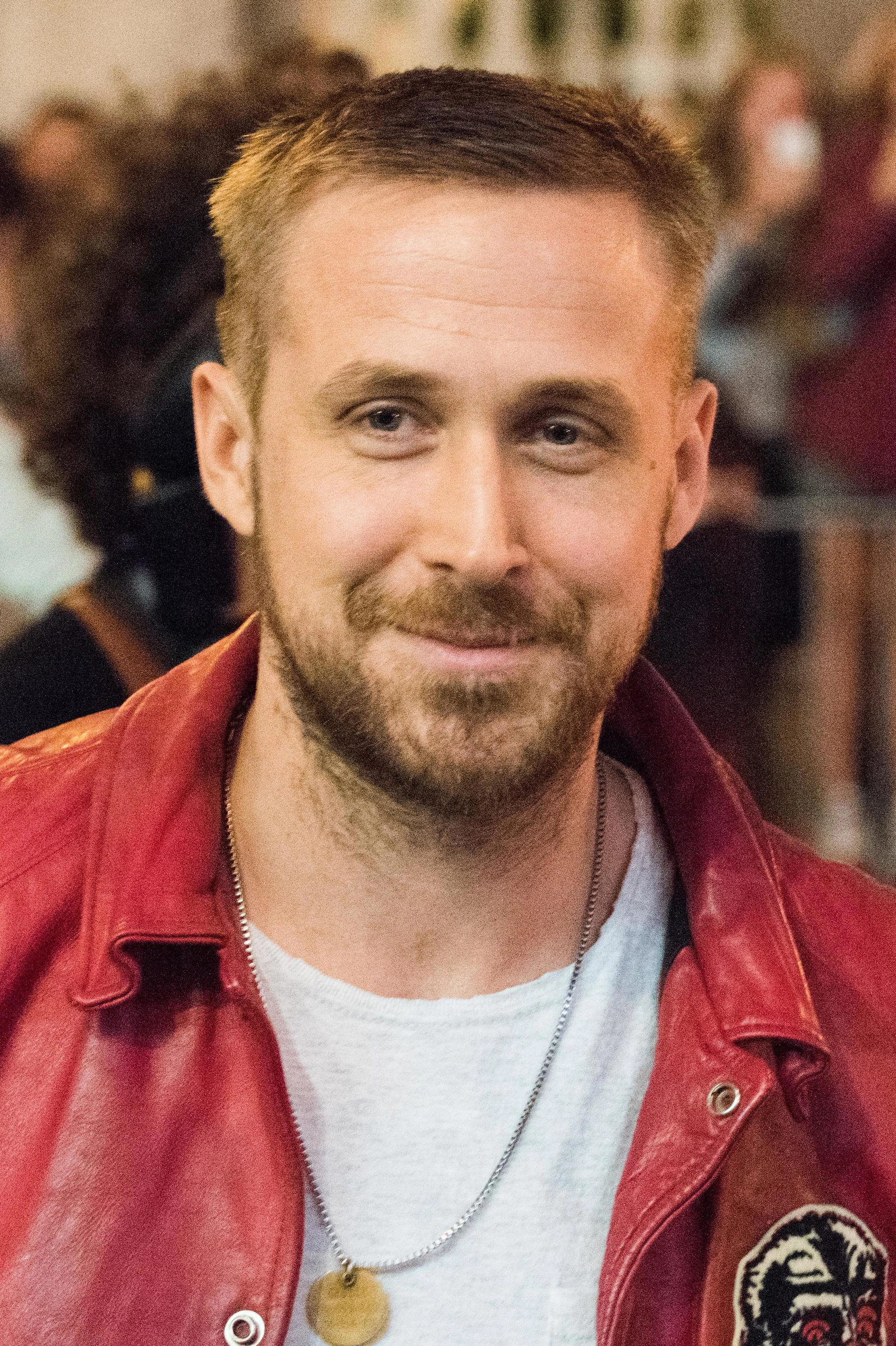
Attr: Mario A. P., CC BY-SA 2.0
| 21 Quotes | |
| Occup. | Actor |
| From | Canada |
| Born | November 12, 1980 |
| Age | 45 years |
| Cite | |
Citation Formats
APA Style (7th ed.)
Ryan gosling biography, facts and quotes. (2026, February 27). FixQuotes. https://fixquotes.com/actors/ryan-gosling/
Chicago Style
"Ryan Gosling biography, facts and quotes." FixQuotes. February 27, 2026. https://fixquotes.com/actors/ryan-gosling/.
MLA Style (9th ed.)
"Ryan Gosling biography, facts and quotes." FixQuotes, 27 Feb. 2026, https://fixquotes.com/actors/ryan-gosling/. Accessed 26 Mar. 2026.
Early Life and Background
Ryan Thomas Gosling was born on November 12, 1980, in London, Ontario, and grew up in a working-class Canadian household shaped by mobility and practical perseverance. His mother, Donna, worked as a secretary and his father, Thomas Ray Gosling, as a traveling salesman, a rhythm that carried the family between Ontario towns and into the day-to-day discipline of making do. That itinerant texture, along with a childhood steeped in popular music, television, and the small-stage performance culture of community life, helped form an early sense of acting as both escape and craft.As a boy he was drawn to impersonation and performance, but he also carried the inwardness of someone watching the room before joining it. Accounts from his youth often note shyness mixed with intensity - the kind of temperament that later reads clearly in his screen personas: men who appear self-contained yet leak feeling through gesture, posture, and silence. Canada in the late 1980s and early 1990s offered fewer glamour pathways than Los Angeles, but it did offer training grounds where ambition had to be justified by work rather than hype, a sensibility Gosling kept even after crossing the industry border.
Education and Formative Influences
Gosling attended school in Ontario and was drawn less to formal academics than to performance and music, developing an instinct for rhythm that would reappear in his timing as an actor and, later, as a singer-dancer. His formative influences were broadly pop - film, MTV-era music, and classic screen archetypes - but what mattered most was learning how to hold attention without excess. Early on he cultivated an approach that treated acting as a physical instrument: listening, adjusting, and letting the body do what words cannot.Career, Major Works, and Turning Points
His professional start came in youth television, most famously as a cast member on Disney Channel's "The Mickey Mouse Club" in the 1990s, followed by Canadian and U.S. TV work that taught him speed, technique, and camera fluency. A decisive turn arrived with the independent drama "The Believer" (2001), where his portrayal of a Jewish neo-Nazi announced a willingness to inhabit moral contradiction; "Half Nelson" (2006) consolidated his status with an Oscar-nominated performance as an addicted teacher whose charisma cannot outrun self-destruction. Mainstream stardom followed through "The Notebook" (2004), yet he resisted being fixed as a romantic lead, pivoting into noir and crime ("Drive", 2011), generational satire ("The Big Short", 2015), musical romance ("La La Land", 2016), and dystopian grandeur ("Blade Runner 2049", 2017). He also co-wrote and directed "Lost River" (2014), an uneven but revealing statement of taste - dreamlike, violent, and empathetic toward misfits. Across these turning points he repeatedly chose directors and material that emphasized mood and moral pressure over easy likability, even as he became an A-list figure and, in the 2020s, expanded his range again with broad comedy in "Barbie" (2023).Philosophy, Style, and Themes
Gosling's inner life as an artist is marked by fascination with emotional misalignment - characters who cannot produce the "correct" feeling on cue, or who feel too much and hide it. He has described that attraction plainly: “I think it's more interesting to see people who don't feel appropriately. I relate to that, because sometimes I don't feel anything at all for things I'm supposed to, and other times I feel too much. It's not always like it is in the movies”. That sentence functions like a key to his screen language: he plays the delay between stimulus and response, the moment when a person realizes he is failing at being the person the scene expects. The effect is often stoic on the surface, but psychologically porous - an actor using restraint as a form of confession.His performances also reflect a belief that film too often simplifies human capacity into tidy categories of hero, villain, or romantic prize. “I think we're very complicated and we're capable of all kinds of things, and movies don't reflect that”. In practice he seeks roles where the viewer is forced to coexist with contradiction: tenderness inside violence ("Drive"), care entangled with manipulation ("The Notebook", read against his more unsettling work), or idealism corroded by compromise ("La La Land"). Even his statements about process suggest a temperament suspicious of grand narratives of destiny, preferring accumulated choices and contingencies: “I feel like everything has happened naturally”. In an era when celebrity is often built from proclamation, Gosling's persona has leaned toward implication - letting the work, collaborators, and the strange charge of a scene do the speaking.
Legacy and Influence
Gosling's enduring influence lies in how he helped re-legitimize the quiet male lead for the post-2000s screen - not as an unfeeling symbol, but as a study in blocked emotion, performative masculinity, and the costs of self-containment. He bridged independent credibility and global stardom without fully surrendering to franchise definition, inspiring a generation of actors to treat "cool" as a surface effect rather than a goal. His collaborations with filmmakers such as Nicolas Winding Refn, Damien Chazelle, and Denis Villeneuve shaped modern screen iconography - neon nocturnes, melancholic romance, and futuristic longing - while his own best work remains a map of modern interiority: the urge to connect, the fear of being seen, and the tension between what a man does and what he can admit to himself.Our collection contains 21 quotes written by Ryan, under the main topics: Mortality - Freedom - Hope - Movie - Mental Health.
Other people related to Ryan: Christina Aguilera (Musician), Marisa Tomei (Actress), Lukas Haas (Actor), Keri Russell (Actress), Nick Cassavetes (Actor), Kim Basinger (Actress), Steve Carell (Actor), Patricia Clarkson (Actress), Cliff Martinez (Musician), America Ferrera (Actress)
Source / external links