
Salma Hayek Biography Quotes 34 Report mistakes
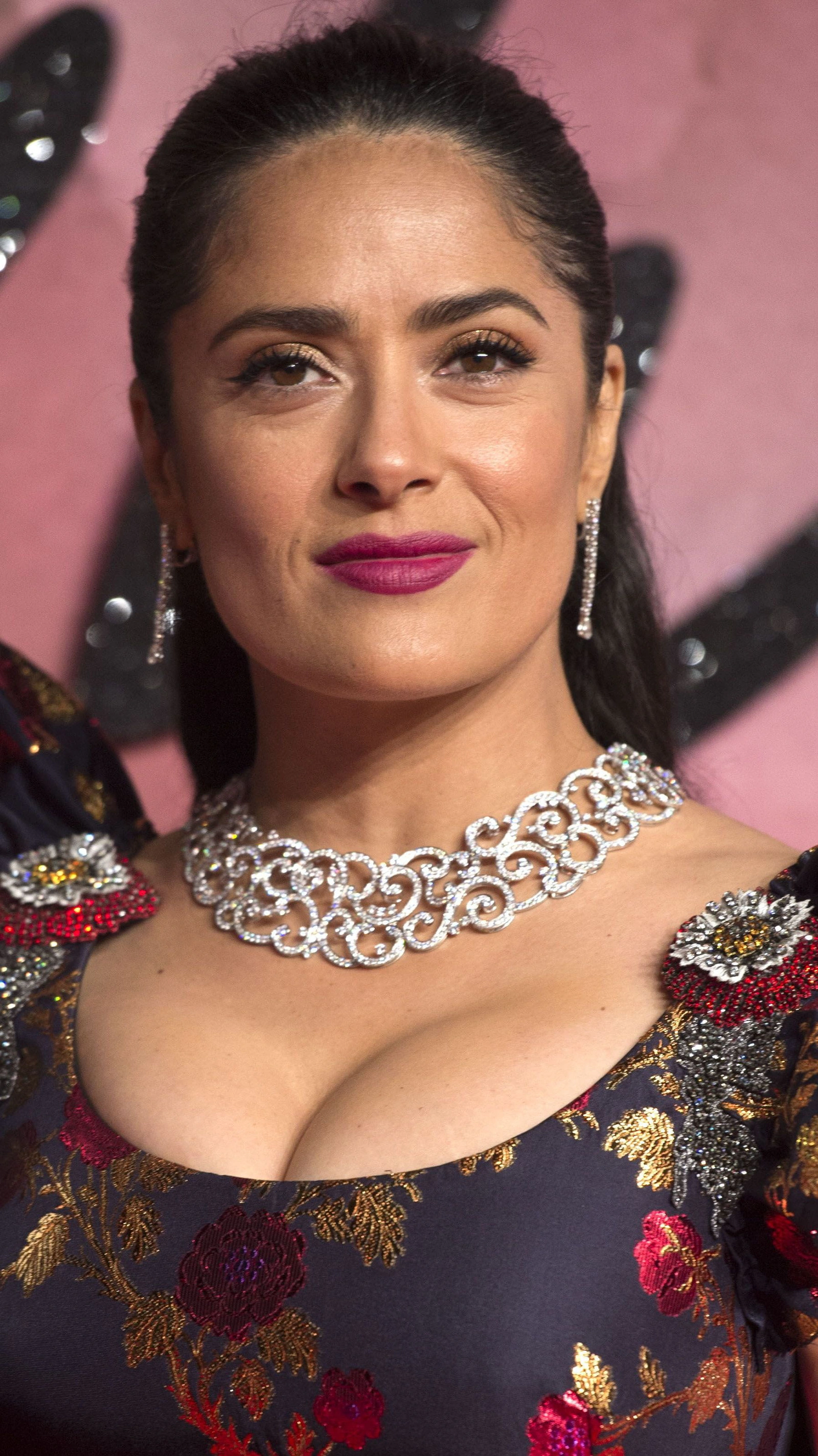
| 34 Quotes | |
| Born as | Salma Valgarma Hayek Jiménez |
| Occup. | Actress |
| From | Mexico |
| Spouse | François-Henri Pinault |
| Born | September 2, 1966 Coatzacoalcos, Veracruz, Mexico |
| Age | 59 years |
| Cite | |
Citation Formats
APA Style (7th ed.)
Salma hayek biography, facts and quotes. (2026, February 11). FixQuotes. https://fixquotes.com/actors/salma-hayek/
Chicago Style
"Salma Hayek biography, facts and quotes." FixQuotes. February 11, 2026. https://fixquotes.com/actors/salma-hayek/.
MLA Style (9th ed.)
"Salma Hayek biography, facts and quotes." FixQuotes, 11 Feb. 2026, https://fixquotes.com/actors/salma-hayek/. Accessed 12 Feb. 2026.
Early Life and Background
Salma Valgarma Hayek Jimenez was born September 2, 1966, in Coatzacoalcos, Veracruz, a Gulf Coast oil town whose boom-and-bust rhythms shaped daily life in late-PRI Mexico. Her father, Sami Hayek Dominguez, a Lebanese-Mexican businessman, and her mother, Diana Jimenez Medina, an opera-trained singer and talent scout, gave her a household where commerce and performance coexisted. That mix - ambition anchored by an ear for drama - became a template for a life spent negotiating art within industry.Growing up, Hayek moved between local tradition and imported pop culture, a biculturalism that later informed her insistence on being seen as more than a stereotype. She has spoken publicly about dyslexia and about being an intense, willful child; friends and collaborators would later recognize the same stubborn focus in her producing career. The Mexico of her youth still offered limited avenues for women to command creative power, so her earliest victories were private - learning to master her own attention, image, and voice.
Education and Formative Influences
As a teenager she was sent to the Academy of the Sacred Heart in Grand Coteau, Louisiana, where separation from home sharpened her independence and exposed her to an American culture that both attracted and repelled her. Back in Mexico she briefly studied international relations at the Universidad Iberoamericana in Mexico City, but the pull of acting prevailed; she trained under acting teacher Stella Adler in Los Angeles, absorbing a craft tradition that prized truthfulness and psychological intention even inside glamorous packaging.Career, Major Works, and Turning Points
Hayek became a household name in Mexico through Televisa, especially the telenovela Teresa (1989-1991), then made a high-risk leap to Hollywood in the early 1990s when few Latina actresses were offered complex leads. Her breakthrough came with Robert Rodriguez's Desperado (1995), followed by a run of studio and independent work (From Dusk Till Dawn, 1996; Wild Wild West, 1999) that exposed the industry's narrow casting. The decisive turning point was Frida (2002), which she produced and starred in, battling for years to bring Frida Kahlo to the screen; the film earned multiple Oscar nominations and won for makeup, and it permanently recast Hayek as a creative force with leverage. In the years after, she balanced visibility with range - voice work in Puss in Boots (2011), ensemble comedies like Grown Ups (2010), prestige television with Ugly Betty as an executive producer (2006-2010), and later dramatic authority in projects such as Beatriz at Dinner (2017), Eternals (2021), and House of Gucci (2021) - while building a parallel identity as a producer advocating for broader representation.Philosophy, Style, and Themes
Hayek's inner life, as it appears through interviews and career choices, is defined by refusal: refusal to be reduced, refused parts turned into self-made vehicles, refused narratives answered with work. She has been blunt about structural bias - "I know the only reason that I haven't gotten many good parts is because I am Latin - and they tell it to my face a lot of times". That candor is not merely complaint; it explains her strategy. When the gate narrows, she builds a door, using producing as a psychological tool to convert frustration into authorship.Her screen style often plays on contrasts: sensuality paired with comic timing, vulnerability paired with a hard edge, warmth under pressure. Yet she has guarded the gap between person and persona: "How I would describe my characters is absolutely different from how I would describe myself". The line reads like self-protection and artistic principle at once, a reminder that she treats acting as transformation, not confession. Likewise, her insistence on specificity pushes against Hollywood shorthand: "I do have a Mexican accent, but that doesn't mean that I'm a Latin vamp". Across her work, the recurring theme is agency - women claiming intellectual, erotic, and economic self-determination - whether embodied by Kahlo's uncompromising artistry or by Hayek herself navigating an industry trained to mistake type for destiny.
Legacy and Influence
Hayek's enduring influence lies in how she broadened the job description of "actress" for Latinas in the mainstream: not only star, but producer, advocate, and builder of institutions. By forcing Frida into existence and sustaining a career that moves between genres, languages, and platforms, she helped normalize the idea that Mexican and Latina performers can anchor prestige biopics, family entertainment, auteur cinema, and global franchises without surrendering identity. Her legacy is less a single role than a pattern - audacity paired with craft - that continues to open space for the next generation to demand complexity as a baseline rather than an exception.Our collection contains 34 quotes written by Salma, under the main topics: Witty One-Liners - Motivational - Art - Never Give Up - Music.
Other people related to Salma: Julie Taymor (Director), Sherry Stringfield (Actress), Edward Norton (Actor), Robert Towne (Actor), Eva Mendes (Actress), Jesse Eisenberg (Actor), Elle Fanning (Actress), Blake Lively (Actress), Linda Fiorentino (Actress), Alfred Molina (Actor)
Source / external links