
Sarah Bernhardt Biography Quotes 20 Report mistakes
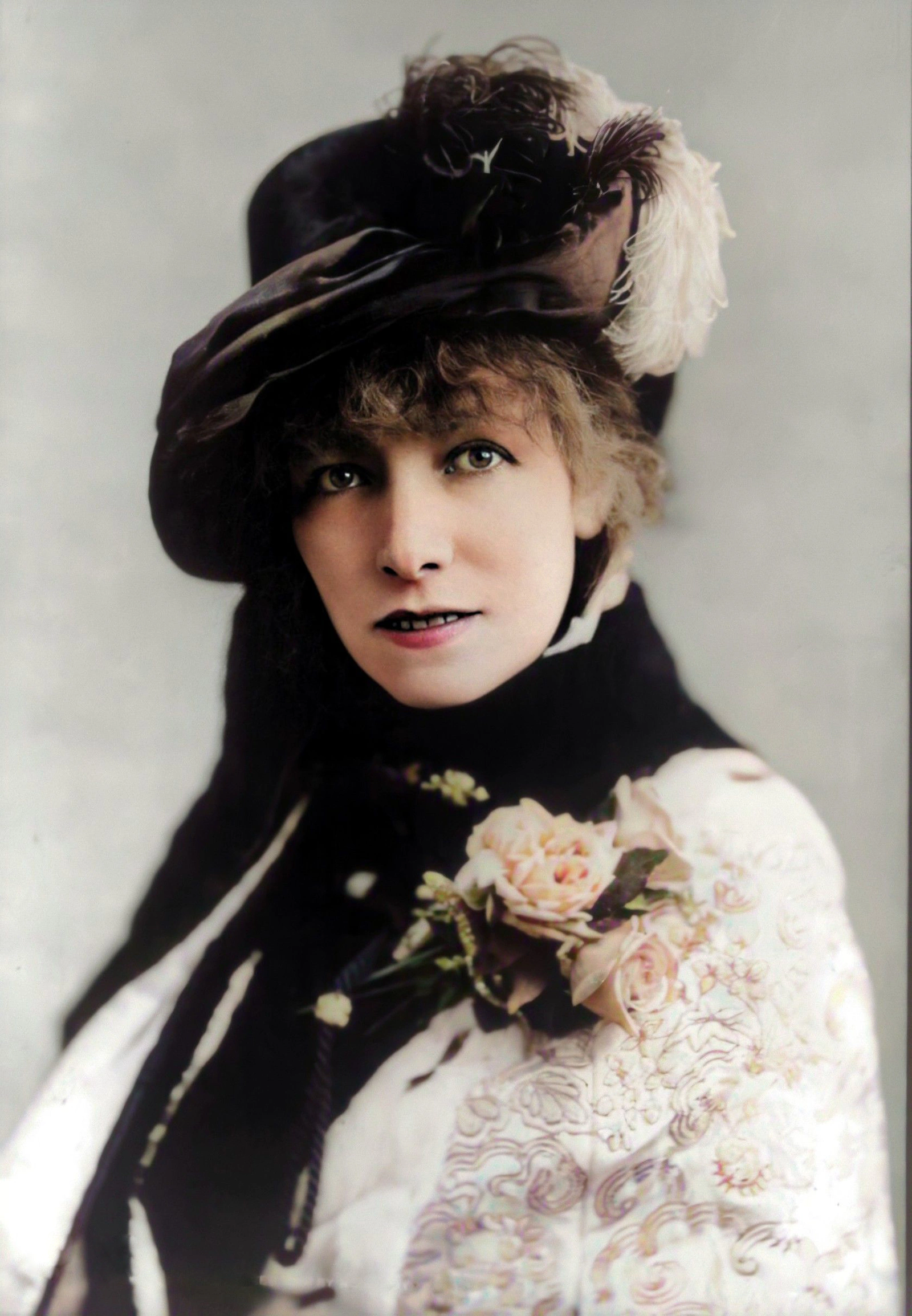
Attr: Napoleon Sarony
| 20 Quotes | |
| Born as | Henriette-Rosine Bernard |
| Occup. | Actress |
| From | France |
| Born | October 22, 1844 Paris, France |
| Died | March 26, 1923 Paris, France |
| Cause | Kidney failure |
| Aged | 78 years |
| Cite | |
Citation Formats
APA Style (7th ed.)
Sarah bernhardt biography, facts and quotes. (2026, February 11). FixQuotes. https://fixquotes.com/actors/sarah-bernhardt/
Chicago Style
"Sarah Bernhardt biography, facts and quotes." FixQuotes. February 11, 2026. https://fixquotes.com/actors/sarah-bernhardt/.
MLA Style (9th ed.)
"Sarah Bernhardt biography, facts and quotes." FixQuotes, 11 Feb. 2026, https://fixquotes.com/actors/sarah-bernhardt/. Accessed 5 Mar. 2026.
Early Life and Background
Sarah Bernhardt was born Henriette-Rosine Bernard on 1844-10-22 in Paris, at a time when the city was refashioning itself into the capital of modern spectacle. Her mother, Judith Bernard, was a Dutch-Jewish courtesan whose connections moved in and out of the Second Empire's salons; her father was long uncertain in public accounts, a blur that left the child with early lessons in reinvention and the social power of mystery. Bernhardt grew up amid rented rooms, shifting guardians, and the precarious respectability offered to women whose livelihoods depended on male patronage.Sickly, intense, and imaginative, she was sent for stability to a convent at Grandchamp near Versailles. There she cultivated a private theatre of devotion and defiance - equally drawn to religious ritual and to performance as escape. The tension between disciplined enclosure and the hunger for a larger life became the engine of her later stage presence: an actress who could radiate sanctity, sensuality, and danger in the same breath.
Education and Formative Influences
A well-placed protector, the Duc de Morny, arranged her entry into the Paris Conservatoire, where she trained in declamation and classical technique and absorbed the era's belief that art could be engineered through rigor. In 1862 she debuted at the Comedie-Francaise, clashed with its hierarchy, and was briefly dismissed - an early sign that her talent would not be housed comfortably inside institutions. The Franco-Prussian War and the Commune hardened her sense of public life; she nursed wounded soldiers and learned how quickly crowds turn ideas into action, a civic education that later shaped her view of theatre as a social instrument.Career, Major Works, and Turning Points
Bernhardt rebuilt her career at the Odeon in the early 1870s and returned triumphantly to the Comedie-Francaise, becoming the era's definitive tragedienne. Her breakthroughs included Phedre, Racine heroines, Victorien Sardou's Fedora (1882) and Theodora (1884), and the role that fixed her international legend, Marguerite Gautier in Dumas fils' La Dame aux camelias. She left the state theatre to become an entrepreneur, touring Europe and the Americas with her own company, turning celebrity into a business model that included posters by Alphonse Mucha, interviews, and carefully staged eccentricities. In the 1890s she took control of the Theatre de la Renaissance and later the Theatre Sarah-Bernhardt, and she scandalized and fascinated audiences by playing male leads, most famously Hamlet (1899) and Rostand's L'Aiglon (1900). After a catastrophic leg injury and subsequent amputation in 1915, she continued to act, tour for the war effort, and perform on film, transforming physical limitation into another kind of authority until her death in Paris on 1923-03-26.Philosophy, Style, and Themes
Bernhardt's art fused classical line with modern nerve: sculpted diction, a body trained to read from the back row, and a willingness to fracture prettiness for truth. She insisted that acting was not decorative but incarnational, a total giving-over in which technique served imagination and responsibility. “Once the curtain is raised, the actor is ceases to belong to himself. He belongs to his character, to his author, to his public. He must do the impossible to identify himself with the first, not to betray the second, and not to disappoint the third”. That ethic helps explain both her relentless touring and her volatile independence - she demanded sovereignty offstage so she could surrender completely onstage.Her psychology was powered by expenditure rather than conservation, a temperament that turned exhaustion into glamour and risk into proof of life. “It is in spending oneself that one becomes rich”. The same impulse drew her toward trouser roles and minds she could inhabit without the sentimental constraints placed on women; she framed it with characteristic sharpness: “I have often been asked why I am so fond of playing male parts. As a matter of fact, it is not male parts, but male brains that I prefer”. Across roles - saint, courtesan, queen, prince - she dramatized the costs of desire and ambition, making the stage a laboratory where identity could be chosen, not merely assigned.
Legacy and Influence
Bernhardt became the prototype of the modern global star: a performer who controlled her image, repertoire, touring circuits, and publicity while expanding what a woman could command in public space. She influenced acting through her synthesis of vocal music, gesture, and psychological intensity, and she influenced theatre economics by proving that a single name could anchor an international enterprise. Her posters, memoirs, and early screen work preserved an aura that later actresses, from Eleonora Duse onward, had to negotiate - either by resisting her grand style or borrowing her daring. More than a legend of beauty or bravura, she endures as a case study in self-creation: an artist who turned her life into material, then spent it lavishly to make an era look back at itself.Our collection contains 20 quotes written by Sarah, under the main topics: Witty One-Liners - Wisdom - Art - Sports - Kindness.
Other people related to Sarah: Edmond Rostand (Poet), Eleanora Duse (Actress), Pierre Loti (Writer), Eleonora Duse (Actress)
Source / external links