
Sarah Bernhardt Biography Quotes 20 Report mistakes
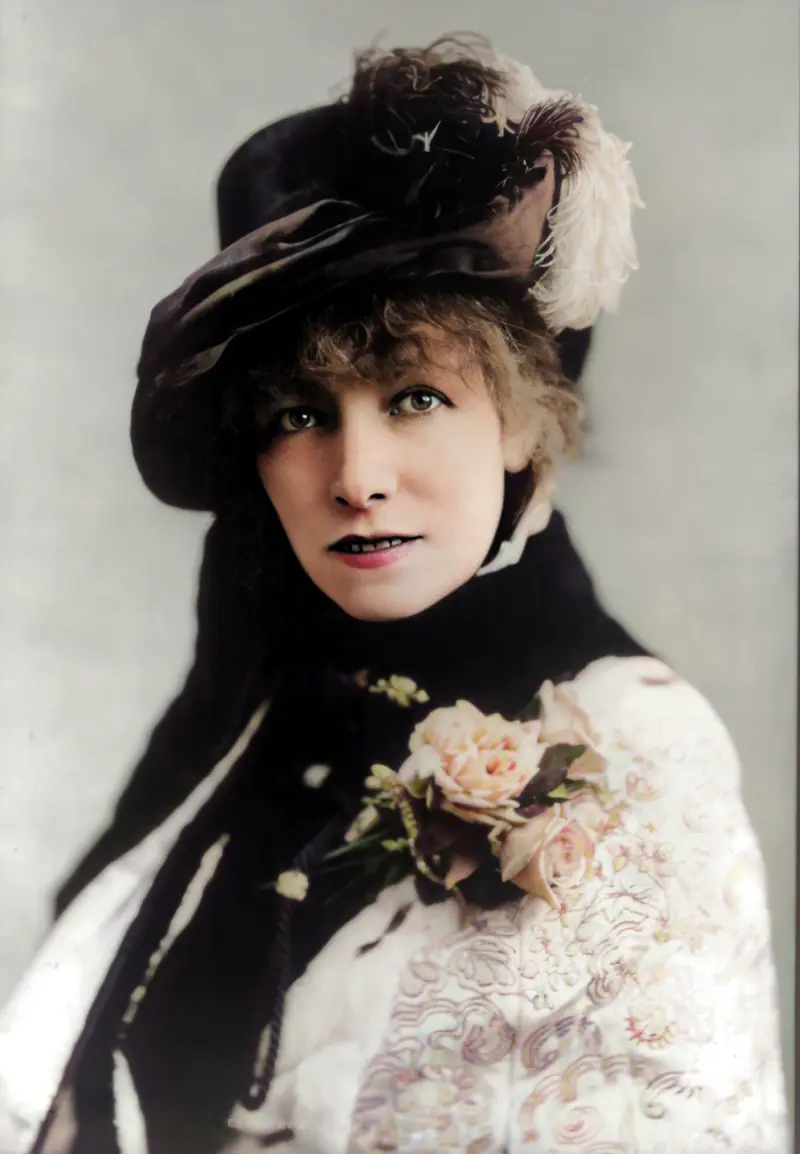
Attr: Napoleon Sarony
| 20 Quotes | |
| Born as | Henriette-Rosine Bernard |
| Occup. | Actress |
| From | France |
| Born | October 22, 1844 Paris, France |
| Died | March 26, 1923 Paris, France |
| Cause | Kidney failure |
| Aged | 78 years |
Sarah Bernhardt was born as Henriette-Rosine Bernard in Paris in 1844. Her early childhood was unstable, shaped by the irregular rhythms of theatrical and artistic circles that her mother, Julie, moved in. She spent time in a convent school, where the tradition of ritual and elocution left a deep mark on her sense of presence and language. As a teenager she entered the Conservatoire de Paris, studying under respected teachers who recognized her unusual vocal color and instinctive command of gesture. When she adopted the stage name Sarah Bernhardt and made her first appearances in Paris, she combined a delicate, almost otherworldly physicality with fierce determination to master the great tragic repertory.
Opening Doors in the Paris Theaters
Bernhardt joined the Comedie-Francaise before she was fully prepared for its rigid hierarchies and rules, departed after conflicts, and rebuilt her confidence at the Theatre de l'Odeon. There she developed precise diction and an agility across classical and modern roles. Appearances in works by Racine and Corneille established her as an interpreter who fused musical phrasing with striking dramatic boldness. After the upheavals of the early 1870s, the Odeon became a crucible for her artistry, and writers and critics began to see her as a singular presence. Victor Hugo, whose poetry and drama she revered, praised the emotional intensity she brought to his plays; Alexandre Dumas fils admired her vitality and entrusted her with La Dame aux Camelias, which became a lifelong signature.
Ascendancy and the Creation of a Legend
Returning to the Comedie-Francaise as a mature artist, she gave performances that stamped her reputation across Europe. She left again, this time on her own terms, and formed a company under her direction. In an era accustomed to male managers, her authority as actress-manager was striking. With Victorien Sardou she found vehicles such as Fedora and La Tosca that showcased her magnetism and ability to shape a character's arc scene by scene. She also sought out male roles, notably Hamlet, to explore the inner life of ambition and doubt. Edmond Rostand later wrote L'Aiglon for her, allowing her to embody Napoleon's fragile son; her performance fused fragility and glory in a way critics still cite. Poster artist Alphonse Mucha crystallized her visual mythology in swirling Art Nouveau designs that presented her body as line and arabesque, an image inseparable from turn-of-the-century Paris.
International Tours and New Media
From the 1880s onward she transformed touring into a global event, carrying French drama across Europe and the Americas. Audiences in New York, Montreal, Buenos Aires, and San Francisco packed theaters to witness the voice that could glide from whisper to cry and the profile that painters and sculptors adored. She cultivated friendships with writers and artists, including Hugo and Rostand, and a well-publicized rivalry with Eleonora Duse sharpened public debate about style and truth in acting. Unafraid of technology, she made early sound recordings and appeared in silent films, notably Queen Elizabeth, which introduced many cinema-goers to her art. These ventures did not replace the stage but extended her reach and helped define the modern, international celebrity.
Private Life and Artistic Range
Bernhardt's private life was turbulent. She married the actor Jacques Damala, but the union was brief and troubled. She had a son, Maurice, whom she cherished and involved in her professional world. Beyond acting she painted and sculpted, exhibiting work that revealed the same appetite for expressive line seen in her stage movement. She wrote memoirs, reflecting on her craft, the discipline required to sustain it, and the costs of a life lived in the glare of fame. Friends and collaborators found her exacting yet generous; she pushed designers, directors, and authors to serve drama's essential pulse while fiercely protecting the independence of her company.
War, Resilience, and Final Years
In later life, health crises would have ended most careers. During the First World War she gave performances for soldiers and took part in patriotic efforts. After a serious injury led to the amputation of a leg, she refused retirement. She adapted staging to her physical limitations, reimagining entrances, exits, and poses to channel power through voice, face, and hands. This adjustment, widely covered by the press, transformed public understanding of courage in art. When she died in Paris in 1923, the city mourned not only a star but an emblem of national spirit who had carried French letters and theater to the world.
Legacy
Sarah Bernhardt reshaped the contours of acting. She fused classical declamation with modern psychological nuance, moved seamlessly between tragedy and melodrama, and demonstrated that an artist could also be an entrepreneur on an international scale. The playwrights who wrote for her, from Sardou to Rostand, the artists who captured her image, from Mucha to photographers of the Belle Epoque, and the audiences she enthralled across continents all contributed to a legend that still frames discussions of performance. She left a repertoire transformed by her interpretations and a model of fearless self-creation that continues to inspire actors, directors, and theater lovers around the world.
Our collection contains 20 quotes who is written by Sarah, under the main topics: Witty One-Liners - Wisdom - Sports - Art - Legacy & Remembrance.
Other people realated to Sarah: Cornelia Otis Skinner (Actress), Eleanora Duse (Actress), Eleonora Duse (Actress), Edmond Rostand (Poet), Pierre Loti (Writer)
Source / external links