
Shelley Winters Biography Quotes 11 Report mistakes
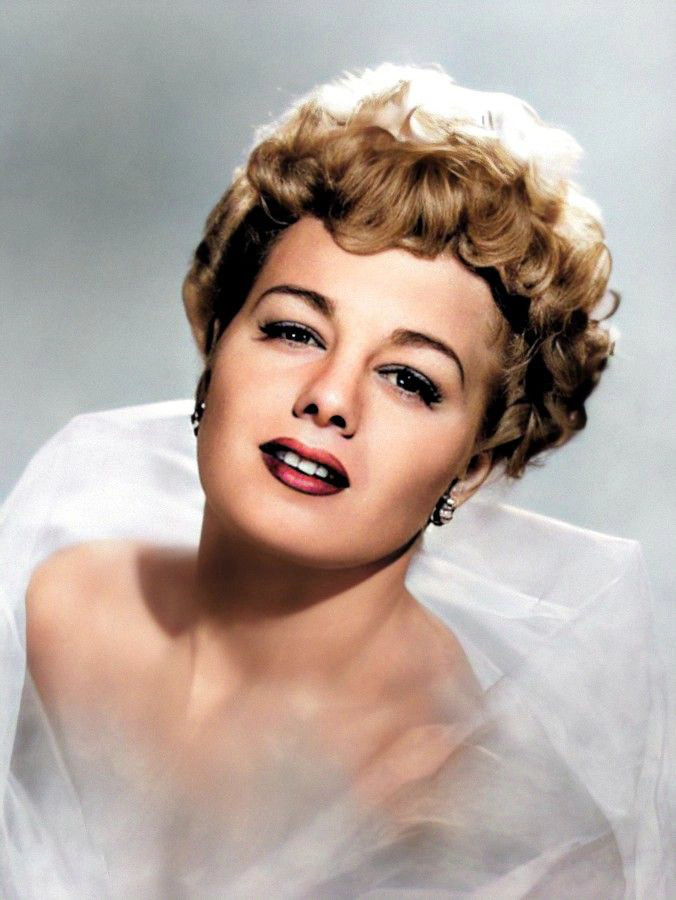
| 11 Quotes | |
| Born as | Shirley Schrift |
| Occup. | Actress |
| From | USA |
| Spouses | Vittorio Gassman (1952–1954) Tony Franciosa (1957–1960) |
| Born | August 18, 1920 St. Louis, Missouri, USA |
| Died | January 14, 2006 Beverly Hills, California, USA |
| Cause | Heart failure |
| Aged | 85 years |
| Cite | |
Citation Formats
APA Style (7th ed.)
Shelley winters biography, facts and quotes. (2026, February 11). FixQuotes. https://fixquotes.com/actors/shelley-winters/
Chicago Style
"Shelley Winters biography, facts and quotes." FixQuotes. February 11, 2026. https://fixquotes.com/actors/shelley-winters/.
MLA Style (9th ed.)
"Shelley Winters biography, facts and quotes." FixQuotes, 11 Feb. 2026, https://fixquotes.com/actors/shelley-winters/. Accessed 25 Mar. 2026.
Early Life and Background
Shelley Winters was born Shirley Schrift on August 18, 1920, in St. Louis, Missouri, and grew up in Brooklyn, New York, in a Jewish immigrant milieu shaped by the aftershocks of World War I, the Depression, and the hard pragmatism of city survival. The boroughs taught her the arts of self-invention early: talk fast, work harder, do not flinch. She carried that street-bred directness into a profession that rewarded gloss, and the tension between the two became one of her defining engines.Before she was famous, she was already performing versions of herself - scrappy, funny, and emotionally unprotected in a way that read as honesty on camera. In an era that marketed women as ideals, Winters arrived as a person: hungry, curious, and not easily shamed. The stage and then the screen gave her what ordinary life rarely did - permission to be loud with feeling, to be excessive, and to make that excess matter.
Education and Formative Influences
Winters studied acting in New York, absorbing the citys theatrical culture as it shifted toward psychological realism; she trained with teachers associated with the Actors Studio orbit and learned to treat performance as excavation rather than display. The rise of Method acting and postwar appetite for grit formed her timing and nerve, but she also kept the comic instincts of vaudeville-era New York: the ability to puncture pretension, including her own, without losing the ache underneath.Career, Major Works, and Turning Points
She entered films in the early 1940s and broke through in the early 1950s with roles that refused decorative femininity - most famously as the doomed working-class girl in A Place in the Sun (1951), where vulnerability and need became dramatic force. From there she built a rare second act for a woman in Hollywood: character parts that deepened with age rather than shrinking, culminating in two Academy Awards for Best Supporting Actress - The Diary of Anne Frank (1959) and A Patch of Blue (1965). She moved between prestige projects and popular entertainments, playing mothers, misfits, and survivors in films such as Lolita (1962), The Poseidon Adventure (1972), and later television work, while publishing memoirs that reinforced her public image as both confessor and provocateur. Across decades, her turning point was not a single reinvention but a stubborn refusal to disappear.Philosophy, Style, and Themes
Winters style was emotional realism with a fighters timing: she pushed scenes until they revealed what polite acting hides, then punctured the moment with humor to keep it from sentimentality. She carried the paradox of being both tough and porous - a performer who could seem indestructible and wounded in the same shot. Offscreen candor was part of the craft: “I have bursts of being a lady, but it doesn't last long”. The line is joke and self-diagnosis, describing a temperament that resisted containment, especially in an industry that demanded women behave like products. Her characters often lived at the intersection of desire and consequence, where impulse meets social penalty.Theater, for her, was the moral laboratory. She understood the stage as a place where attention becomes intimacy and the audience cannot edit away discomfort: “Every now and then, when you're on stage, you hear the best sound a player can hear... a wonderful, deep silence that means you've hit them where they live”. That aim - to hit the viewer where they live - explains her preference for roles that risked ugliness, need, or shame. She also treated American prudery as performance, skewering it with a comic blade that exposed power beneath decorum: “I think on-stage nudity is disgusting, shameful and damaging to all things American. But if I were 22 with a great body, it would be artistic, tasteful, patriotic and a progressive religious experience”. The joke lands because it is true about the culture and about show business: morality is often just a costume fitted to youth, beauty, and who gets to be looked at.
Legacy and Influence
Winters died on January 14, 2006, in Beverly Hills, California, after a career that stretched from wartime Hollywood to the age of cable television. Her enduring influence lies in the proof she offered - that a woman could be a star without being an ideal, that aging could expand a performers range, and that honesty could be a method and a weapon. Later generations of actresses who built careers on fearlessness rather than perfection drew from her template: show the bruise, keep the joke, and insist that the audience follow you into the uncomfortable places where the truth lives.Our collection contains 11 quotes written by Shelley, under the main topics: Witty One-Liners - Art - Dark Humor - Sarcastic - Aging.
Other people related to Shelley: Roger Corman (Producer), Wendell Mayes (Screenwriter), Ed Wynn (Entertainer), Ernest Borgnine (Actor), Vittorio Gassman (Actor), Paul Mazursky (Actor), Montgomery Clift (Actor), George Stevens (Director), Roddy McDowall (Actor)
Source / external links