
Solange Knowles Biography Quotes 6 Report mistakes
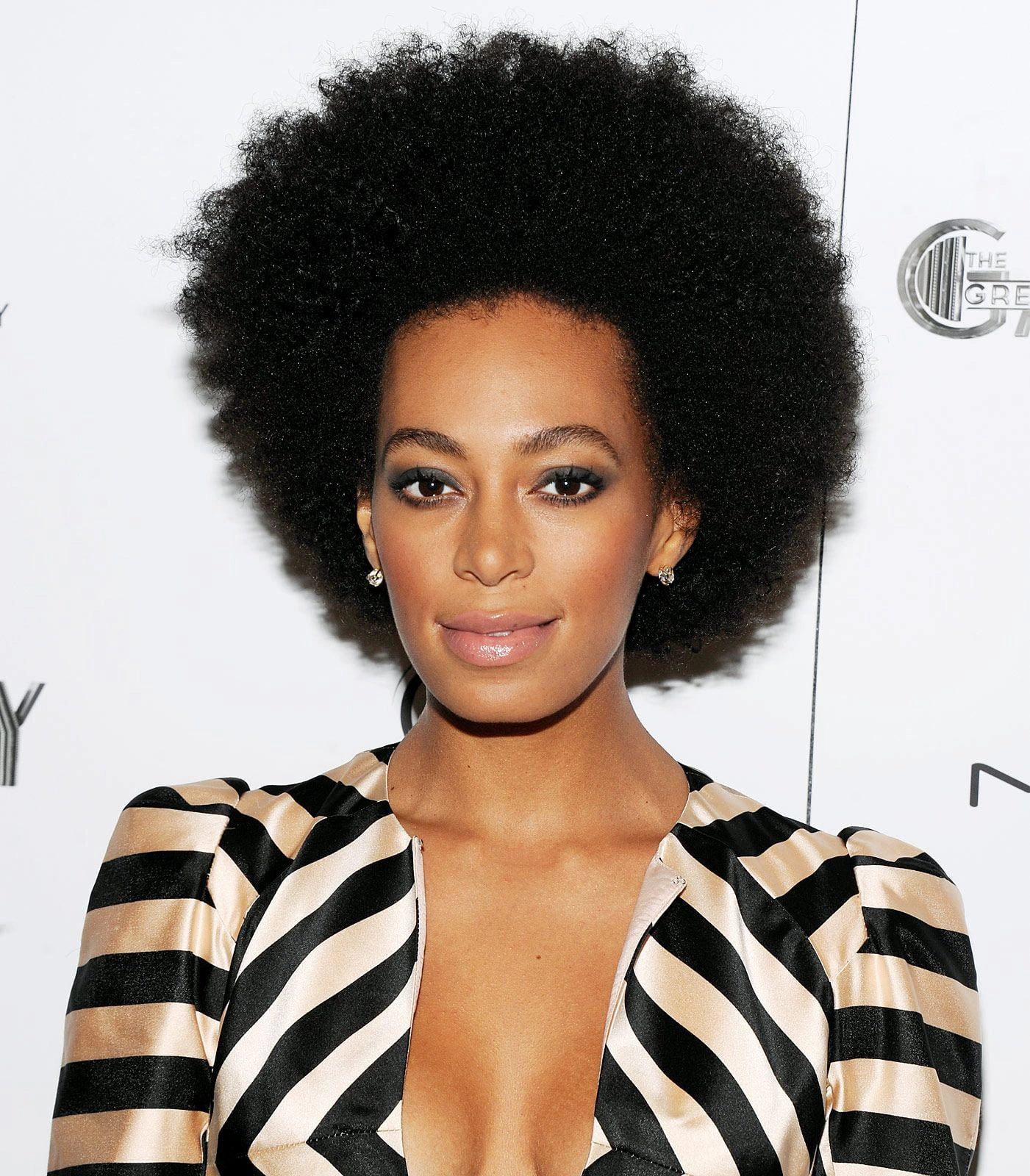
| 6 Quotes | |
| Born as | Solange Piaget Knowles |
| Occup. | Actress |
| From | USA |
| Spouse | Alan Ferguson |
| Born | June 24, 1986 Houston, Texas, USA |
| Age | 39 years |
| Cite | |
Citation Formats
APA Style (7th ed.)
Solange knowles biography, facts and quotes. (2026, March 26). FixQuotes. https://fixquotes.com/actors/solange-knowles/
Chicago Style
"Solange Knowles biography, facts and quotes." FixQuotes. March 26, 2026. https://fixquotes.com/actors/solange-knowles/.
MLA Style (9th ed.)
"Solange Knowles biography, facts and quotes." FixQuotes, 26 Mar. 2026, https://fixquotes.com/actors/solange-knowles/. Accessed 28 Mar. 2026.
Early Life and Background
Solange Piaget Knowles was born on June 24, 1986, in Houston, Texas, into a family that would become one of the most scrutinized in American popular culture. Her father, Mathew Knowles, was a music executive with a marketer's rigor; her mother, Tina Knowles, was a designer whose sense of glamour and Black Southern polish shaped the visual language around her daughters. Solange grew up in a Creole-inflected Houston world where church, family discipline, regional Black style, and entertainment ambition coexisted. She was the younger sister of Beyonce Knowles, and from childhood she developed under the glare that follows exceptional talent in a gifted family - visible, but often comparatively measured.
That position inside, and partly outside, the center of attention proved formative. As a child she danced, wrote songs, and absorbed performance not as fantasy but as household labor. She briefly appeared around Destiny's Child's orbit and entered professional spaces very young, seeing contracts, rehearsals, image-making, and tour machinery from the inside. Houston in the 1990s, with its rap innovation, pageant aesthetics, and entrepreneurial Black middle class, gave her a hybrid sensibility: grounded in local identity yet alert to global style. Even before she defined herself publicly, the tensions that would later animate her work were present - independence versus dynasty, vulnerability versus control, and self-invention under inherited expectation.
Education and Formative Influences
Knowles's education was unusually split between formal schooling and immersion in the entertainment world. She trained in dance and theater and reportedly took lessons in jazz and ballet, but her deepest apprenticeship came through travel, backstage observation, and early responsibility. As a teenager she served at times as a substitute dancer for Destiny's Child and soon pursued her own recording career, experiences that exposed her to the asymmetries of youth in the industry - the ways a young woman can be managed before she has language for agency. Her influences were correspondingly broad: Motown craftsmanship, 1960s girl groups, funk, neo-soul, indie pop, Southern Black culture, visual art, fashion history, and the experimental edges of contemporary R&B. Motherhood also arrived early; she had her son, Daniel Julez J. Smith Jr., in 2004, at 17, and that accelerated her maturity. The combination of precocious labor, travel, and domestic responsibility sharpened the observational intelligence that later distinguished both her music and her public persona.
Career, Major Works, and Turning Points
Knowles emerged first as a singer-songwriter and performer, releasing Solo Star in 2002, an adolescent debut that showed promise but not yet a settled identity. Her acting work unfolded alongside music, with appearances in film and television including Johnson Family Vacation and Bring It On: All or Nothing, helping establish her as more than a celebrity relative. The real artistic turn came with Sol-Angel and the Hadley St. Dreams in 2008, where retro soul, wit, and emotional precision replaced generic teen-pop framing. In the 2010s she became an emblem of independent curation - collaborating across fashion, music, and art, founding the Saint Heron platform to champion adventurous Black music, and carefully controlling her releases and imagery. Her masterpiece, A Seat at the Table (2016), transformed her stature: a meditative, politically lucid album on Black womanhood, family memory, rage, and rest that debuted at No. 1 and made her a central voice of her generation. When I Get Home (2019) extended that project into a more abstract, Houston-centered work of repetition, ambient groove, and spatial thinking. Alongside albums, performances at institutions such as the Guggenheim and her interdisciplinary work in museums confirmed a career moving beyond entertainment into authored cultural architecture.
Philosophy, Style, and Themes
Knowles's art is animated by self-possession wrested from systems that prefer pliancy. She has been unusually candid about what youth in show business can cost: “When you're younger, you get shoved a lot. You don't really have a say-so”. That insight explains the steel beneath her soft-spoken public manner. Her career has often been a long refusal of imposed scripts - commercial, familial, racial, and gendered. “You're just so excited that you have this record deal or this movie opportunity that you don't stand up for yourself and say, this is what I want to do”. In retrospect, much of her biography can be read as the construction of precisely that say-so: ownership of sound, pacing, collaborators, image, and silence. Even controversies, including the intensely public 2014 elevator incident, ultimately reinforced her refusal to be flattened into decorum for other people's comfort.
Travel, in her imagination, is not luxury but epistemology. “You get educated by traveling”. captures a worldview central to her work: identity expands through movement, encounter, and context. Yet unlike rootless cosmopolitanism, her sensibility keeps circling home - Houston, Black kinship, regional memory, the emotional weather of Southern life. Stylistically, she favors negative space, patient grooves, visual minimalism, and collage-like references that draw from funk, minimalist composition, performance art, and Black domestic ritual. Her themes are intimacy, interiority, healing, bodily autonomy, and the right to opacity. She often resists overexplanation, suggesting that freedom includes the right not to narrate oneself for public consumption. In that restraint lies a signature psychology: disciplined, sensual, intellectually curious, and committed to forms of Black expression that are ceremonial rather than merely confessional.
Legacy and Influence
Solange Knowles's legacy rests on more than hit records or acting credits. She helped redefine what a 21st-century Black woman artist could be: not just performer, but curator, theorist of atmosphere, institution-builder, and guardian of aesthetic sovereignty. A Seat at the Table became a landmark in American music because it joined political clarity to sonic tenderness, offering language for anger without sacrificing beauty. Younger musicians and multidisciplinary artists have drawn from her example of rigorous self-definition, especially her insistence that Black interior life deserves experimentation, slowness, and formal ambition. For audiences, she has modeled adulthood as a process of editing inherited narratives and reclaiming authorship. In a celebrity culture that rewards exposure, Knowles made selectivity itself into an art - and in doing so, secured an influence that extends far beyond the stage or screen.
Our collection contains 6 quotes written by Solange, under the main topics: Learning - God - Career - Youth - Travel.
Source / external links