
Spalding Gray Biography Quotes 10 Report mistakes
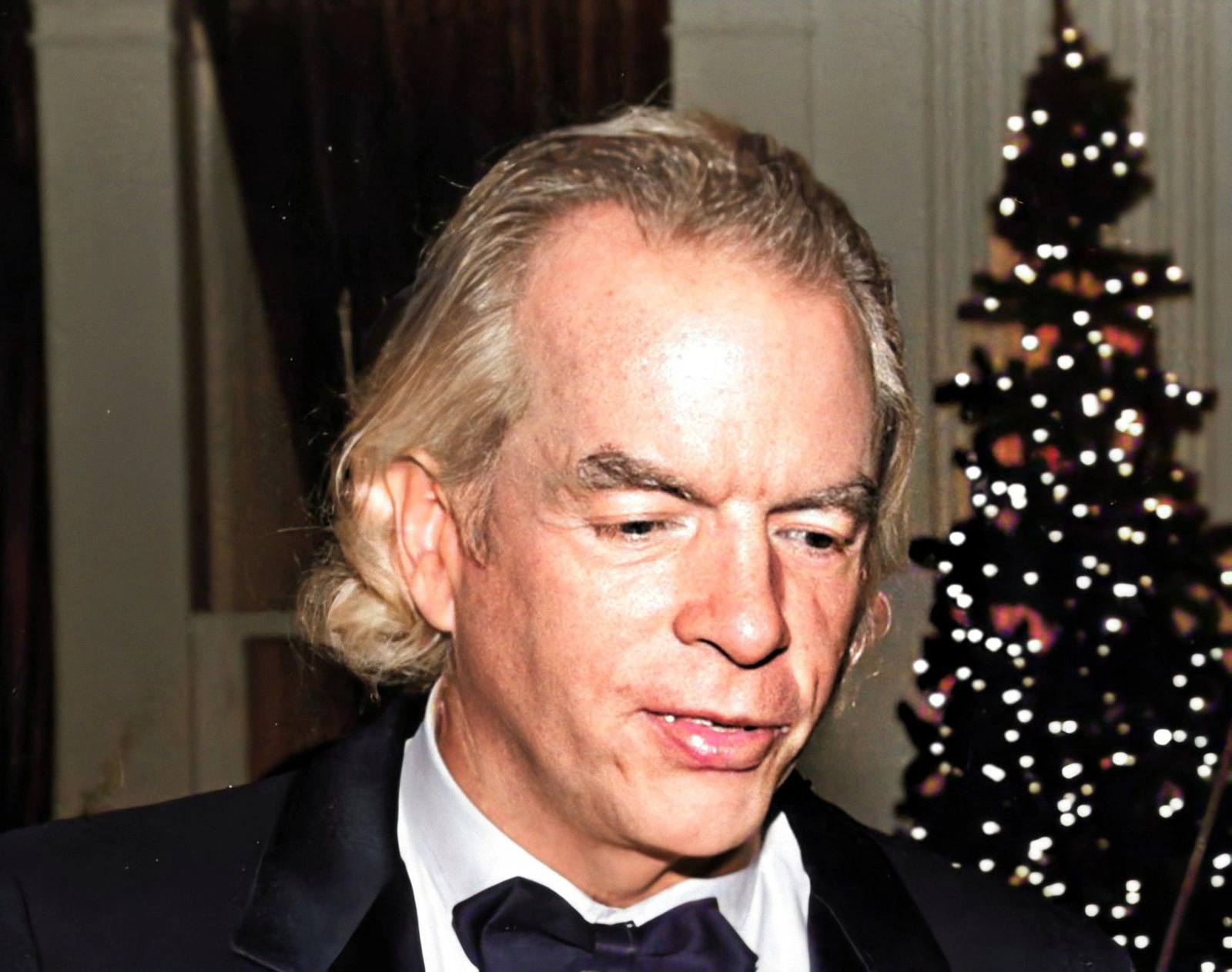
| 10 Quotes | |
| Born as | Spalding Rockwell Gray |
| Occup. | Actor |
| From | USA |
| Spouse | Kathie Russo |
| Born | June 5, 1941 Barrington, Rhode Island, USA |
| Died | January 11, 2004 New York City, New York, USA |
| Cause | Suicide by drowning |
| Aged | 62 years |
| Cite | |
Citation Formats
APA Style (7th ed.)
Spalding gray biography, facts and quotes. (2026, February 25). FixQuotes. https://fixquotes.com/actors/spalding-gray/
Chicago Style
"Spalding Gray biography, facts and quotes." FixQuotes. February 25, 2026. https://fixquotes.com/actors/spalding-gray/.
MLA Style (9th ed.)
"Spalding Gray biography, facts and quotes." FixQuotes, 25 Feb. 2026, https://fixquotes.com/actors/spalding-gray/. Accessed 5 Mar. 2026.
Early Life and Background
Spalding Rockwell Gray was born on June 5, 1941, in Providence, Rhode Island, and raised primarily in the coastal mill town of Barrington. The New England of his childhood prized restraint and respectability, yet Gray grew up alert to the unstable currents beneath domestic order. His father, a salesman, projected conventional expectations; his mother, whose mental illness intensified over the years, brought a volatile emotional weather that Gray later described as both formative and unavoidably theatrical.Family history became his first, inescapable script. In 1967 his mother died by suicide, a fact that lodged in him as dread, inheritance, and narrative engine. Decades later, when Gray made himself the material of his art, this origin story was never mere confession. It was an attempt to master fate by arranging it into language and timing - the comic beat as a way to keep catastrophe at bay.
Education and Formative Influences
Gray studied at Fryeburg Academy in Maine and later at Emerson College in Boston, then refined his craft at the Yale School of Drama, where he absorbed both classical discipline and the new American appetite for experimental forms. The late 1960s and early 1970s theater world - post-Vietnam, post-Beat, suspicious of official stories - offered him permission to treat the self as a stage. He learned that sincerity could be constructed, that truth could be edited, and that a performer could be both witness and character.Career, Major Works, and Turning Points
After early work with the experimental troupe The Performance Group and later Richard Schechner's Wooster Group in New York, Gray broke away to develop his signature form: the autobiographical monologue performed seated at a table, lit like a deposition and paced like jazz. His defining works included Swimming to Cambodia (1985), drawn from his experience acting in The Killing Fields and turned into Jonathan Demme's celebrated film of the monologue; Monster in a Box (1991), a hilariously anxious account of trying to write a novel; and Gray's Anatomy (1993), a search for cures and meaning after a vision problem. He also appeared as an actor in films such as Taps (1981) and Sex, Lies, and Videotape (1989), often embodying anxious, articulate men who sounded like they were thinking faster than they could live. In 2001, a serious car accident left him with chronic pain and worsening depression. On January 11, 2004, after months missing, he was found dead in New York Harbor in an apparent suicide - a grim coda to a life spent arguing, onstage, with despair.Philosophy, Style, and Themes
Gray called himself not an inventor but an arranger, turning lived material into performance with the rigor of an editor and the vulnerability of a diarist. His method was a moral claim as much as an aesthetic one: “I say that I can't make anything up. I think of myself as a collage artist. I'm cutting and pasting memories of my life. And I say, I have to live a life in order to tell a life. I would prefer to tell it because telling you're always in control, you're like God”. The line reveals the psychological bargain at the center of his art - if experience could be shaped into story, then chaos could be momentarily governed, and terror could be converted into a laugh that arrived on cue.New York City became both his refuge and his metaphor for consciousness itself - crowded, loud, relentlessly ongoing. “I knew I couldn't live in America and I wasn't ready to move to Europe, so I moved to an island off the coast of America - New York City”. In Gray's mouth, this is comic geography and private diagnosis: he needed distance from the country's bland myths without leaving its language, and he needed an urban stage big enough to hold his contradictions. Yet the humor was never merely decorative; it was the performance of survival. “I was darkly convinced that at age 52 I would kill myself because my mother committed suicide at that age. I was fantasizing that she was waiting for me on the other side of the grave”. That fear, spoken aloud, became an incantation against itself - and also a reminder that his themes (control, contingency, inheritance, the body as unreliable narrator) were not literary topics but daily conditions.
Legacy and Influence
Gray helped define modern American monologue and what later generations would call autobiographical or confessional performance, influencing storytellers in theater, stand-up, podcasts, and one-person shows that treat the self as a report from the front. His work endures because it refuses the clean arc: it keeps the seams visible, showing how memory is edited, how comedy can be a form of care, and how the search for meaning can be both ridiculous and urgent. In an era that increasingly rewards curated identity, Gray remains a model of crafted vulnerability - a performer who made a life by speaking it, even as the life spoke back with forces he could not fully control.Our collection contains 10 quotes written by Spalding, under the main topics: Witty One-Liners - Mortality - Writing - Deep - Parenting.
Source / external links