
Spencer Tracy Biography Quotes 5 Report mistakes
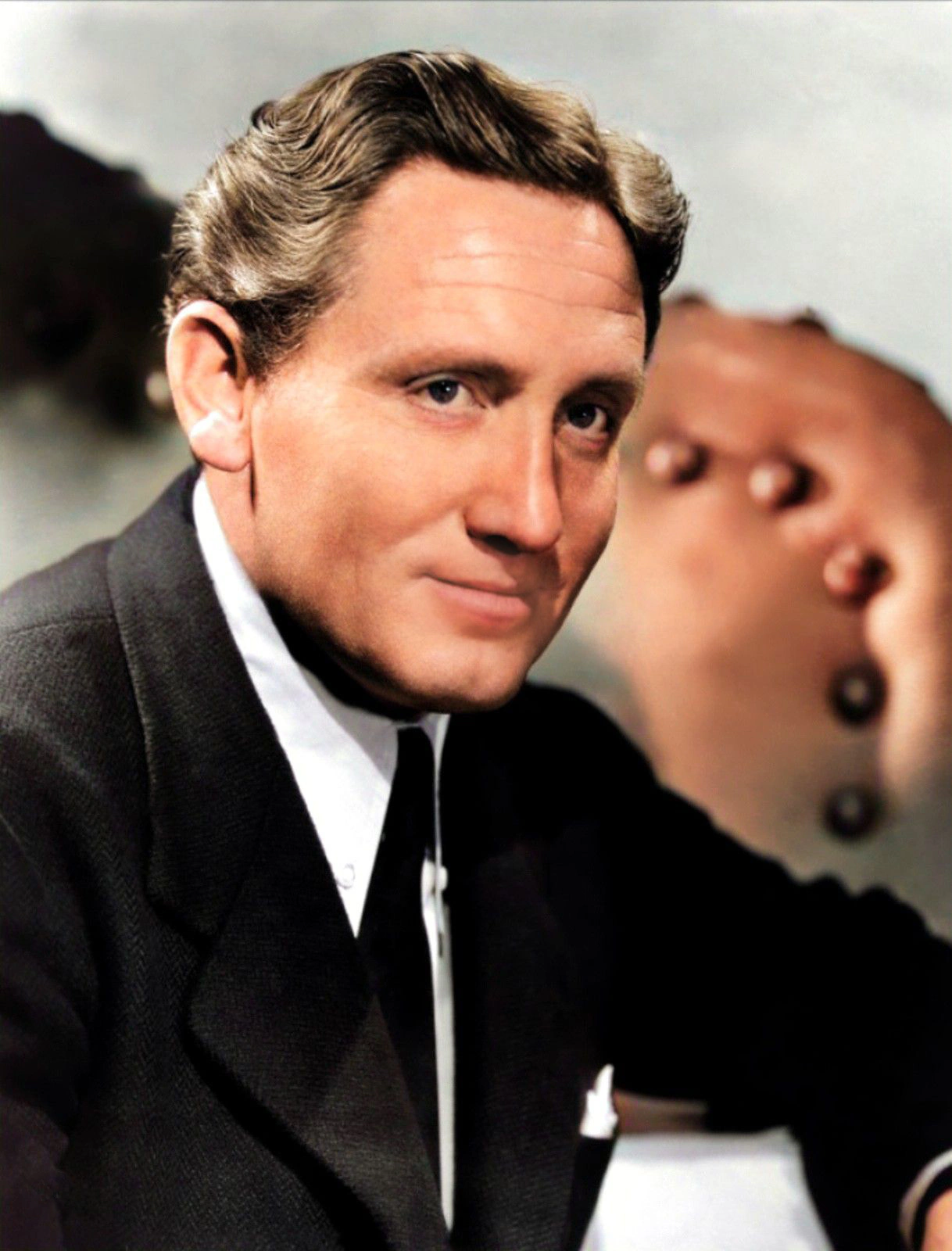
| 5 Quotes | |
| Born as | Spencer Bonaventure Tracy |
| Occup. | Actor |
| From | USA |
| Born | April 5, 1900 Milwaukee, Wisconsin, United States |
| Died | June 10, 1967 Los Angeles, California, United States |
| Cause | Heart attack |
| Aged | 67 years |
| Cite | |
Citation Formats
APA Style (7th ed.)
Spencer tracy biography, facts and quotes. (2026, February 11). FixQuotes. https://fixquotes.com/actors/spencer-tracy/
Chicago Style
"Spencer Tracy biography, facts and quotes." FixQuotes. February 11, 2026. https://fixquotes.com/actors/spencer-tracy/.
MLA Style (9th ed.)
"Spencer Tracy biography, facts and quotes." FixQuotes, 11 Feb. 2026, https://fixquotes.com/actors/spencer-tracy/. Accessed 2 Apr. 2026.
Early Life and Background
Spencer Bonaventure Tracy was born on April 5, 1900, in Milwaukee, Wisconsin, into an Irish Catholic family whose sense of humor and moral seriousness would echo in his adult screen persona. His father, John Edward Tracy, worked in sales; his mother, Caroline Brown Tracy, had the steadiness of Midwestern domestic life and the expectations of parish respectability. Tracy grew up in an America jolting toward modernity - automobiles, mass entertainment, and the looming shock of World War I - yet his childhood was marked less by glamour than by restlessness, a quick temper, and a desire to be liked without seeming to ask for it.The foundational private fact of his life was a tension between duty and appetite. In 1923 he married Louise Treadwell, and they had two children; their son John was born deaf, a reality Tracy carried with a mixture of guilt, protectiveness, and a need to provide. The marriage endured in name but not in daily intimacy, especially after Tracy moved into the Hollywood system. His later long partnership with Katharine Hepburn - intense, hidden, and partly sustained by the era's moral policing and studio discretion - became both refuge and burden, deepening his pattern of inward pressure, alcohol dependence, and self-reproach even as his work projected composure.
Education and Formative Influences
Tracy attended local Milwaukee schools, enlisted in the Navy near the end of World War I, and then found his direction at Ripon College, where he acted and met a fellow student, Pat O'Brien, who remained a lifelong friend. He transferred to the American Academy of Dramatic Arts in New York, absorbing a practical, stage-first discipline: learn the text, hit the mark, serve the scene. Working in stock companies and on Broadway in the 1920s, he developed what colleagues later recognized as his signature preparation - a craftsman's insistence on clarity and truth that rejected theatrical display and instead favored behavior that looked unforced.Career, Major Works, and Turning Points
After early screen work at Fox, Tracy broke through at MGM, the studio that shaped him into a leading man who did not look like one but played like one. His key ascent ran through films such as Captains Courageous (1937), which won him an Academy Award, and Boys Town (1938), which earned him a second consecutive Oscar - rare then and rarer now - for a performance built on decency without sentimentality. In the 1940s he became a moral center for wartime and postwar audiences: Dr. Jekyll and Mr. Hyde (1941), Woman of the Year (1942, beginning his celebrated run with Hepburn), and State of the Union (1948) set his blend of romance, skepticism, and authority. Later work sharpened into public argument: Father of the Bride (1950) and its sequel showed his domestic comedy, while Inherit the Wind (1960) and Judgment at Nuremberg (1961) turned him into the screen's plainspoken conscience. He worked through worsening health - diabetes, heart trouble - and died on June 10, 1967, shortly after finishing Guess Who's Coming to Dinner (1967), a final film that fused his personal fatigue with national change.Philosophy, Style, and Themes
Tracy's craft was a paradox: intensely worked, yet designed to disappear. His most famous instruction - “Know your lines and don't bump into the furniture”. - is less a joke than a worldview: acting, for him, was competence under pressure, the ability to free the mind by mastering the basics. He distrusted flourish because flourish looked like need, and need threatened the authority his characters required. That discipline was also self-protection. Tracy feared exposure - of vanity, of weakness, of the private chaos he kept off-camera - so he built performances like sturdy rooms: clean edges, no wasted motion, and a quiet confidence that made other actors sound like they were trying.He also carried a complicated relationship to celebrity and self-worth, sharpened by insecurities about his looks and the sense that audiences might prefer charm to substance. “It is up to us to give ourselves recognition. If we wait for it to come from others, we feel resentful when it doesn't, and when it does, we may well reject it”. reads like a personal rule hammered out
Our collection contains 5 quotes written by Spencer, under the main topics: Witty One-Liners - Movie - Self-Discipline - Self-Love.
Other people related to Spencer: Joseph Bologna (Actor), George Stevens (Director), Lee Marvin (Actor), Garson Kanin (Playwright), Gig Young (Actor), Anne Edwards (Writer), Hume Cronyn (Actor), Myrna Loy (Actress), Louis B. Mayer (Director), Hope Emerson (Actress)
Source / external links