
Stella Adler Biography Quotes 13 Report mistakes
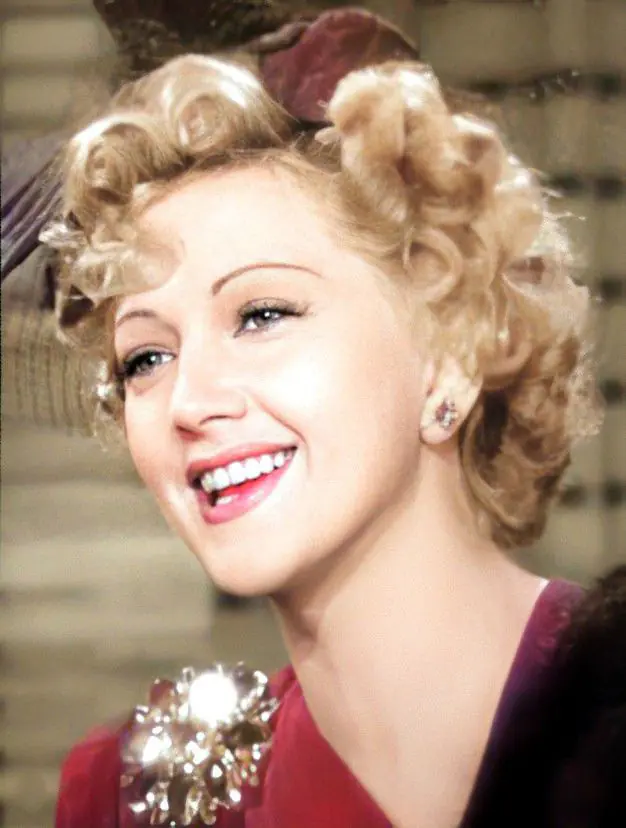
| 13 Quotes | |
| Occup. | Actress |
| From | USA |
| Spouse | Horace Eliashof |
| Born | February 10, 1901 New York City, New York, USA |
| Died | December 21, 1992 Los Angeles, California, USA |
| Cause | Natural causes |
| Aged | 91 years |
Stella Adler was born on February 10, 1901, in New York City, into a storied theatrical household that shaped her identity and ambitions from the start. Her father, Jacob P. Adler, was one of the great actor-managers of the Yiddish stage, and her mother, Sara Adler, was a formidable actress whose intelligence and force of character left a lasting imprint on her children. The Adlers were often called the first family of Yiddish theater, and the home bustled with rehearsals, rehearsed arguments about art, and the rhythms of life lived on and around the stage. Stella made her stage debut as a child in her father's company, absorbing craft by observation and participation. Her siblings, including Luther Adler and Jay Adler, as well as her half-sister Celia Adler, were also prominent actors, and the family's high standards and rigorous work ethic quietly molded her expectations of the art. She grew up between languages and cultures, moving from Yiddish venues to English-language productions, with New York's multicultural energy supplying her sensibility.
Stage Career and the Group Theatre
Coming of age in a period of artistic ferment, Adler worked steadily on the stage, appearing in New York productions that drew on both classical repertory and contemporary drama. Her life changed decisively in the early 1930s when she joined the Group Theatre, the influential ensemble founded by Harold Clurman, Lee Strasberg, and Cheryl Crawford. The Group's commitment to socially resonant plays and ensemble discipline matched her instincts. Within this community, she collaborated with actors and directors who would mark American theater for decades, including Sanford Meisner, Elia Kazan, Franchot Tone, John Garfield, and Clifford Odets, whose plays crystallized the Group's voice. Adler's relationship with Harold Clurman, a director and critic whose passionate essays argued for a theater of ideas, became central; they shared a belief that acting should be rooted in the playwright's world and the circumstances of the character's life. Their partnership, personal and artistic, gave shape to much of her work in this era.
Encounter with Stanislavski and Artistic Philosophy
In 1934 Adler traveled to Europe and studied with Konstantin Stanislavski in Paris. The encounter redirected her thinking. From Stanislavski's later teachings she drew an emphasis on the actor's imagination, on the given circumstances of the text, and on actions rather than the recollection of private emotions. Returning to New York, she challenged prevailing methods within the Group Theatre, particularly Lee Strasberg's focus on affective memory. Her insistence that a rich imaginative life, social context, and disciplined script analysis were the actor's central tools sparked debates that resonated across American acting pedagogy. While Strasberg, Meisner, and others evolved distinct approaches, Adler's voice remained singular: the text and the world it implies, she argued, must awaken the actor's creative life. The playwright's vision came first, and the actor's responsibility was to fill that world with truthful, bold behavior.
Teacher and Mentor
Adler's deepest legacy grew from her teaching. In 1949 she founded the Stella Adler Studio of Acting in New York, where generations of students found a demanding but galvanizing mentor. Her classes blended close reading of plays by Shakespeare, Ibsen, Strindberg, and Chekhov with practical exercises that trained imagination, presence, and a sense of scale. She urged actors to expand their lives through literature, art, and observation, insisting that richness of experience would yield richness onstage. Among the artists who studied with her were Marlon Brando, who credited her with transforming his craft, Robert De Niro, and Warren Beatty. The studio eventually became affiliated with New York University's Tisch School of the Arts, extending her influence through a formal conservatory setting. Adler's lectures, later collected in books such as The Technique of Acting, distilled her philosophy into a durable framework: commit to the world of the play, act through courageous choices, and honor the writer.
Film, Directing, and Later Work
Although primarily a stage artist and teacher, Adler also appeared on screen, notably in Shadow of the Thin Man, and in a handful of other films. She directed and coached actors in theater projects that benefited from her rigorous standards and unwavering belief in the playwright's vision. In her classrooms she could be formidable, using sharp wit and frank critique to press students toward clarity and imagination. She championed the actor as an intellectual and social being, conversant with history and culture, so that performances would carry weight beyond technique. Her published talks and interviews preserved her assessments of performance and text, offering guidance that bridged the practical and the philosophical.
Personal Life
Adler's personal life intersected with her artistic commitments. She married Harold Clurman, with whom she shared years of creative exchange rooted in their Group Theatre history. Earlier she had married Horace Eliascheff; their daughter, Ellen Adler, later played an important role in stewarding the school that bore her mother's name. Family remained a throughline: she acknowledged Jacob and Sara Adler not merely as parents but as the source of a tradition that demanded seriousness, ambition, and respect for audiences. The Adlers' multi-generational presence on American stages gave Stella both a lineage to honor and a standard to surpass.
Legacy and Final Years
In her later years, Adler continued to teach, lecture, and refine her approach, even as former students carried her ideas into film and theater culture worldwide. A Los Angeles branch of the school ensured that her methods reached artists on both coasts. She died on December 21, 1992, in Los Angeles, having spent nearly the entire twentieth century shaping American acting. Her influence can be traced in the performances of her students and in the pedagogy of countless teachers who absorbed her emphasis on imagination, textual fidelity, and social consciousness. The Stella Adler Studio of Acting in New York and the academy in Los Angeles continue her mission, with Ellen Adler among those who preserved the institution's spirit. In a field often torn between technique and inspiration, Stella Adler embodied a union of both, grounded in the playwright's world and animated by a fearless, cultivated imagination.
Our collection contains 13 quotes who is written by Stella, under the main topics: Art - Writing - Mental Health - Self-Improvement.
Other people realated to Stella: Uta Hagen (Actress), Yancy Butler (Actress), Judd Nelson (Actor), Peter Bogdanovich (Director), Kate Mulgrew (Actress)
Source / external links