
Steven Berkoff Biography Quotes 6 Report mistakes
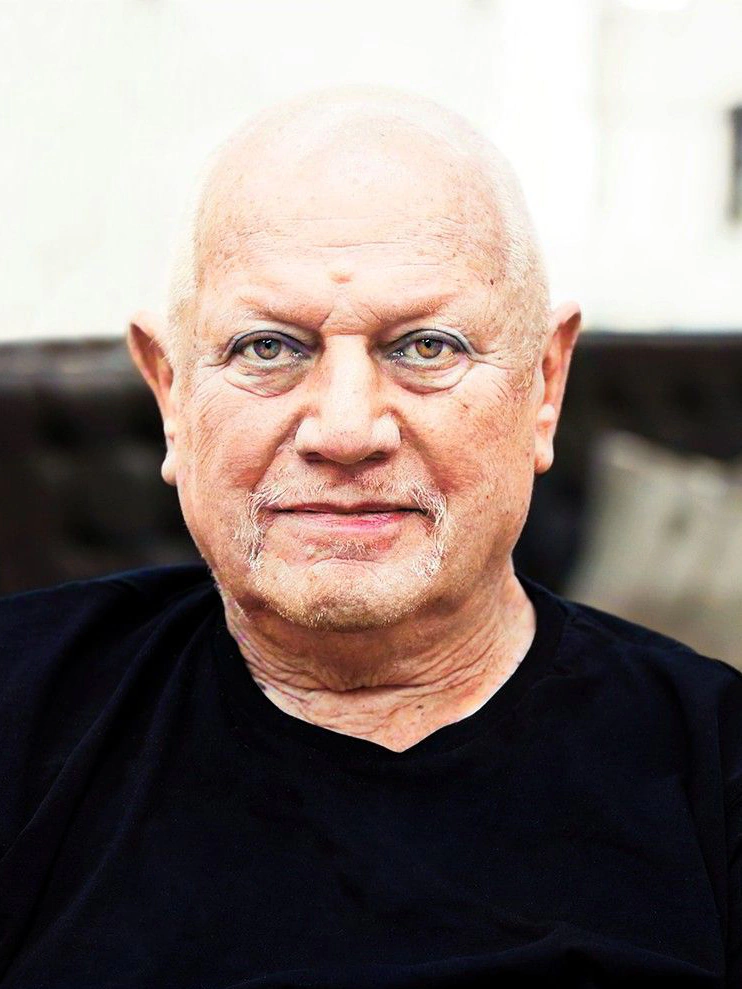
| 6 Quotes | |
| Born as | Leslie Steven Berks |
| Occup. | Actor |
| From | United Kingdom |
| Spouse | Gudrun Frerichs (1967–1973) |
| Born | August 3, 1937 Stepney, London, England |
| Age | 88 years |
| Cite | |
Citation Formats
APA Style (7th ed.)
Steven berkoff biography, facts and quotes. (2026, February 11). FixQuotes. https://fixquotes.com/actors/steven-berkoff/
Chicago Style
"Steven Berkoff biography, facts and quotes." FixQuotes. February 11, 2026. https://fixquotes.com/actors/steven-berkoff/.
MLA Style (9th ed.)
"Steven Berkoff biography, facts and quotes." FixQuotes, 11 Feb. 2026, https://fixquotes.com/actors/steven-berkoff/. Accessed 5 Mar. 2026.
Early Life and Background
Steven Berkoff was born Leslie Steven Berks on 1937-08-03 in Stepney, East London, to a working-class Jewish family whose rhythms, argot, and pressures would later reappear - heightened, stylized, and often brutalized - in his theater. He grew up amid wartime and postwar austerity, in a city still marked by bomb sites and rationing, where toughness was both shield and currency. The East End offered him a double education: the solidarity of close neighborhoods and the hard scrutiny of street life, a combination that later fed his stage worlds of swaggering men, sexual bargaining, and the yearning to escape one's own class skin.As a young man he gravitated toward boxing, bodybuilding, and the cult of masculine display, shaping the physical discipline that would become a signature of his performance method. London also gave him anonymity - the sense that self-invention was possible because no one had time to pry - and he absorbed its mixture of high culture and backstreet bravado. That tension, between refinement and rawness, became the engine of his identity as both actor and author: a performer with classical ambition who never stopped sounding like the streets that formed him.
Education and Formative Influences
Berkoff trained at the Webber Douglas Academy of Dramatic Art in London, then widened his craft in Paris with Jacques Lecoq, where rigorous physical theater, mask work, and ensemble precision offered him an alternative to English naturalism. Lecoq's emphasis on the actor's body as instrument fused with Berkoff's own athleticism and with his hunger for theatrical extremity - expressionism, mime, and the heightened gesture of European modernism - while his London background kept the work anchored in social observation rather than pure abstraction.Career, Major Works, and Turning Points
From the 1960s onward Berkoff built a reputation as a combative theatrical author-performer, establishing the London Theatre Group and writing, directing, and acting in his own pieces with a fiercely controlled aesthetic. Plays such as East (first staged in the mid-1970s), Greek, and Decadence became touchstones: verse-driven, obscene and lyrical by turns, and staged with muscular choreography and ensemble unison. He also became widely visible as an actor on screen and stage, appearing in film and television while remaining identified with a maverick theater practice; international productions and revivals kept his work in circulation even when British institutions treated him as an irritant rather than a house style. Over time he turned his East End autobiography into theatrical myth, transforming the local into a portable language of desire, violence, and aspiration.Philosophy, Style, and Themes
Berkoff's theater is a rejection of polite realism: faces become masks, bodies become architecture, and speech becomes chant, rhyme, or incantation. He preferred the actor as maker rather than as psychological specimen, and his rehearsal rooms were famously exacting - a drill hall as much as a studio - because he believed stage truth could be engineered through form. That impatience with received convention surfaces in his own declaration, “I'm very resistant to most forms of theater”. Resistance, for him, was not mere contrarianism but a moral stance: if theater anesthetizes, it collaborates with social complacency.At the same time, Berkoff wrote from a private wound: the fear of isolation behind bravado. “Writing is an antidote for loneliness”. The line clarifies why his characters so often posture, insult, and seduce in order to avoid silence - why his monologues feel like fistfights with emptiness. His contempt for institutional comfort also sharpened his outsider identity: “The mainstream is generally garbage. Look at the heavily subsidized theaters”. This disdain fueled a style that is aggressively authorial: satire as self-defense, lyricism as a bid for dignity, and physical precision as a way to make chaos legible. Across his work, sex and violence are less sensational than diagnostic - symptoms of blocked tenderness, class shame, and the yearning to be seen without being softened.
Legacy and Influence
Berkoff endures as a defining British voice of postwar outsider modernism: an artist who fused East End speech with European physical theater and insisted that vulgarity and poetry could share the same breath. His plays remain a proving ground for actors who want to master ensemble rigor, vocal athleticism, and the moral risk of satire, while his career models a stubborn alternative to institutional approval - the writer-actor-director as one combative intelligence. Even when audiences resist his brutality, they recognize the pressure behind it: a craftsman turning biography into archetype, and loneliness into a public, disciplined form.Our collection contains 6 quotes written by Steven, under the main topics: Art - Writing - Life - Movie - Management.
Source / external links