
Tatyana Ali Biography Quotes 13 Report mistakes
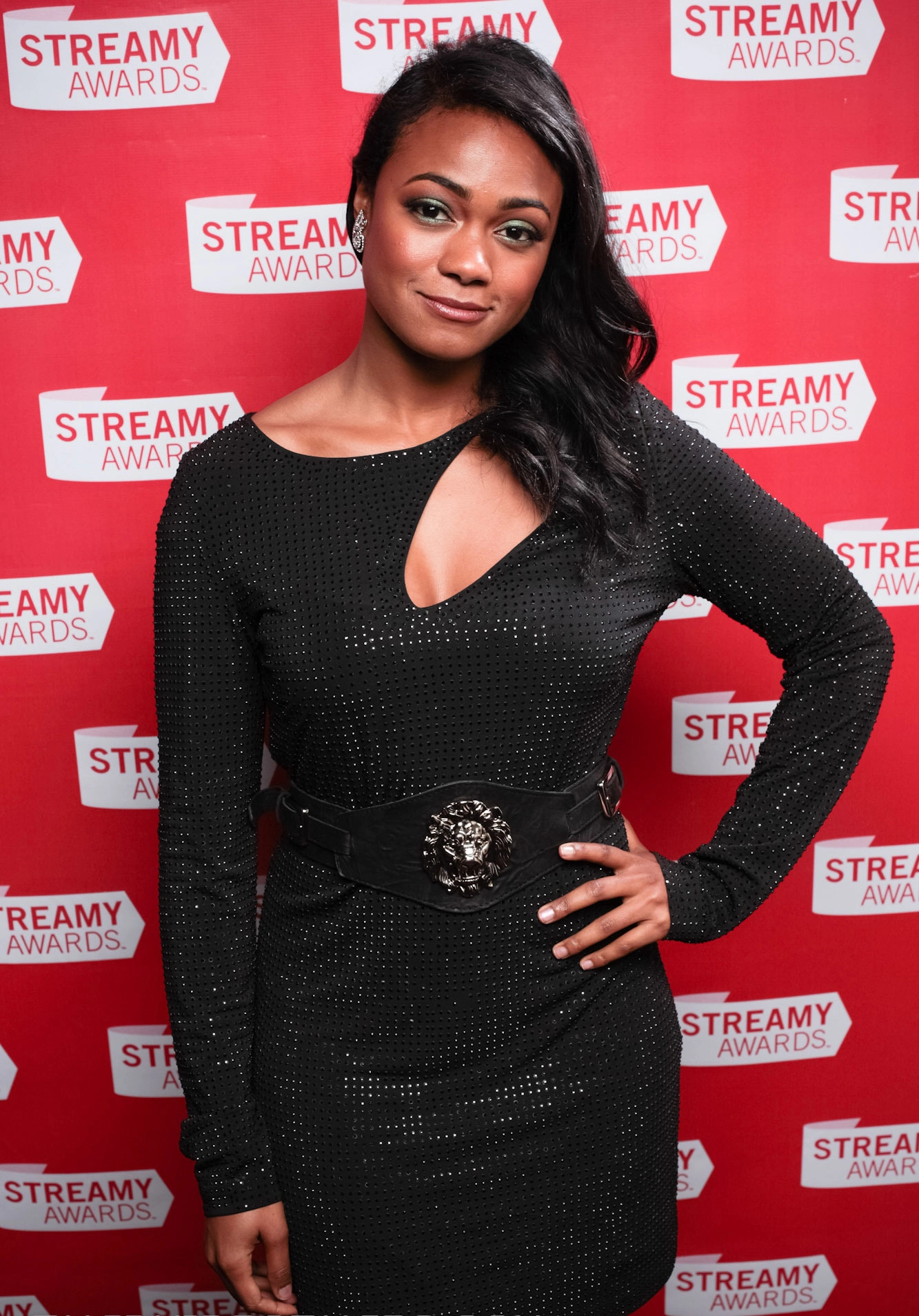
Attr: The Bui Brothers, CC BY-SA 2.0
| 13 Quotes | |
| Occup. | Actress |
|---|---|
| From | USA |
| Born | January 24, 1979 North Bellmore, New York |
| Age | 47 years |
| Cite | |
Citation Formats
APA Style (7th ed.)
Tatyana ali biography, facts and quotes. (2026, August 13). FixQuotes. https://fixquotes.com/actors/tatyana-ali/
Chicago Style
"Tatyana Ali biography, facts and quotes." FixQuotes. August 13, 2026. https://fixquotes.com/actors/tatyana-ali/.
MLA Style (9th ed.)
"Tatyana Ali biography, facts and quotes." FixQuotes, 13 Aug. 2026, https://fixquotes.com/actors/tatyana-ali/. Accessed 2 Oct. 2026.
Early Life and Background
Tatyana Marisol Ali was born on January 24, 1979, in North Bellmore, New York, into a family whose immigrant and diasporic roots helped shape her poise, ambition, and political awareness. Her mother, Sonia, worked in nursing and came from Panama; her father, Sheriff Ali, has Trinidadian Indo-Caribbean heritage. That mixed Caribbean background mattered in the America of the 1980s and 1990s, when mainstream television still offered few textured roles for young Black and Latina girls. Ali grew up in a household that prized discipline, education, and self-possession, and she entered entertainment not as a child insulated from the world, but as a bright observer of class, race, and presentation.
She began performing very young, appearing on Sesame Street and in commercials before adolescence. Early exposure to cameras gave her a relaxed precision that would become central to her screen presence: she could project innocence without passivity and confidence without hardness. Those qualities would later make her ideal for sitcom television, especially at a moment when American pop culture was expanding its image of Black family life. Even as a child, Ali represented something quietly significant - a cosmopolitan, musically inclined, academically serious young performer whose identity could not be reduced to a single category.
Education and Formative Influences
Ali's adolescence unfolded under unusual pressures. Cast as Ashley Banks on The Fresh Prince of Bel-Air in 1990, she spent her formative years inside one of the defining Black sitcoms of the decade while still navigating ordinary rites of passage. The show's environment was a school in itself: James Avery embodied theatrical rigor, Janet Hubert and later Daphne Maxwell Reid modeled different versions of female professionalism, and Will Smith brought a new crossover energy from rap into network comedy. Ali later reflected on how novel that fusion had seemed: “I was only 11 when we filmed the pilot. The idea of a rapper being a star on a sitcom just wasn't heard of”. At home, meanwhile, her parents insisted that celebrity was not an excuse to evade study. She pursued academics seriously, enrolled at Harvard University, and resisted the child-star pattern of stunted adulthood by treating education as identity, not ornament.
Career, Major Works, and Turning Points
Ali became nationally known through six seasons of The Fresh Prince of Bel-Air, where Ashley Banks evolved from the adorable youngest child into a believable teenager with her own comic timing, vulnerability, and musical ambitions. That arc mirrored Ali's own maturation and helped make her one of the most recognizable young actresses of the 1990s. Encouraged by Smith, she developed her singing career, releasing the 1998 album Kiss the Sky, which produced the hit "Daydreamin'" and went gold - an achievement that confirmed she was more than a sitcom familiar face. She also appeared in music videos and films, balancing pop visibility with an effort to avoid being trapped by childhood fame. Later work included television films, independent projects, stage appearances, and recurring roles on series such as The Young and the Restless and Love That Girl!, along with performances in socially engaged films including Glory Road and Nora's Hair Salon. Her career did not follow the explosive but unstable path of some 1990s stars; instead, it revealed durability, adaptability, and a preference for steady authorship over spectacle.
Philosophy, Style, and Themes
Ali's public philosophy has always joined achievement to accountability. Unlike many performers who speak of fame as destiny, she has tended to frame opportunity as something to justify through work. “Before high school ended, I started applying to college. It really wasn't even a choice because of the brainwashing of my parents”. The joke softens a harder truth: her ambition was structured early by a family ethic that treated education as protection against the volatility of entertainment. She made that ethic explicit in another remark: “I'm going to go to school. It doesn't matter what the outcome is as long as I did it. I can say I did it”. What emerges is a psychology of self-respect rooted less in applause than in completion. Harvard, for Ali, was not a branding exercise but an assertion that intellect and performance could coexist in a Black female public figure.
That seriousness deepened into civic consciousness. As she matured, Ali became more outspoken about race, history, and democracy, showing that the cheerful polish of her early screen image concealed an analytical temperament. “Is America truly a democracy? Has America ever been a democracy with the institution of slavery?” The question is not rhetorical decoration; it reveals a performer unwilling to treat celebrity as exemption from moral inquiry. Her style across interviews and roles has often carried this dual register - warm, accessible, but alert to structures of power. Even her artistic instincts suggest control and composition over chaos; she has spoken of visual media in terms of image-making rather than mere storytelling, a clue to her instinct for framing, presentation, and the politics of being seen. In that sense, her themes are maturation, dignity, representation, and the right to be multivalent.
Legacy and Influence
Tatyana Ali's legacy rests on a rare combination: she is both a durable emblem of 1990s television and a case study in how a child star can become a grounded adult artist. For many viewers, Ashley Banks was a first image of Black girlhood that was stylish, funny, affluent, and emotionally legible without stereotype. For younger performers, Ali helped normalize a path in which acting, music, higher education, and political intelligence reinforce rather than cancel one another. Her career also carries importance within Afro-Caribbean American representation, widening the cultural map of who could appear at the center of U.S. entertainment. She may not have pursued maximal celebrity, but that restraint is part of her influence: she turned continuity into achievement, using talent, discipline, and thoughtfulness to outlast the era that first made her famous.
Last updated August 2026 · Editorial standards
Our collection contains 13 quotes written by Tatyana, under the main topics: Music - Art - Friendship - Work - Equality.