
Timothée Chalamet Biography Quotes 7 Report mistakes
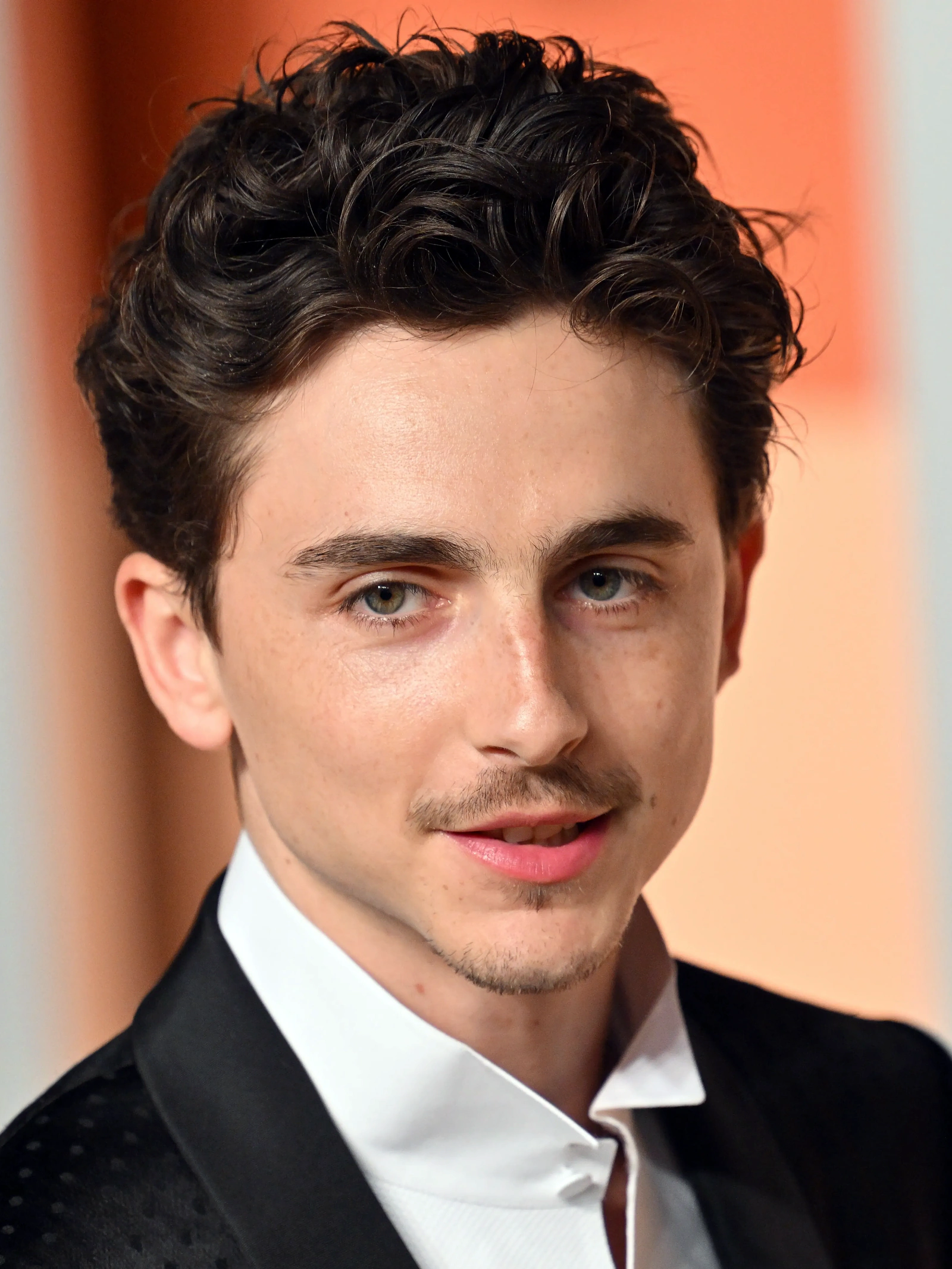
| 7 Quotes | |
| Born as | Timothée Hal Chalamet |
| Occup. | Actor |
| From | USA |
| Born | December 27, 1995 New York City, New York, USA |
| Age | 30 years |
| Cite | |
Citation Formats
APA Style (7th ed.)
Timothée chalamet biography, facts and quotes. (2026, March 9). FixQuotes. https://fixquotes.com/actors/timothee-chalamet/
Chicago Style
"Timothée Chalamet biography, facts and quotes." FixQuotes. March 9, 2026. https://fixquotes.com/actors/timothee-chalamet/.
MLA Style (9th ed.)
"Timothée Chalamet biography, facts and quotes." FixQuotes, 9 Mar. 2026, https://fixquotes.com/actors/timothee-chalamet/. Accessed 29 Mar. 2026.
Early Life and Background
Timothee Hal Chalamet was born on December 27, 1995, in Manhattan, New York City, and grew up in Hell's Kitchen, a neighborhood whose old theatrical roughness had already begun to give way to gentrification but still carried the density and improvisational energy of downtown life. He was born into a bilingual, culturally mixed household: his mother, Nicole Flender, a New Yorker with a background in dance and acting who worked in real estate; his father, Marc Chalamet, a French journalist and editor. That dual inheritance - American performance culture on one side, French intellectual and linguistic formation on the other - became central to his public identity and private method. He spent summers in Le Chambon-sur-Lignon, the French village tied to his father's family, and developed an ease moving between New York directness and European reserve.His family was artistically adjacent rather than conventionally celebrity-driven, which mattered. He saw creative work not as fantasy but as labor with discipline, rejection, and craft built into it. His older sister, Pauline Chalamet, also pursued acting, making performance part of family conversation rather than a distant aspiration. As a child he was drawn to mimicry, sports, and camera play in equal measure. He has spoken of an early fascination with performance that was less about glamour than about energy, rhythm, and trying on selves. That instinct found expression in homemade videos, school productions, and a childhood spent observing how identity shifts across neighborhoods, languages, and social classes - an education in character long before formal training.
Education and Formative Influences
Chalamet attended MS 54 and then Fiorello H. LaGuardia High School of Music and Art and Performing Arts, the storied New York public arts school whose alumni loom large in American theater and film. There he moved from raw charisma into technique, sharpening voice, physicality, and emotional access while also developing the competitiveness that would mark his rise. He acted in school productions, made comic videos, and absorbed the city's living archive of performance, from downtown independent film to classic Hollywood and French cinema. He briefly attended Columbia University, then transferred to NYU's Gallatin School before his professional momentum made full-time study impractical. His formative influences were eclectic: stage training, basketball's improvisational tempo, the inward volatility of actors like Philip Seymour Hoffman and Joaquin Phoenix, and the example of performers who could appear both vulnerable and self-possessed. By his late teens, he had already learned a crucial lesson of modern screen acting: intimacy reads as truth only when controlled by intelligence.Career, Major Works, and Turning Points
After early television appearances, including Homeland, Chalamet's breakthrough came with Luca Guadagnino's Call Me by Your Name in 2017, where his performance as Elio Perlman fused adolescent intellect, erotic awakening, vanity, shame, and grief with unusual transparency. The role made him, at 22, one of the youngest nominees for the Academy Award for Best Actor in decades. Yet the breakthrough was not isolated: 2017 also brought strong supporting work in Greta Gerwig's Lady Bird and a darker turn in Hostiles. He followed with Beautiful Boy, playing addiction with unsettling fragility, and then made a risky pivot between prestige and scale: Little Women, The King, Wes Anderson's The French Dispatch, Denis Villeneuve's Dune and Dune: Part Two, and a musically embodied portrait in Wonka. His choices reveal both ambition and caution - a refusal to be trapped as merely a sensitive indie prodigy, and a determination to test whether introspective acting could survive franchise cinema. Across these projects, the turning point was not only fame but adaptation to fame: learning how to remain porous as a performer while becoming a global image.Philosophy, Style, and Themes
Chalamet's acting style depends on alertness - listening so intensely that stillness itself becomes dramatic action. He often plays young men divided against themselves: intellect tugging one way, appetite another, social performance a third. That interior fragmentation is not incidental to his appeal; it is the engine of it. He has described this psychological multiplicity with unusual candor: “I don't even know if I want to share this with you because it's quite intimate, but as an actor, you sort of live at a dining room table in your head, and you have about 30 personalities at the table, and you're trying to attend to them, without going crazy”. That image captures the essence of his screen presence - not shapeshifting through masks, but coordinating competing impulses in real time. He rarely projects settled authority; instead he dramatizes consciousness itself, the nervous weather of becoming.This helps explain why his performances feel contemporary. In an era suspicious of bombast yet hungry for sincerity, he offers emotional intelligence without heaviness. His own remarks point to a self-made ethic of presence and agency: “For me, it's really about staying present, in that wave”. and “You could be the master of your fate, you could be the captain of your soul, but you have to realize that life is coming from you and not at you, and that takes time”. The first suggests an actor committed to receptivity rather than domination; the second reveals a young star trying to convert passivity into authorship. That effort matters because celebrity came to him with unusual speed, and his best work often turns that destabilization into art - playing boys and men who are overwhelmed by desire, history, family expectation, or destiny, yet still searching for a moral center. Even when cast as a romantic object or reluctant prince, he specializes in uncertainty made articulate.
Legacy and Influence
Chalamet's legacy is still forming, but his influence is already visible in how stardom is imagined for male actors in the 21st century. He helped revive the idea that a leading man could be slight, soft-spoken, literary, fashion-conscious, and commercially viable at once. He bridges art-house cinema and franchise filmmaking without fully surrendering to either, and he has become a reference point for younger performers trying to balance vulnerability with self-possession. Just as important, he arrived at a moment when audiences were newly attentive to fluid identity, public scrutiny, and emotional nuance, and he embodied those tensions rather than pretending to transcend them. If classic stardom often depended on seeming complete, Chalamet's depends on remaining open - to contradiction, to risk, and to the unfinished self.Our collection contains 7 quotes written by Timothée, under the main topics: Deep - Live in the Moment - Confidence - Self-Improvement - Career.
Source / external links