
Tom Baker Biography Quotes 10 Report mistakes
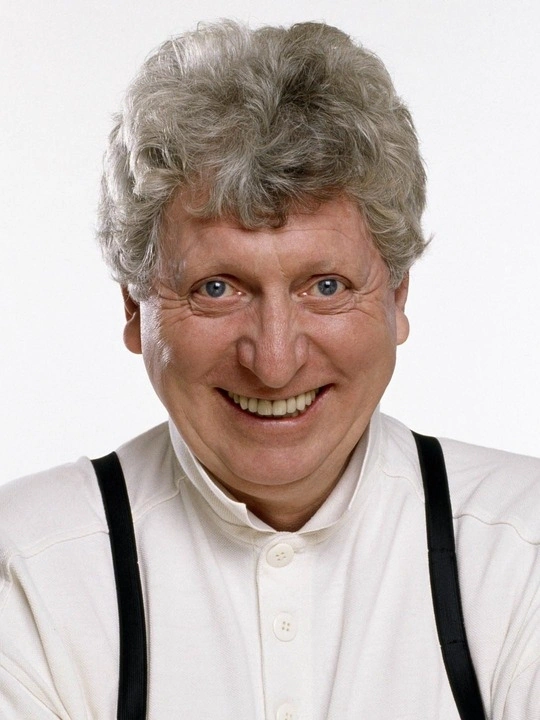
| 10 Quotes | |
| Born as | Thomas Stewart Baker |
| Occup. | Actor |
| From | England |
| Born | January 20, 1934 Liverpool, Lancashire, England |
| Age | 92 years |
| Cite | |
Citation Formats
APA Style (7th ed.)
Tom baker biography, facts and quotes. (2026, February 11). FixQuotes. https://fixquotes.com/actors/tom-baker/
Chicago Style
"Tom Baker biography, facts and quotes." FixQuotes. February 11, 2026. https://fixquotes.com/actors/tom-baker/.
MLA Style (9th ed.)
"Tom Baker biography, facts and quotes." FixQuotes, 11 Feb. 2026, https://fixquotes.com/actors/tom-baker/. Accessed 5 Mar. 2026.
Early Life
Thomas Stewart Baker was born on 20 January 1934 in Liverpool, England. Raised in a working-class Roman Catholic family, he grew up during and after the Second World War in a city marked by hardship and resilience. Leaving school young, he entered religious life as a teenager and spent several years as a novice monk. Ultimately deciding not to take vows, he left the monastery and completed National Service in the British Army, serving in the Royal Army Medical Corps. The mix of monastic discipline, military duty, and the wry humor of his native Liverpool shaped a distinctive voice and presence that would later anchor his acting career.Formative Years on Stage and Screen
After the army, Baker gravitated toward acting, developing his craft on the stage. He worked with the National Theatre, where association with figures such as Laurence Olivier helped him gain confidence and visibility. His striking looks and resonant, amused baritone brought him attention in film and television. A breakthrough came with his vivid portrayal of Grigori Rasputin in Nicholas and Alexandra (1971), which revealed a capacity for eccentric intensity. Other screen roles in the early 1970s included appearances in The Vault of Horror (1973) and a memorable turn as the sorcerer Koura in The Golden Voyage of Sinbad (1973), underscoring his gift for grandly mischievous villains and charismatic outsiders.Breakthrough as the Fourth Doctor
In 1974 Baker was cast by producer Barry Letts as the Fourth Doctor in Doctor Who, succeeding Jon Pertwee. At the time he was between jobs and famously practical about opportunities, yet the role proved a perfect fit. The Doctor he created felt alien and mercurial, alternating warmth with a disconcerting, impish aloofness. Costume designer James Acheson devised the long, multicolored scarf that became inseparable from Baker's image; paired with a broad-brimmed hat, it signaled whimsy and unpredictability. Jelly Babies in the pocket, a sly grin, and a voice that could turn from kindly to ominous in a line, he quickly became the face of the series for a generation.Under producer Philip Hinchcliffe and script editor Robert Holmes, his early seasons leaned into gothic science fiction and literary pastiche, yielding acclaimed stories such as Genesis of the Daleks (by Terry Nation), Pyramids of Mars, and The Talons of Weng-Chiang. Later years under producer Graham Williams, and then John Nathan-Turner, pivoted in tone, but the core of Baker's Doctor remained irrepressible. City of Death, overseen during Douglas Adams's tenure as script editor, showcased his comedic timing against a high-concept caper backdrop, reinforcing his range within the show's elastic format.
Companions, Collaborators, and Adversaries
Baker's era is inseparable from the people around him. On screen, he shared chemistry with Elisabeth Sladen as Sarah Jane Smith, whose pluck and moral clarity grounded his Doctor's eccentricity. With Ian Marter as Harry Sullivan, he played wry mentor to a stalwart companion. Louise Jameson's fierce, independent Leela offered a striking contrast to his whimsical intellect, and Mary Tamm's patrician Romana I introduced a peer, not a pupil, to spar with. Lalla Ward's Romana II extended that dynamic with charm and wit; their rapport on screen deepened into a marriage off screen. K9, voiced by John Leeson (and for a time David Brierley), added an arch, logical counterpoint. The Brigadier, played by Nicholas Courtney, provided continuity with the show's past and a genial authority figure for Baker's cosmic vagrant.Behind the camera, Holmes's ear for character and Hinchcliffe's appetite for atmosphere helped define the feel of the mid-1970s episodes. Directors like David Maloney and Douglas Camfield delivered muscular, memorable storytelling. Later, producer Graham Williams balanced budget and ambition, while John Nathan-Turner ushered in a glossier aesthetic as Baker's tenure wound down. Among adversaries, Michael Wisher's Davros emerged in Genesis of the Daleks as a chilling ideologue; later takes by David Gooderson and, at the end of Baker's run, Anthony Ainley's incarnation of the Master in Logopolis, framed the Doctor's departure with a sense of fated rivalry.
Departure and Immediate Aftermath
Baker left Doctor Who in 1981 with Logopolis, concluding the longest run of any classic-series Doctor. The decision followed creative shifts under a new production team and his own sense that the role should refresh for the audience. The farewell carried weight precisely because his Doctor had become a cultural fixture: chaotic, compassionate, and slightly dangerous. He exited with a sense of myth, setting a high bar for successors.Beyond Doctor Who
After leaving the TARDIS, Baker leaned into his strengths: a singular voice and a flair for the theatrical. He presented the children's literature series The Book Tower, bringing a conspiratorial warmth to the camera. In comedy, he delivered a riotous cameo as the piratical Captain Redbeard Rum in Blackadder II, gleefully sending up his own grandiosity. He took on Puddleglum in the BBC's The Chronicles of Narnia: The Silver Chair (1990), finding a dry, melancholic humor in the character that resonated with audiences.Voice work became central. Baker's narration and commercial voice-overs were in demand, culminating in a defining stint as narrator of the sketch show Little Britain, where his urbane absurdity became part of the series' signature. He also returned to the world of Doctor Who on audio with Big Finish Productions, beginning a long run of original Fourth Doctor adventures that reconnected him with listeners and former colleagues. In 2013 he appeared, to widespread delight, in The Day of the Doctor as the Curator, sharing a winking, time-bending scene with Matt Smith that honored his legacy while preserving his mystery. He also took part in the completion of Shada, the long-unfinished story from the Douglas Adams era, lending his presence to a piece of series lore.
Writing and Reflections
Baker's voice extends to the page. His autobiography, Who on Earth Is Tom Baker? (1997), mixes show-business anecdote with rueful self-scrutiny, recalling his austere years in the monastery, the zigzag early career, and the unexpected burdens of fame. He also published the darkly comic novella The Boy Who Kicked Pigs (1999), which showcases his taste for mordant humor and moral fables. Across interviews and public appearances, he has reflected on the thin line between performance and persona, acknowledging that the Fourth Doctor magnified traits he already possessed: curiosity, contrariness, and a knack for unsettling laughter.Personal Life
Baker's personal life occasionally overlapped with his work. He married Lalla Ward in 1980 after they had worked together on Doctor Who; the marriage ended amicably a few years later. From an earlier marriage he has two sons, and in later years he settled into a quieter domestic routine in England, prioritizing writing, recording, and selective screen work. He has spoken candidly about the challenges of sudden celebrity and the solace he found in steady creative labor, a small circle of friends, and the affections of long-standing fans.Legacy
Tom Baker's place in British popular culture is anchored by the outsized success of his Doctor. Polls across decades have repeatedly ranked his portrayal as a favorite, and serials such as Genesis of the Daleks and City of Death regularly appear near the top of fan and critic lists. The scarf, the hat, and the twinkling sarcasm form an iconography understood well beyond science fiction fandom. Yet the larger legacy is one of invitation: he made strangeness inviting and intelligence delightful, encouraging viewers to embrace the odd, to laugh at the pompous, and to greet the universe with a pocketful of curiosity. Through collaborators like Elisabeth Sladen, Louise Jameson, Mary Tamm, Lalla Ward, Robert Holmes, Philip Hinchcliffe, Douglas Adams, and many more, he helped define a collaborative era of television that remains influential. Decades on, his voice and visage still carry the ineffable promise, both mischievous and kind, that adventure could begin at any moment.Our collection contains 10 quotes written by Tom, under the main topics: Wisdom - Art - Sarcastic - Deep - Failure.
Other people related to Tom: Sarah Sutton (Actress), Colin Baker (Actor), Julian Glover (Actor)
Source / external links