
Tom Cruise Biography Quotes 29 Report mistakes
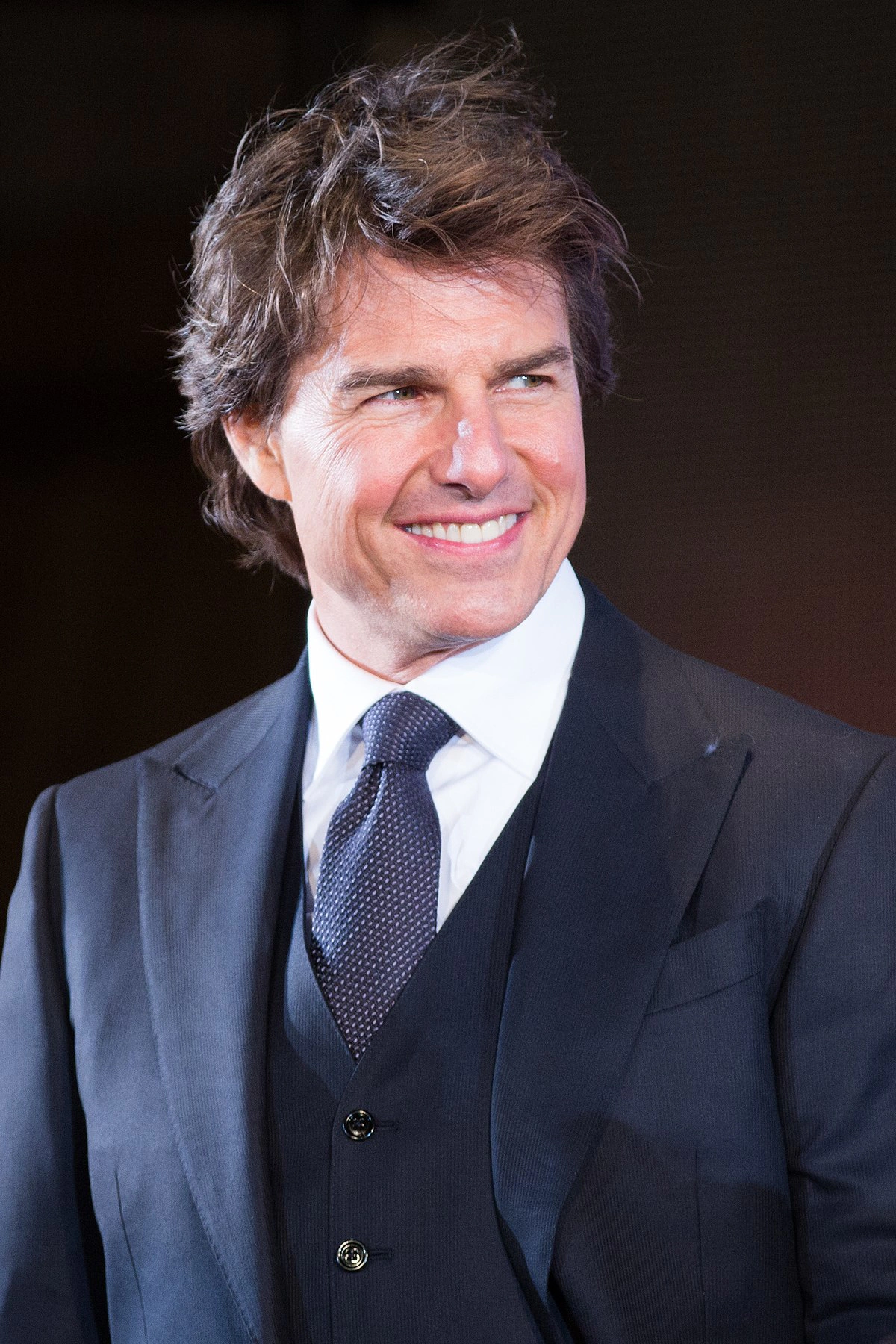
| 29 Quotes | |
| Occup. | Actor |
| From | USA |
| Born | July 3, 1962 Syracuse, New York |
| Age | 63 years |
| Cite | |
Citation Formats
APA Style (7th ed.)
Tom cruise biography, facts and quotes. (2026, March 2). FixQuotes. https://fixquotes.com/actors/tom-cruise/
Chicago Style
"Tom Cruise biography, facts and quotes." FixQuotes. March 2, 2026. https://fixquotes.com/actors/tom-cruise/.
MLA Style (9th ed.)
"Tom Cruise biography, facts and quotes." FixQuotes, 2 Mar. 2026, https://fixquotes.com/actors/tom-cruise/. Accessed 21 Mar. 2026.
Early Life and Background
Thomas Cruise Mapother IV was born on July 3, 1962, in Syracuse, New York, into a mobile, strained household that moved with the fortunes of his father, Thomas Cruise Mapother III, an electrical engineer, and his mother, Mary Lee Pfeiffer, a special education teacher. One of four children, he grew up closely bonded to his three sisters, a closeness that later served as emotional ballast against the public churn of celebrity and the private uncertainty of adolescence. His early environment was marked by frequent relocations across the United States and Canada, a pattern that trained him to read rooms quickly, adapt fast, and treat stability as something you build through work rather than inherit.
Those moves coincided with a cultural moment when American masculinity was being remade onscreen - from the bruised post-Vietnam antiheroes of the 1970s to the sleek, high-achievement figures of the 1980s. Cruise would eventually become one of the era's defining faces, but his childhood was less about glamour than grit: changing schools, feeling like an outsider, and turning restlessness into a kind of forward momentum. The family eventually fractured; his parents divorced when he was young, and Cruise later spoke of his father in harsh terms, a complicated imprint that made control, preparedness, and self-reliance feel not optional but necessary.
Education and Formative Influences
Cruise's schooling was irregular, punctuated by moves and a reported struggle with dyslexia that made the ordinary tasks of reading and classroom performance feel like tests of identity. In adolescence he briefly considered a Catholic seminary, an episode that suggests not piety alone but a search for structure, belonging, and a disciplined path. Acting arrived as a practical revelation: a place where intensity was rewarded and reinvention was permitted. He left formal education behind and pushed into the audition economy of late-1970s New York and early-1980s Hollywood, learning the craft in public, under the pressure that would become his natural habitat.
Career, Major Works, and Turning Points
After early screen work, Cruise broke through with "Risky Business" (1983), then became a global star with "Top Gun" (1986), embodying the decade's adrenaline, polish, and competitive ethos. Unlike many heartthrobs, he used stardom as leverage to chase range: "The Color of Money" (1986) and "Rain Man" (1988) placed him beside heavyweight collaborators; "Born on the Fourth of July" (1989) announced his seriousness, while "A Few Good Men" (1992) and "The Firm" (1993) confirmed his command of commercial drama. A key turning point came with "Mission: Impossible" (1996) and the creation of his production footprint, shifting him from hired lead to architect of a long-running franchise. He kept toggling between auteur-led experiments ("Eyes Wide Shut" in 1999, "Magnolia" in 1999) and mass entertainment, later fusing both impulses through precision action in "Mission: Impossible" sequels and a late-career cultural jolt with "Top Gun: Maverick" (2022). Public controversies - especially his outspoken affiliation with Scientology and a media cycle that magnified his personal life - tested his brand, yet his work ethic, risk tolerance, and insistence on theatrical spectacle repeatedly pulled attention back to the screen.
Philosophy, Style, and Themes
Cruise's inner life, as it emerges across roles and interviews, is defined by a paradox: supreme physical confidence paired with an almost ritual humility before the work. “Every single time I start to do a picture, without fail, I feel as if I don't know what I'm doing”. The line is less self-deprecation than a glimpse of his operating system - fear transmuted into preparation, doubt converted into repetition, rehearsal, and technical mastery. It helps explain his on-camera intensity: the smile that can read as charm or challenge, the sprint that functions as signature, the insistence on doing stunts that externalize a private demand to earn the moment rather than coast on persona.
His acting style favors immediacy over confession, a preference that keeps sentiment from calcifying into performance tics. “What I find sometimes that is tricky is if actors are using too much of their own life in a picture, in a scene, they get locked into a particular way to play the scene, and it lacks an immediacy”. That philosophy aligns with his best work: characters driven by mission, competence, and velocity, yet shadowed by vulnerability - the cocky aviator who must learn limits, the wounded veteran seeking moral language, the professional who discovers his own replaceability. Even his fascination with endings carries a hard edge of realism: “Nothing ends nicely, that's why it ends”. In Cruise's filmography, closure is rarely soft; it is earned through action, sacrifice, or the acceptance that control is temporary, which may be why his heroes keep moving - as if motion itself is a form of faith.
Legacy and Influence
Cruise endures as one of the last true movie stars - not only famous, but structurally important to how big films are financed, marketed, and physically staged. He helped define the 1980s leading-man template, then refused to remain trapped in it, using a producer's leverage to alternate between prestige risk and crowd-pleasing engineering. His commitment to theatrical exhibition and practical stunt work reset expectations for modern action, influencing a generation of performers and filmmakers who now treat authenticity as a selling point rather than a luxury. Whatever the debates around his private affiliations and public controversies, his professional legacy is unusually coherent: a career built on relentless craft, calibrated risk, and the belief that spectacle still matters when it is anchored by a human being willing to be frightened at the starting line and disciplined enough to run anyway.
Our collection contains 29 quotes written by Tom, under the main topics: Witty One-Liners - Motivational - Art - Learning - Kindness.
Other people related to Tom: Emmanuelle Beart (Actress), Kelly McGillis (Actress), Noah Taylor (Actor), Sumner Redstone (Businessman), Craig T. Nelson (Actor), Bryan Singer (Director), Anthony Edwards (Actor), Matt Dillon (Actor), John Grisham (Writer), Rebecca De Mornay (Actress)
Source / external links