
Tyler Perry Biography Quotes 19 Report mistakes
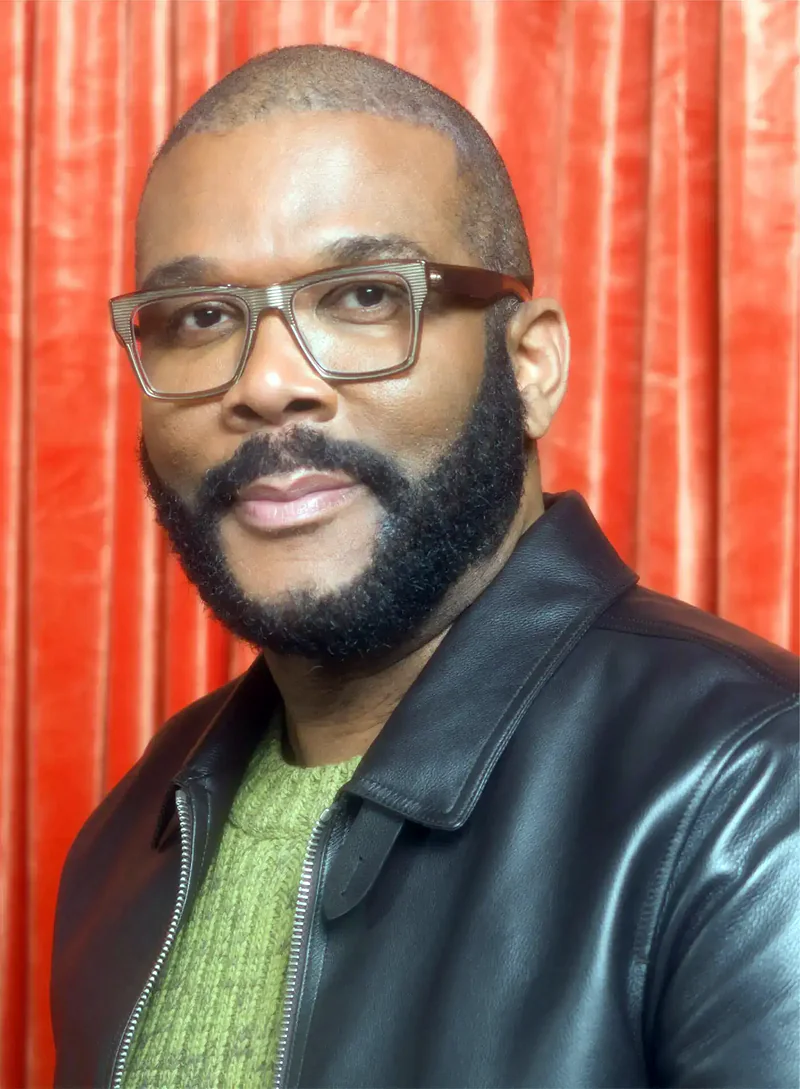
Attr: PEN America
| 19 Quotes | |
| Occup. | Actor |
| From | USA |
| Born | September 14, 1969 |
| Age | 56 years |
| Cite | |
Citation Formats
APA Style (7th ed.)
Tyler perry biography, facts and quotes. (2026, February 11). FixQuotes. https://fixquotes.com/actors/tyler-perry/
Chicago Style
"Tyler Perry biography, facts and quotes." FixQuotes. February 11, 2026. https://fixquotes.com/actors/tyler-perry/.
MLA Style (9th ed.)
"Tyler Perry biography, facts and quotes." FixQuotes, 11 Feb. 2026, https://fixquotes.com/actors/tyler-perry/. Accessed 13 Feb. 2026.
Early Life and Background
Tyler Perry was born Emmitt Perry Jr. on September 14, 1969, in New Orleans, Louisiana, the son of Willie Maxine Perry and Emmitt Perry Sr. His childhood unfolded in a house marked by instability and violence, and he later spoke plainly about abuse that left lasting psychological grooves: hypervigilance, shame, and a need to build an inner refuge. In a city where church culture and neighborhood talk were vivid parts of daily life, Perry absorbed the cadences of Southern Black speech and the moral drama of Sunday testimony - ingredients that would later become the engine of his characters.As a young man he changed his name to Tyler, distancing himself from his father while holding on to the paradox that would define his work: pain transmuted into public storytelling. He worked a string of jobs, lived with scarcity, and watched how humor could protect people from collapse. That protective impulse - to make audiences laugh while naming what hurts - became his earliest artistic instinct, shaped less by formal arts institutions than by lived survival and the community rituals of the Gulf South.
Education and Formative Influences
Perry did not follow a conventional academic route; his formative education was self-directed and emotional rather than credentialed. A pivotal nudge came from a television broadcast in which Oprah Winfrey encouraged viewers to write as a way to heal, and Perry took the advice literally, drafting letters to himself and then transforming those confessions into scenes. Gospel preaching, the theatricality of church services, and the direct moral logic of Bible stories gave him a template: show sin and consequence, then stage a reckoning that offers release.Career, Major Works, and Turning Points
In the early 1990s Perry staged his first play, I Know Ive Been Changed, in Atlanta; it initially failed and left him deep in debt, but he kept rewriting, touring, and learning his audience by proximity rather than by market research. By the late 1990s and early 2000s, the play found traction through word-of-mouth in Black churches and community venues, and Perry built a theater-to-DVD pipeline that bypassed traditional gatekeepers. His breakout on film came with Diary of a Mad Black Woman (2005), followed by Madea's Family Reunion (2006) and an expanding Madea universe that made him a household name as an actor and creator. He scaled into television with House of Payne (debut 2006) and later The Haves and the Have Nots (2013), proving an industrial model: rapid production, loyal audiences, and ownership. The culmination of that model was the 330-acre Tyler Perry Studios, opened in 2019 on the former Fort McPherson site in Atlanta - a symbol of both personal reinvention and a new locus of Black-controlled production infrastructure.Philosophy, Style, and Themes
Perry's inner life is the hidden subject of his public output: a man trying to outwrite trauma by turning it into parable. His comedies often begin as coping mechanisms, then pivot into melodrama because the pain underneath is real; laughter is permission to stay in the room until the hard truths arrive. Across Madea, his stage plays, and his screen dramas, he returns to domestic betrayal, addiction, generational harm, and the moment a character decides whether to repeat the past or interrupt it. The work is frequently criticized for broad strokes, yet its emotional architecture is deliberate - a sermon shaped like entertainment, aiming for recognition rather than subtlety.Forgiveness, for Perry, is not a soft virtue but a technology of survival. "It's not an easy journey, to get to a place where you forgive people. But it is such a powerful place, because it frees you". That line is less inspirational slogan than autobiography: he has described how unresolved childhood pain corroded his happiness until he learned to release it, and his protagonists often undergo the same conversion from vengeance to freedom. Faith is similarly nonnegotiable in his worldview, both as personal anchor and creative boundary: "If you don't want my God here, you don't want me here either. God has been too good to me to go and try to sell out to get some money". Even when his characters are messy, the stories bend toward a moral horizon where grace is possible and where community - often embodied by church women, grandmothers, and matriarchs - holds the line against despair. "Everyone can relate to love, hurt, pain, learning how to forgive, needing to get over, needing the power of God in their life". , and Perry builds narratives as mass-accessible rituals for that shared human syllabus.
Legacy and Influence
Tyler Perry's legacy is twofold: an artistic brand that normalized faith-inflected Black popular melodrama at blockbuster scale, and an ownership-driven production empire that altered the business geography of American entertainment. By proving that underserved audiences could sustain films, stage tours, and long-running TV series, he widened what studios and networks consider bankable and helped create pathways for Black actors, writers, and crews in Atlanta and beyond. His work remains a lightning rod in cultural criticism, yet its endurance - and the sheer institutional fact of Tyler Perry Studios - marks a lasting shift: a creator who turned private wounds into a public industry and, in doing so, made authorship and infrastructure part of the same story.Our collection contains 19 quotes written by Tyler, under the main topics: Motivational - Work Ethic - Overcoming Obstacles - Movie - Faith.
Other people related to Tyler: Sanaa Lathan (Actress), Blair Underwood (Actor), Jill Scott (Musician), Shemar Moore (Actor), Phylicia Rashad (Actress), Loretta Devine (Actress)