
Tyrone Power Biography Quotes 2 Report mistakes
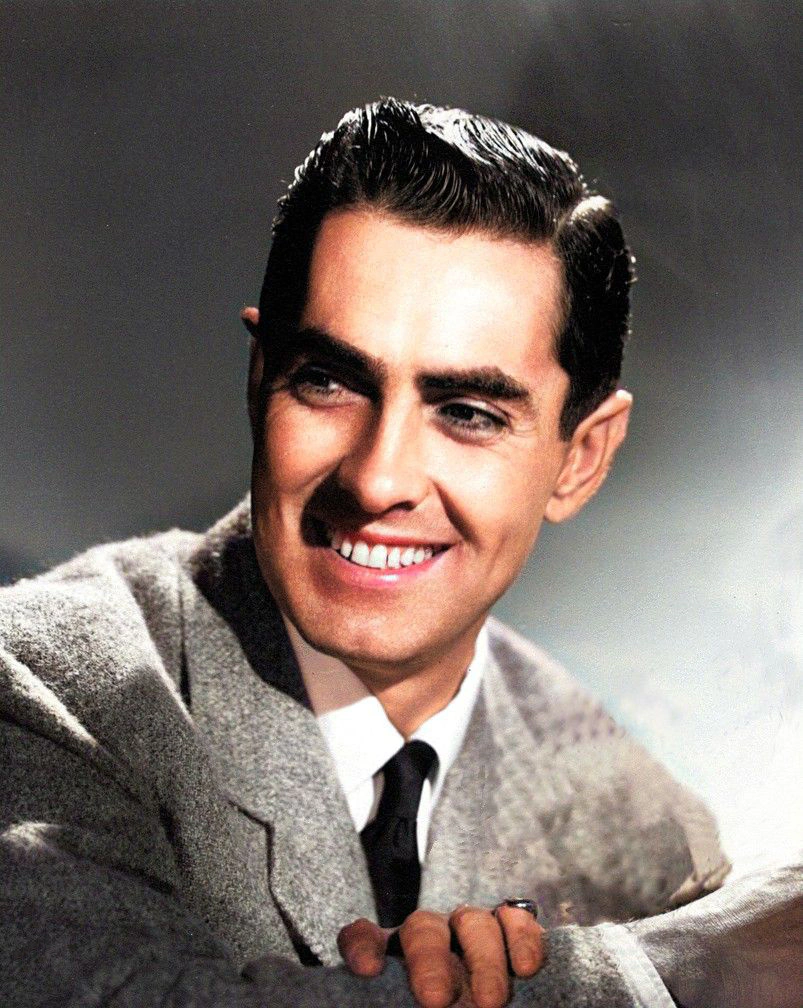
| 2 Quotes | |
| Born as | Tyrone Edmund Power III |
| Occup. | Actor |
| From | USA |
| Spouse | Annabella (1939-1948), Linda Christian (1949-1956) |
| Born | May 5, 1914 Cincinnati, Ohio, USA |
| Died | November 15, 1958 Madrid, Spain |
| Cause | Heart attack |
| Aged | 44 years |
| Cite | |
Citation Formats
APA Style (7th ed.)
Tyrone power biography, facts and quotes. (2026, March 22). FixQuotes. https://fixquotes.com/actors/tyrone-power/
Chicago Style
"Tyrone Power biography, facts and quotes." FixQuotes. March 22, 2026. https://fixquotes.com/actors/tyrone-power/.
MLA Style (9th ed.)
"Tyrone Power biography, facts and quotes." FixQuotes, 22 Mar. 2026, https://fixquotes.com/actors/tyrone-power/. Accessed 25 Mar. 2026.
Early Life and Background
Tyrone Edmund Power III was born in Cincinnati, Ohio, on May 5, 1914, into one of America's great theatrical dynasties. His father, Tyrone Power Sr., was a celebrated stage and screen actor, and his mother, Helen Emma Reaume, worked in the theater world as well. The family name carried both privilege and pressure: long before he had earned an audience of his own, he inherited a public identity shaped by expectation, comparison, and loss. When his father died in 1931, the event marked not simply a personal bereavement but the collapse of the model he had hoped to follow. In the shadow of that death, the son began to convert grief into vocation.
His childhood was split between the mobility of theatrical life and the instability of a profession built on reputation. He attended schools in Cincinnati and later in California, absorbing both Midwestern reserve and Hollywood proximity. Handsome, athletic, and socially polished, he could easily have become only the latest heir to a famous name. What made him more complicated was an early awareness that beauty can become a trap. The image that later made him one of 20th Century-Fox's most bankable stars was visible very young, and with it came a lifelong tension between inner seriousness and outer ease - a division that would define both his career choices and his private frustrations.
Education and Formative Influences
Power's formal education was less decisive than his apprenticeship through observation, imitation, and persistence. After studying at Purcell High School and spending time in California, he pursued acting in the early 1930s with little immediate success, taking small roles, enduring screen tests, and learning craft in stock companies and on the New York stage. His father's legacy gave him entry but not mastery; that had to be built through diction, posture, timing, and the hard discipline of making romantic magnetism look effortless. He admired stage acting as the serious proving ground, and the contrast between the theater's rigor and Hollywood's star machine shaped him early. The Depression-era entertainment industry also taught him that survival often depended on adaptability: one learned to fence, ride, smile, and suffer under typecasting while waiting for material worthy of genuine emotional risk.
Career, Major Works, and Turning Points
Power's breakthrough came after he signed with 20th Century-Fox and exploded into stardom with Lloyd's of London in 1936. Fox quickly built him into the ideal swashbuckling and romantic lead of late-1930s and 1940s Hollywood, casting him in hit after hit: Alexander's Ragtime Band, Jesse James, The Mark of Zorro, Blood and Sand, Son of Fury, The Black Swan, and Captain from Castile. He was not merely decorative; he combined grace, quick intelligence, and a lightly ironic charm that kept heroics from becoming stiff. Yet the studio system also confined him, repeatedly packaging him as an aristocratic adventurer when he wanted range and gravity. World War II altered him. He served in the U.S. Marine Corps as a transport pilot, and military experience deepened his seriousness and interrupted the fantasy aura of his screen persona. After the war he sought darker, more adult work, notably in Nightmare Alley, one of his finest performances, and later in The Razor's Edge, Witness for the Prosecution, and Billy Wilder's The Sun Also Rises. He returned often to the stage to reclaim artistic control. In 1958, while filming Solomon and Sheba in Spain, he suffered a fatal heart attack after shooting a dueling scene and died on November 15, still in his early forties, with his career in the midst of a mature second phase.
Philosophy, Style, and Themes
Power's screen style rested on a paradox: he projected ease while hinting at unease. Audiences saw elegance, virility, and confidence; beneath them flickered melancholy, fatigue, and self-scrutiny. That tension made him more than a matinee idol. He understood, perhaps too clearly, the gap between celebrity and accomplishment. “I've done an awful lot of stuff that's a monument to public patience”. The self-mockery is revealing. It was not false modesty but an actor's impatience with work that depended too heavily on surface. He knew that the camera adored him, and he also knew that adoration could cheapen ambition by rewarding repetition. This is why even in costume adventures he often played men whose poise felt like armor - characters moving elegantly across worlds of violence, betrayal, or moral compromise.
That dissatisfaction sharpened into an artistic credo. “I'm sick of all these knights in shining armor parts, I want to do something worthwhile like plays and films that have something to say”. The line reads as a complaint against typecasting, but it is more than that: it is an argument for adulthood, for seriousness after the narcotic of studio-manufactured glamour. His best later performances pursued damaged men rather than ideal heroes - the carnival schemer of Nightmare Alley, the spiritually restless veteran of The Razor's Edge, the polished witness under pressure in Witness for the Prosecution. Power's theme, in the end, was not heroism but disillusion disciplined by style. He brought to the screen a courtly exterior haunted by the suspicion that identity itself is partly performance.
Legacy and Influence
Tyrone Power remains one of classic Hollywood's most emblematic stars, but his lasting importance lies in the friction between icon and artist. He helped define the romantic male lead of the studio era while also exposing the cost of that definition from within. Later actors who sought to break out of beauty-based casting found in his career an early version of the same struggle. His work in The Mark of Zorro and Captain from Castile preserves the golden mechanics of old Hollywood adventure; Nightmare Alley and Witness for the Prosecution preserve something rarer - proof that he possessed depth equal to his fame. His early death froze him between legend and reinvention, ensuring that he is remembered not only for what he was allowed to become on screen, but for the more searching actor he was still becoming.
Our collection contains 2 quotes written by Tyrone, under the main topics: Witty One-Liners - Movie.
Other people related to Tyrone: Mel Ferrer (Actor), Darryl F. Zanuck (Director), Allan Dwan (Director)
Source / external links