
Victoria Abril Biography Quotes 25 Report mistakes
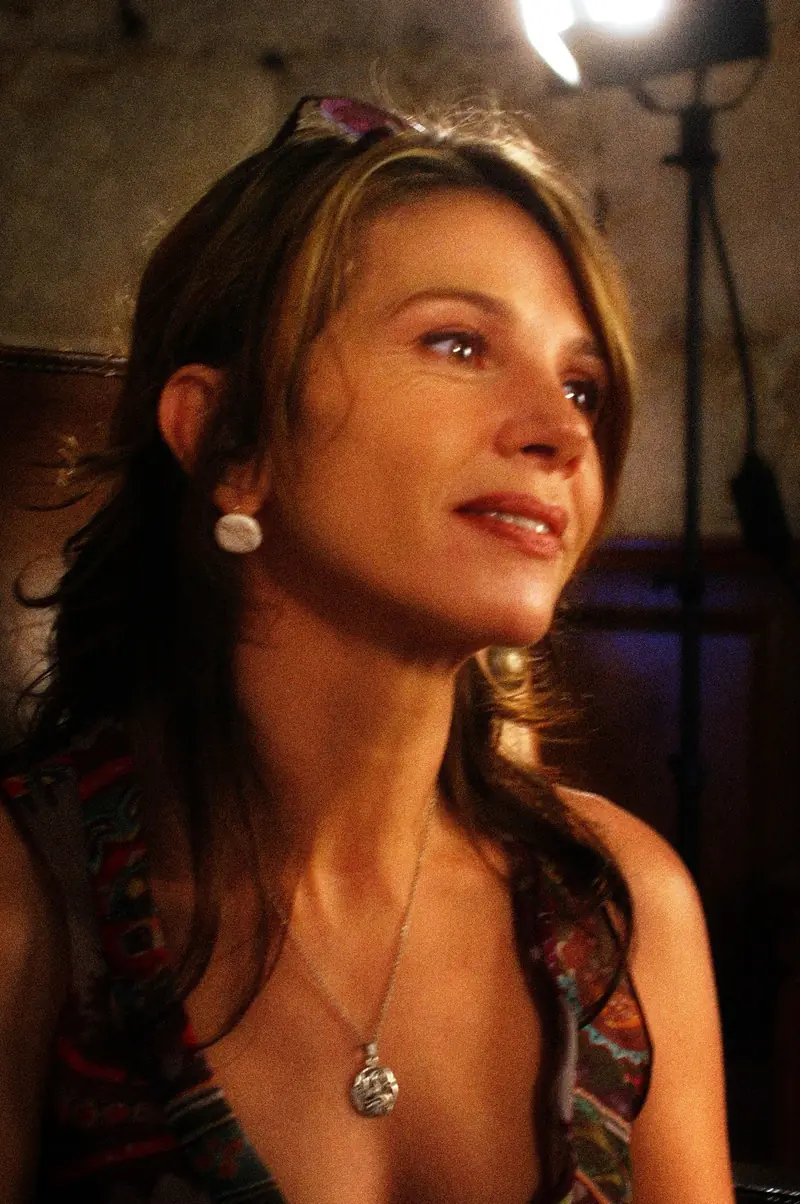
| 25 Quotes | |
| Born as | Victoria Mérida Rojas |
| Occup. | Actress |
| From | Spain |
| Born | July 4, 1959 Madrid, Spain |
| Age | 66 years |
Victoria Abril was born Victoria Merida Rojas on July 4, 1959, in Madrid, Spain, into a country still under the rigid late-Franco order, where respectability narrowed the choices of working-class families and public culture moved through censorship and double meanings. She grew up watching Spain begin to crack open - first through the slow social thaw of the 1960s, then through the abrupt emotional whiplash of the 1970s, when the dictatorship ended and a new, risk-taking urban life started to surface. That atmosphere mattered: her adult screen persona would often carry both the old Spain's anxiety and the new Spain's appetite for transgression.
From early on she gravitated to performance not as ornament but as exit route - a way to earn, to move, to be taken seriously. The family expectation that a practical job should come first remained a pressure line, sharpening her drive toward self-sufficiency and a kind of inward stubbornness. When she later spoke about independence as a central motive, it fit a biography that begins not in privilege, but in the hard math of work, discipline, and the desire to control her own fate.
Education and Formative Influences
Abril trained in dance with an intensity that bordered on monastic, juggling long days between the studio and school while living under the threat of failure: "I went to dance classes from 9 in the morning until 1, then to school from 3 to 10 at night, always under the threat that if I failed a single course I could forget about dancing". That regimen shaped her physical precision and her later acting rhythms - the way she uses posture, tempo, and stillness as narrative tools - and it also taught her that art could be a contract with consequences, not a hobby.
Career, Major Works, and Turning Points
She entered film young, first gaining wide recognition in the late 1970s as Spanish cinema accelerated into the democratic transition and the Movida-era reimagining of identity and desire. A decisive early step was working with Vicente Aranda in Change of Sex (1977), a daring project for its time; soon after, she led Carlos Saura's Blood Wedding (1981), where dance and drama fused into a single language. In the 1980s and early 1990s she became an emblem of adult, morally complicated femininity in European cinema, most famously through Pedro Almodovar's Matador (1986), Tie Me Up! Tie Me Down! (1990), and High Heels (1991). She also built a major French career - including the visceral Nobody's Love (Ennemis comme avant, 1991) and, most notably, Patrice Chereau's Queen Margot (1994), a role that helped secure her standing as an actress of pan-European range. Over time she moved between Spanish, French, and international productions, leaning into characters defined less by likability than by appetite, shame, courage, and survival.
Philosophy, Style, and Themes
Abril's performances are often built around the idea that the body tells the truth even when the character lies. That comes from the dancer's training, but it also reflects a personal ethic of emotional authenticity: "You can fake your age or mask it, but the passion that moves the characters has to be real". Her best work weaponizes that principle. In Almodovar, she can be feverish and funny, using melodrama as a scalpel; in Aranda and Chereau, she brings a harsher electricity, a sense that the character is negotiating with danger moment by moment. Even when playing glamour, she keeps the seams visible - desire mixed with fatigue, seduction shadowed by fear.
Psychologically, she has long framed acting as labor and liberation rather than pure calling, and that stance clarifies the grit beneath her screen sensuality. "I really wanted to work and become independent". Independence, in her case, is not a slogan but a survival strategy learned early, and it explains her recurring attraction to women who bargain with institutions - family, the state, the church, the lover - without fully surrendering to any of them. At the same time, she has described the industry's opportunism with a disarming candor: "For most of my career, I've played roles that were written for other actresses". Instead of treating that as humiliation, she turned it into method - arriving at a part as an intruder and then making the intrusion feel inevitable.
Legacy and Influence
Victoria Abril endures as one of the defining faces of post-Franco European cinema: a bridge between Spain's democratic cultural eruption and the broader continent's art-house mainstream of the 1990s. Her legacy is not just a list of films, but a model of the modern screen heroine - erotic without apology, wounded without passivity, funny without softness, and always physically intentional. Younger actors cite her as proof that intensity can be intelligent and that melodrama can hold political and psychological truth. In an era when Spain reinvented itself in public, Abril made reinvention private as well, turning discipline into freedom and freedom into a fierce, watchable kind of risk.
Our collection contains 25 quotes who is written by Victoria, under the main topics: Friendship - Love - Learning - Art - Movie.
Source / external links