
Agnetha Faltskog Biography Quotes 11 Report mistakes
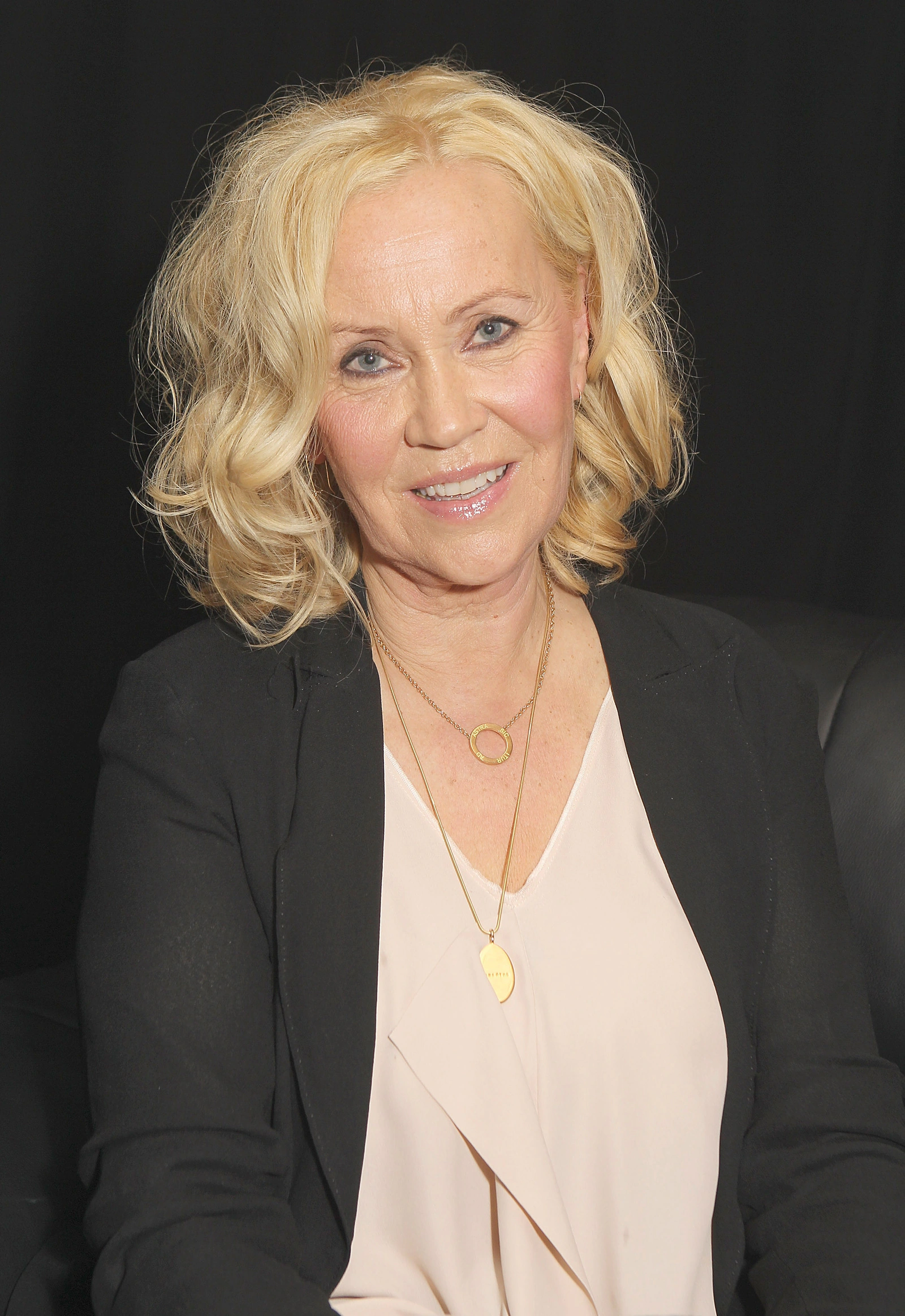
| 11 Quotes | |
| Born as | Agneta Åse Fältskog |
| Occup. | Musician |
| From | Sweden |
| Spouses | Björn Ulvaeus (1971-1980) Tomas Sonnenfeld (1990-1993) |
| Born | April 5, 1950 Jönköping, Sweden |
| Age | 75 years |
| Cite | |
Citation Formats
APA Style (7th ed.)
Agnetha faltskog biography, facts and quotes. (2026, February 11). FixQuotes. https://fixquotes.com/artists/agnetha-faltskog/
Chicago Style
"Agnetha Faltskog biography, facts and quotes." FixQuotes. February 11, 2026. https://fixquotes.com/artists/agnetha-faltskog/.
MLA Style (9th ed.)
"Agnetha Faltskog biography, facts and quotes." FixQuotes, 11 Feb. 2026, https://fixquotes.com/artists/agnetha-faltskog/. Accessed 6 Mar. 2026.
Early Life and Background
Agnetha Ase Faltskog was born on April 5, 1950, in Jonkoping, Sweden, into a mid-century Scandinavian society that prized restraint, diligence, and privacy. That cultural climate - orderly on the surface, emotionally careful underneath - would later frame the tension at the heart of her public life: a crystalline pop voice marketed for mass intimacy, and a person who often sought distance from the machinery of fame. She grew up with music as a daily language rather than a distant aspiration, singing early and learning piano while radio pop and Swedish dance-band traditions shaped a practical, melody-first ear.By her teens she was writing songs and performing locally, not as an act of rebellion but as an extension of temperament - conscientious, exacting, and quietly ambitious. The Swedish entertainment world of the 1960s offered routes from provincial stages to national television, and Faltskog moved along that pipeline quickly, building confidence as a frontwoman while also discovering the costs of being watched. Even before the global ABBA years, her story was already about control: of tone, of presentation, of the line between private self and public demand.
Education and Formative Influences
Rather than a conservatory trajectory, Faltskog formed as a working musician in real time: local groups, studio sessions, and Swedish pop professionalism functioned as her classroom. Her early success as a solo singer-songwriter in Sweden in the late 1960s - including the breakthrough single "Jag var sa kar" (1968) - taught her how to carry a record on her voice and phrasing, and how to translate personal feeling into clean, memorable hooks. That apprenticeship in craft, timing, and studio discipline became crucial when she later entered the far more pressurized, international assembly line of ABBA recordings.Career, Major Works, and Turning Points
In 1972 she joined forces with Bjorn Ulvaeus, Benny Andersson, and Anni-Frid Lyngstad, a partnership that became ABBA and, after winning Eurovision with "Waterloo" (1974), one of the defining pop phenomena of the 1970s. Faltskog's soprano - bright but capable of ache - anchored an era of meticulously built singles: "SOS", "Dancing Queen", "The Winner Takes It All", "Take a Chance on Me", and "Knowing Me, Knowing You", among many others. The group married Swedish studio exactitude to international glamour, yet the personal tectonics inside ABBA mattered: her marriage to Ulvaeus (1971-1980), the pressures of touring, and the intense interpretive attention paid to songs that listeners often read as autobiography. After ABBA's gradual pause in the early 1980s, she pursued solo work in English, notably "Wrap Your Arms Around Me" (1983), and later retreated from the public eye for long stretches, returning with "My Colouring Book" (2004) and the reflective pop album "A" (2013) - projects that emphasized control, selectivity, and voice-as-memory rather than celebrity-as-performance.Philosophy, Style, and Themes
Faltskog's inner life has often been audible in her approach to craft: precise intonation, clean lines, and an insistence that feeling is best delivered without excess. Her performance style - direct, unsentimental, and emotionally legible - suited ABBA's signature contrast: buoyant surfaces carrying private weather. She has described a self-scrutinizing temperament that can turn artistry into self-pressure: “I may have aimed too high sometimes, asked too much of myself and demanded too little from those around me”. That admission maps neatly onto her vocal persona, where control is not coldness but a strategy - a way to keep emotion credible by keeping it measured.Just as central is her resistance to being edited by others, whether producers, headlines, or nostalgia. She has defended an essential self against the distortions of fame: “I must be allowed to be as I am”. That insistence helps explain both her intermittent withdrawals and her careful returns, as well as the way her best recordings balance accessibility with guardedness. Even her perfectionism is framed as a risk to identity rather than a virtue to be celebrated: “There is a danger of changing too much in the search for perfection”. In practice, her legacy tracks that warning - the finest Faltskog moments are polished but not sterilized, intimate but not confessional on demand, as if the voice draws a boundary while also inviting the listener in.
Legacy and Influence
Agnetha Faltskog endures as one of pop's most influential singers because her work captures a rare equilibrium: technical clarity paired with emotional ambiguity, the kind that keeps songs alive across decades and languages. With ABBA she helped set the template for modern studio pop - layered harmonies, precise hooks, and narratives of love and fracture that could be danced to without becoming trivial - while her solo career demonstrated a different kind of authority: choosing when to speak, and letting absence be part of the story. In an era increasingly skeptical of celebrity intimacy, her example has grown more resonant: a global voice that never fully surrendered the right to privacy, and a body of recordings that still teaches singers and producers how to make brightness carry shadow.Our collection contains 11 quotes written by Agnetha, under the main topics: Change - Success - Humility - Mother - Privacy & Cybersecurity.
Other people related to Agnetha: Lasse Hallstrom (Director)
Source / external links