
Amy Winehouse Biography Quotes 13 Report mistakes
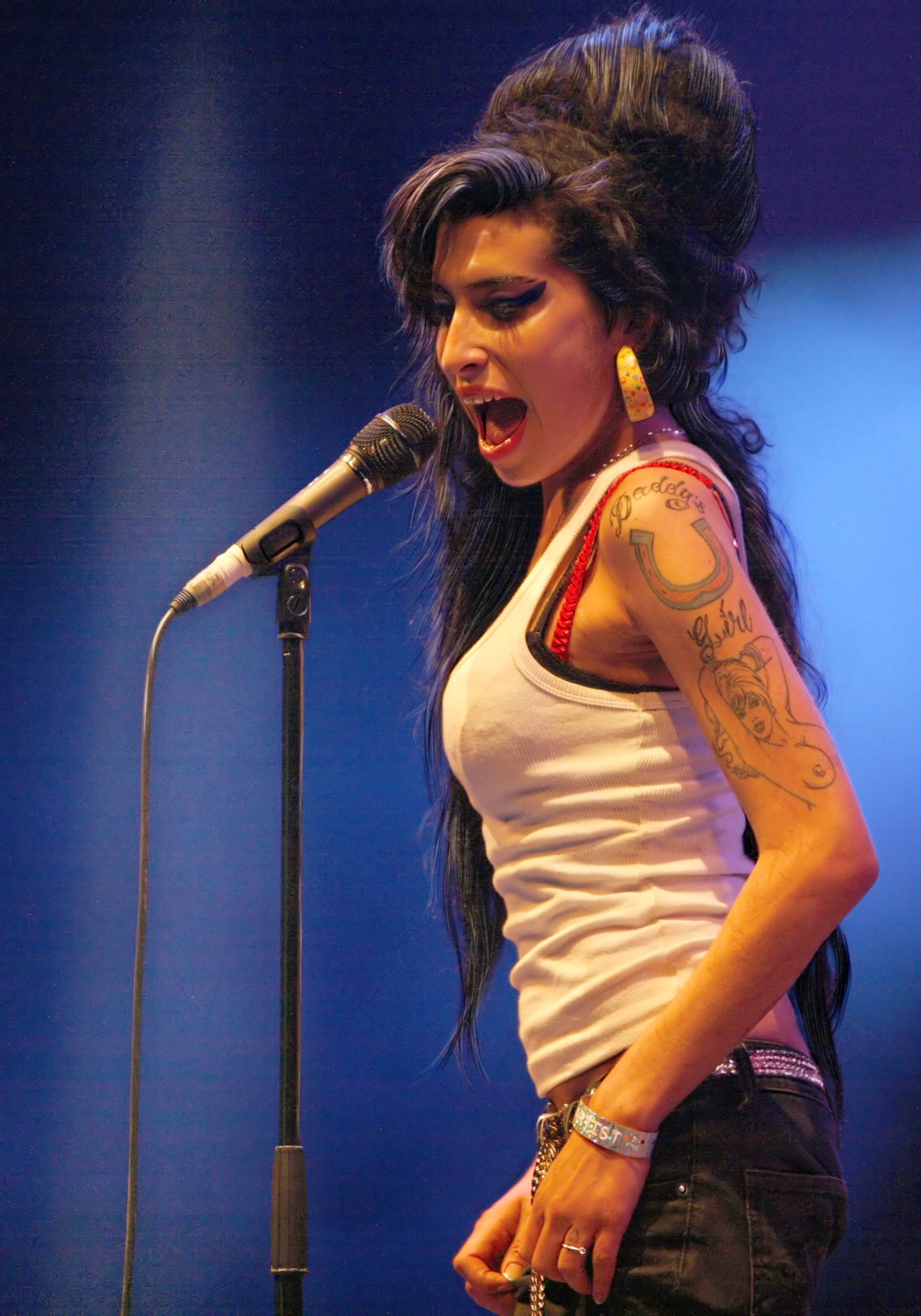
| 13 Quotes | |
| Born as | Amy Jade Winehouse |
| Occup. | Musician |
| From | United Kingdom |
| Born | September 13, 1984 Southgate, London, England |
| Died | July 23, 2011 Camden, London, England |
| Cause | Alcohol poisoning |
| Aged | 26 years |
| Cite | |
Citation Formats
APA Style (7th ed.)
Amy winehouse biography, facts and quotes. (2026, February 11). FixQuotes. https://fixquotes.com/artists/amy-winehouse/
Chicago Style
"Amy Winehouse biography, facts and quotes." FixQuotes. February 11, 2026. https://fixquotes.com/artists/amy-winehouse/.
MLA Style (9th ed.)
"Amy Winehouse biography, facts and quotes." FixQuotes, 11 Feb. 2026, https://fixquotes.com/artists/amy-winehouse/. Accessed 26 Mar. 2026.
Early Life and Background
Amy Jade Winehouse was born on September 13, 1983, in Southgate, North London, into a Jewish family whose humor and musicality formed an early dialect of home. Her father, Mitch Winehouse, worked as a taxi driver and sang in amateur settings; her mother, Janis Seaton, was a pharmacist. Amy grew up between the everyday bustle of London and the deep private world of records, absorbing jazz and classic songcraft as naturally as other children absorbed television. From the start, her voice carried an old-soul grain that felt less like mimicry than inheritance.Her parents separated when she was young, a fracture that sharpened her appetite for belonging and control. She could be mischievous, magnetic, and combative in the same breath, learning early that performance was both armor and invitation. London in the 1990s offered her two mirrors: the unruly freedom of youth culture and the strict expectations placed on girls who were expected to be palatable, not loud. Winehouse would later make a career out of refusing palatability, turning the messy facts of her inner life into a public language.
Education and Formative Influences
Winehouse attended schools including the Sylvia Young Theatre School and later the BRIT School for Performing Arts and Technology in Croydon, though her time in formal training was uneven and often contentious. What shaped her more than curriculum were her fixations: Sarah Vaughan, Dinah Washington, Thelonious Monk, Frank Sinatra, and the craft-heavy pop of 1960s girl groups, alongside hip-hop and contemporary R&B. She idolized musicians who sounded unsanitized - singers whose timing bent around pain, desire, and humor - and she learned to treat phrasing like confession rather than technique.Career, Major Works, and Turning Points
By her late teens she was performing in London, briefly fronting a small jazz outfit and writing songs with a diarist's bluntness; a label deal followed, and her debut album, Frank (2003), established her as a rare British voice with jazz harmony, hip-hop cadence, and emotional candor. The true turning point came with Back to Black (2006), shaped with producer Mark Ronson and songwriter-producer Salaam Remi, and driven by the hard glamour of 1960s soul filtered through modern tabloid Britain. Singles like "Rehab", "Back to Black", "You Know I'm No Good", and "Tears Dry on Their Own" turned private breakdown into communal chorus, winning major awards and global sales while also intensifying scrutiny of her body, relationships, and addictions. Her marriage to Blake Fielder-Civil, cycles of substance abuse, canceled performances, and periods of recovery became inseparable from her public narrative; after years of turbulence and an increasingly fragile live schedule, she died in London on July 23, 2011, from alcohol poisoning at age 27.Philosophy, Style, and Themes
Winehouse wrote like someone arguing with herself in real time. She distrusted self-pity, yet she refused to flatter her own motives; the songs stage a mind that wants love but also wants the last word, that craves intimacy while anticipating abandonment. Her lyric voice is blunt, witty, and rhythmically conversational - closer to a friend recounting a disaster than a poet polishing an image - and her melodies often cradle bruising admissions inside deceptively classic structures. The beehive hair, heavy eyeliner, and retro silhouettes were not nostalgia so much as self-mythology, a way to declare lineage and control the gaze that pursued her.Her themes orbit autonomy and self-sabotage, and she narrated addiction with an unsettling mix of defiance and clarity. “I'm of the school of thought where, if you can't sort something out for yourself, no one can help you. Rehab is great for some people but not others”. The line reveals both pride and fatalism: she cast willpower as identity, even when willpower was failing. “I saw a picture of myself when I came out of the hospital. I didn't recognize myself”. That moment of estrangement mirrors the recurring lyrical split between the watcher and the self being watched, a consciousness trapped inside a body that has become evidence. And when she insisted, “I know I'm talented, but I wasn't put here to sing. I was put here to be a wife and a mom and look after my family. I love what I do, but it's not where it begins and ends”. , she exposed the private longing beneath the bravado: the desire to be valued for care, not spectacle, even as fame demanded she become spectacle.
Legacy and Influence
Winehouse left a small, fiercely concentrated catalog, but it reshaped 21st-century pop by proving that mainstream success could be built on adult songwriting, jazz-bred vocal nuance, and unfiltered autobiography. Back to Black helped open the door for a wave of British soul-influenced artists and for a broader industry pivot toward intimate, confessional lyricism; her sound and visual iconography became templates, while her phrasing and emotional directness became lessons. Just as enduring is the caution she embodies: how talent can be amplified and endangered by a culture that consumes personal crisis as entertainment. In her best work, the tragedy is not that she revealed too much, but that she revealed it with such precision that the world mistook the warning for the show.Our collection contains 13 quotes written by Amy, under the main topics: Witty One-Liners - Funny - Music - Live in the Moment - Health.
Other people related to Amy: Adele (Musician), Tony Bennett (Musician)
Source / external links