
Andy Vivian Palacio Biography Quotes 6 Report mistakes
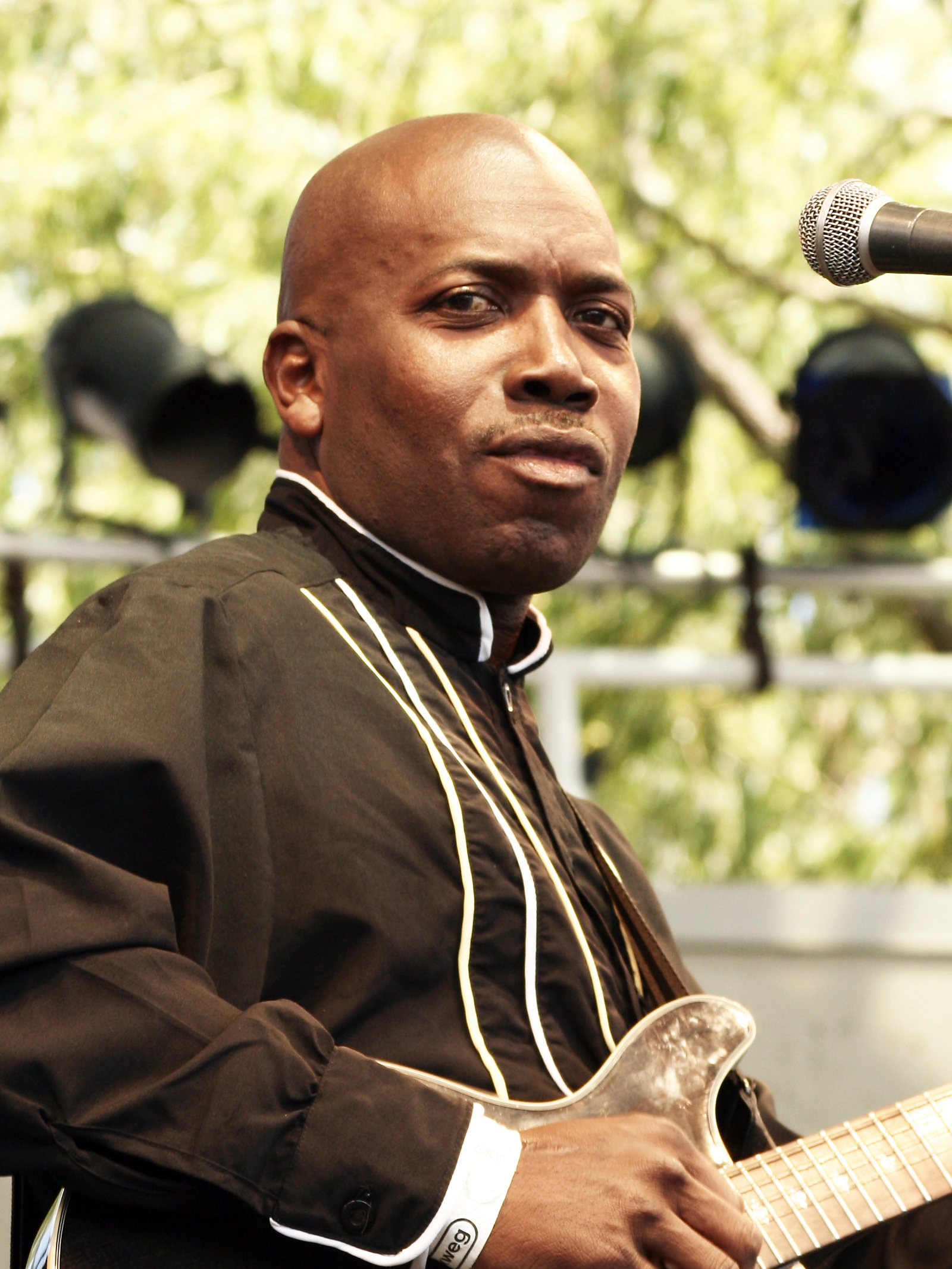
Attr: John Leeson, CC BY 2.0
| 6 Quotes | |
| Known as | Andy Palacio |
| Occup. | Musician |
| From | Belize |
| Born | December 2, 1960 Barranco, Toledo District, British Honduras (now Belize) |
| Died | January 19, 2008 Belize City, Belize |
| Cause | Stroke |
| Aged | 47 years |
| Cite | |
Citation Formats
APA Style (7th ed.)
Andy vivian palacio biography, facts and quotes. (2026, February 16). FixQuotes. https://fixquotes.com/artists/andy-vivian-palacio/
Chicago Style
"Andy Vivian Palacio biography, facts and quotes." FixQuotes. February 16, 2026. https://fixquotes.com/artists/andy-vivian-palacio/.
MLA Style (9th ed.)
"Andy Vivian Palacio biography, facts and quotes." FixQuotes, 16 Feb. 2026, https://fixquotes.com/artists/andy-vivian-palacio/. Accessed 11 Mar. 2026.
Early Life and Background
Andy Vivian Palacio was born on December 2, 1960, in Barranco, a Garifuna fishing village in southern Belize, then still British Honduras. He grew up in a coastline world of dugout canoes, cassava fields, and all-night drumming ceremonies where language was not an abstraction but a daily instrument of belonging. In that setting, Garifuna history lived in the body - in the call-and-response of paranda songs, in the pulse of punta rhythms, and in the inherited memory of exile and survival that had carried the Garifuna from St. Vincent to Central America after the late-18th-century deportations.Belize in Palacio's youth was also a country in transition: decolonization, expanding schooling, migration to Belize City, and the rising prestige of English and Caribbean pop forms. For Garifuna communities, modernity could feel like erosion. Palacio would later describe the cultural bargain many families were pushed into: “A lot has already been lost. I think my generation in Belize is the last to be raised where Garifuna was our first language in the home, streets and playground. But in the classroom, English was the language of instruction”. The tension between intimacy and institution - what was spoken at home versus what was rewarded in public - became one of the defining pressures of his inner life.
Education and Formative Influences
Palacio trained as a teacher and worked in education before his music career became his primary platform, and that classroom discipline shaped his later approach: lyrics that explained without lecturing, and performances that felt like cultural lessons without losing joy. His formative influences were the elders and working musicians around him - the paranda tradition, the devotional and social repertoire of Garifuna gatherings, and the broader Belizean soundscape where calypso, brukdown, reggae, and later soca circulated. As Belize moved toward and beyond independence in 1981, Palacio absorbed a widening sense of national possibility while remaining anchored to a smaller, more endangered nation within the nation: the Garifuna language community.Career, Major Works, and Turning Points
Palacio emerged publicly in the 1980s and 1990s as a leading Belizean performer and cultural advocate, using radio, festivals, and touring to bring Garifuna music into national and international attention. He helped popularize punta rock and related hybrids without treating tradition as a museum piece, and he also served in cultural institutions - most notably as Belize's National Institute of Culture and History (NICH) Director of Culture - translating artistry into policy and programming. His artistic peak arrived with the album Watina (2007), recorded with the Garifuna Collective and produced by Ivan Duran, a project that presented Garifuna language and rhythm with global-level sonic clarity while retaining the grain of village voices and drums. The album's acclaim turned Palacio into a symbol of a modern Garifuna renaissance just as he faced personal strain; he died in Belize City on January 19, 2008, at 47, cutting short a moment when his work was rapidly widening in influence.Philosophy, Style, and Themes
Palacio's philosophy of music was inseparable from cultural survival. His most consistent theme was language as destiny - not only as vocabulary, but as a living way of thinking that could vanish if it stopped being used for everyday love, humor, dispute, and prayer. That anxiety was not theoretical; it was gathered from travel and comparison, watching what happens when a community loses intergenerational transmission. He framed one decisive turning point as an encounter with a future he refused to accept: “It was in these moments on Nicaragua's Atlantic Coast that he decided that he would dedicate all his efforts, his whole life to make sure this does not happen to the Garifuna in Belize”. In his psychology, devotion was triggered by dread - the shock of seeing language death up close - then stabilized into a lifelong program.Musically, he balanced tenderness and urgency. His singing often carried a teacher's clarity, but his arrangements left room for ancestral textures: hand drums, shakers, communal choruses, and the melodic contours of paranda that can sound like conversation set to rhythm. He located the moral center of his art in historical memory, turning the past into an ethical standard for the present: “The true heroes behind our music are really those first Garifuna fighters who in the 18th century on the island of Yurume, St. Vincent, stood up against slavery, colonization, and cultural domination”. Even when songs sounded celebratory, they often contained a private interrogation, a self-audit of responsibility. As he put it, “The song came from some soul searching, looking into the future and asking fundamental questions about the preservation and survival of Garifuna culture”. That combination - pleasure braided with prophecy - is what made his work feel both inviting and weighty.
Legacy and Influence
Palacio's legacy rests on proving that a small language and a regional tradition could speak in a global room without surrendering its grammar or its pride. Watina became a reference point for world-music audiences and for younger Garifuna and Belizean artists looking for a model of excellence that did not require cultural dilution. In Belize, his impact also endures in the institutional idea that culture is infrastructure - something to fund, teach, archive, and broadcast - and in the renewed prestige of speaking Garifuna in public life. He died young, but his larger achievement was psychological as much as musical: he turned the fear of disappearance into a disciplined, contagious confidence, making cultural preservation feel not like retreat, but like a forward-moving art.Our collection contains 6 quotes written by Andy, under the main topics: Music - Freedom - Learning - Human Rights.
Source / external links