
Angélique Kidjo Biography Quotes 16 Report mistakes
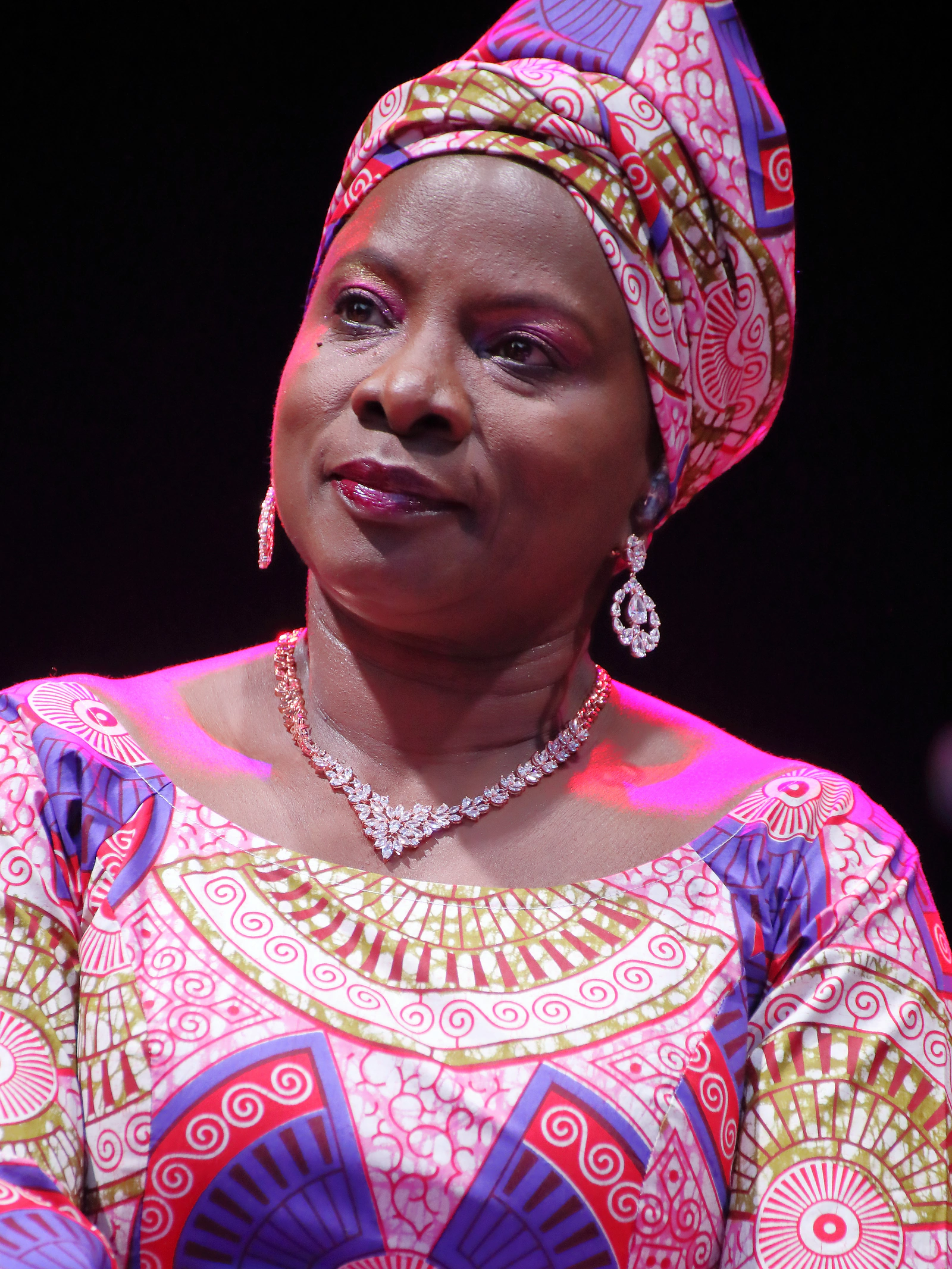
Attr: Schorle, CC BY-SA 4.0
| 16 Quotes | |
| Born as | Angélique Kpasseloko Hinto Hounsinou Kandjo Manta Zogbin Kidjo |
| Occup. | Musician |
| From | Benin |
| Spouse | Jean Hébrail |
| Born | July 14, 1960 Ouidah, Benin |
| Age | 65 years |
| Cite | |
Citation Formats
APA Style (7th ed.)
Angélique kidjo biography, facts and quotes. (2026, February 15). FixQuotes. https://fixquotes.com/artists/angelique-kidjo/
Chicago Style
"Angélique Kidjo biography, facts and quotes." FixQuotes. February 15, 2026. https://fixquotes.com/artists/angelique-kidjo/.
MLA Style (9th ed.)
"Angélique Kidjo biography, facts and quotes." FixQuotes, 15 Feb. 2026, https://fixquotes.com/artists/angelique-kidjo/. Accessed 31 Mar. 2026.
Early Life and Background
Angeliqe Kidjo was born Angeliqe Kpasseloko Hinto Hounsinou Kandjo Manta Zogbin Kidjo around 1960 in Ouidah, a coastal town in what was then the newly independent Republic of Dahomey (renamed Benin in 1975). Ouidah carried the weight of Atlantic history - a place marked by trade routes, Catholic processions, and Vodun ceremonies - and Kidjo grew up inside that layered cultural reality rather than at a distance from it. Her mother ran a theater troupe and her father worked as a civil servant; the household was disciplined but artistically porous, with performance treated as craft, not fantasy.She was onstage young, appearing with her mother's troupe and absorbing the call-and-response habits of West African performance where the crowd is part of the song. Benin in her childhood lurched through coups and, after 1972, a Marxist-Leninist military regime that monitored culture even as it promoted certain national arts. Kidjo learned early that a voice can be both joy and argument - and that women, especially, often have to make their authority by sheer competence. The tension between celebration and constraint became a recurring engine in her later work.
Education and Formative Influences
As a teenager in Cotonou she sang in local groups and on television, then entered the Beninese popular-music circuit as imported soul, funk, and disco mingled with traditional rhythms; Miriam Makeba, James Brown, Stevie Wonder, and Fela Kuti were all touchstones. A pivotal bargain with her family fused ambition to discipline: “The deal I had with my father was: You want to sing, you go to school”. That insistence on education - not as ornament but as survival strategy - helped shape her later emphasis on professionalism, languages, and the ability to move between worlds without losing the core of her identity.Career, Major Works, and Turning Points
In the early 1980s Kidjo relocated to Paris, where the African diaspora, Caribbean scenes, and European studios created new possibilities but also new pressures to exoticize. She studied jazz at CIM in Paris, fronted the jazz-funk band Pili Pili (appearing on their album Futur), and began building a solo profile that fused West African polyrhythms with pop songcraft. Her international breakthrough came with Logozo (1991), followed by albums that steadily widened her canvas - including Ayé (1994), Fifa (1996), Oremi (1998), Black Ivory Soul (2002), and Djin Djin (2007), the latter featuring high-profile collaborations that placed her at the center of global pop without flattening her roots. Later projects such as Eve (2014), a tribute to the stories of African women, and her vivid remake of Talking Heads' Remain in Light (2018) showed an artist still hungry for risk: revisiting the archive, interrogating it, and re-Africanizing what the world had already called "world music". Parallel to recording, she became a prominent humanitarian voice, serving as a UNICEF Goodwill Ambassador and aligning her public platform with concrete advocacy.Philosophy, Style, and Themes
Kidjo's core philosophy starts from sound as human infrastructure, not entertainment. “There’s no humanity without music”. In her work this is not metaphor: the voice is a bridge that allows strangers to share time, grief, and exhilaration long enough to recognize one another. Her multilingual singing - moving through Fon, Yoruba, French, and English - is less a display than a method, a way to refuse the idea that any one language owns truth. The percussion-driven arrangements, the bright horn lines, and the dance-floor tempos often carry messages that are sober: memory of slavery along the Bight of Benin, the dignity of everyday women, and the political consequences of poverty and extraction.Her inner life, as it emerges in interviews and song choices, is marked by fierce empathy paired with practical action. “If somebody is suffering somewhere, I am suffering”. That statement clarifies the emotional voltage behind her activism and her refusal to treat Africa as a symbol rather than a lived set of communities. She repeatedly argues that the tools for solidarity already exist in the ordinary experience of listening: “I’ve travelled around the world with my music and I’ve seen the power of music bringing everybody together despite language, color, despite the culture where we come from”. Psychologically, Kidjo reads as an artist who metabolizes displacement into connection - turning exile, touring, and diaspora life into a disciplined practice of coalition, where collaboration is both aesthetic and ethical.
Legacy and Influence
Kidjo's enduring influence lies in how she normalized a cosmopolitan African pop stardom that is neither apologetic nor packaged for outsiders: she can share a stage with Western rock and R&B icons, reinterpret canonical art-pop, and still sound unmistakably Beninese. Her Grammy-winning career, her advocacy for children and education, and her insistence on African women's stories have helped reshape what global audiences expect from an African artist - not "authenticity" as a museum label, but dynamism as a living right. For younger musicians across Africa and the diaspora, she models a rare combination: technical mastery, historical consciousness, and the courage to treat joy as a political act.Our collection contains 16 quotes written by Angélique, under the main topics: Motivational - Music - Learning - Kindness - Father.
Source / external links