
Anton Seidl Biography Quotes 12 Report mistakes
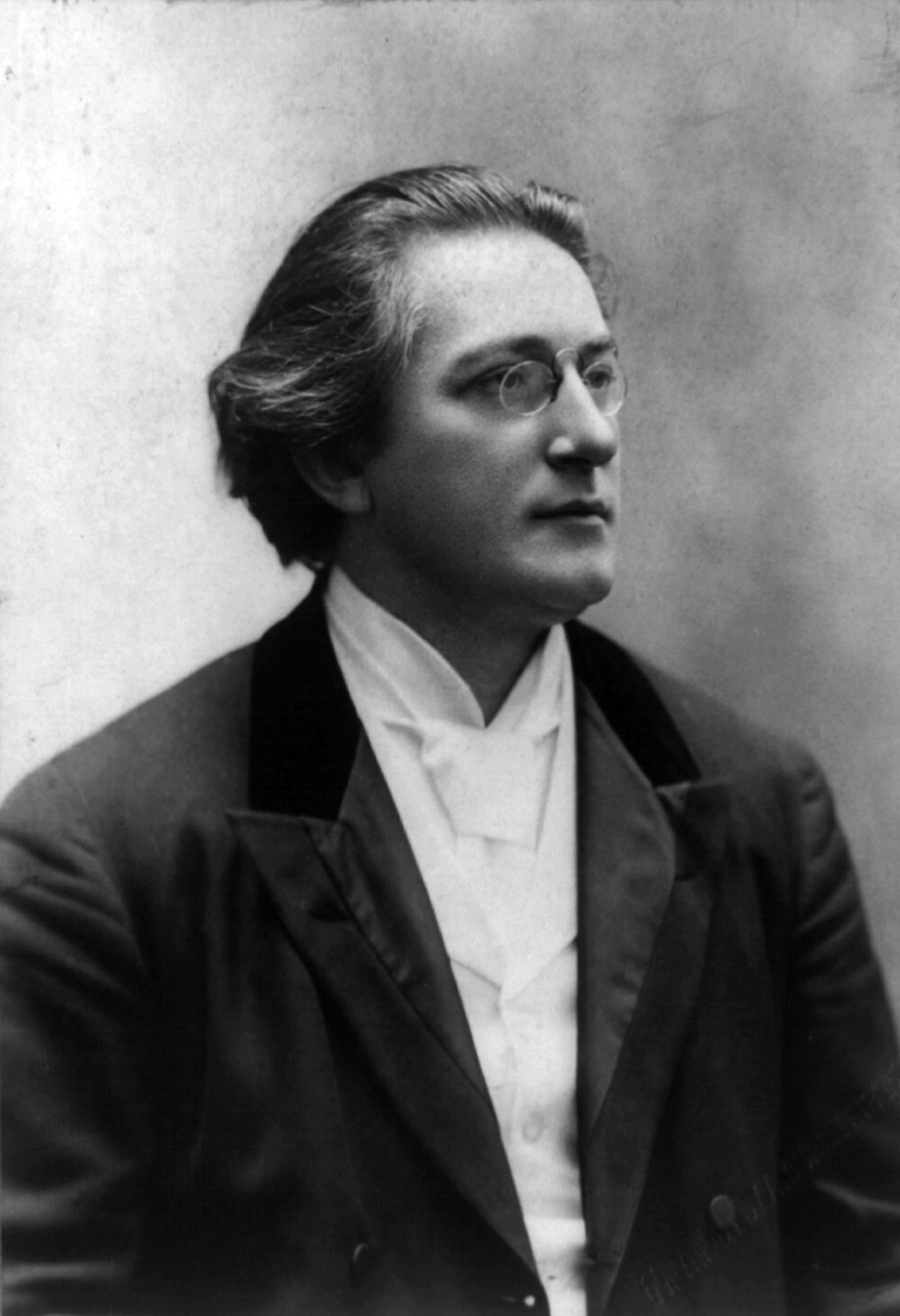
| 12 Quotes | |
| Occup. | Musician |
| From | Hungary |
| Born | May 7, 1850 Pest, Hungary |
| Died | March 28, 1898 New York City, United States |
| Aged | 47 years |
| Cite | |
Citation Formats
APA Style (7th ed.)
Anton seidl biography, facts and quotes. (2026, February 11). FixQuotes. https://fixquotes.com/artists/anton-seidl/
Chicago Style
"Anton Seidl biography, facts and quotes." FixQuotes. February 11, 2026. https://fixquotes.com/artists/anton-seidl/.
MLA Style (9th ed.)
"Anton Seidl biography, facts and quotes." FixQuotes, 11 Feb. 2026, https://fixquotes.com/artists/anton-seidl/. Accessed 6 Mar. 2026.
Early Life and Background
Anton Seidl was born May 7, 1850, in Pest, then within the Kingdom of Hungary in the Habsburg Empire, a polyglot capital where German, Hungarian, and Jewish bourgeois culture overlapped with the tightening politics that followed the revolutions of 1848. He grew up as the modern conductor was coming into being - no longer merely a time-beater, but a public interpreter of increasingly complex scores, and a mediator between composer, orchestra, and audience. That historical shift mattered to a boy with a keen ear and an organizing mind: Seidl absorbed the idea that musical authority could be earned through rehearsal craft and stylistic judgment rather than inherited through rank.His early environment also placed him between worlds. Pest looked west to Vienna and north to the German theater network; a gifted musician could imagine a life beyond Hungary, but would have to master the German repertory to get there. Seidl carried that ambition with a temperament reported as intense yet disciplined - a combination that later made him a favorite in Wagnerian circles and, eventually, a catalytic figure in American symphonic life.
Education and Formative Influences
Seidl studied at the Leipzig Conservatory, where Mendelssohnian rigor still shaped training even as the Wagner-Liszt faction pressed its claims. Leipzig gave him contrapuntal grounding and, just as important, access to the professional infrastructure of German music: opera houses, publishers, rehearsal standards, and the emerging cult of the conductor. His decisive formation came when he entered Richard Wagner's orbit in the 1870s, serving as a copyist and musical assistant; the apprenticeship was practical, intimate, and exhausting, and it taught Seidl that fidelity to a score was inseparable from an understanding of theatrical purpose, diction, and orchestral color.Career, Major Works, and Turning Points
Seidl's career rose through the German opera system, with early posts that culminated in major responsibilities at the Bayreuth Festival, where he helped prepare and conduct Wagner repertory and became associated with the "authentic" Bayreuth tradition. He later led the German opera at the Metropolitan Opera in New York (notably in the mid-1880s), bringing a disciplined Wagner style to an American stage still learning the repertoire, and then became music director of the New York Philharmonic (1891-1898). In that role he expanded orchestral polish, strengthened rehearsal culture, and championed newer music alongside German classics; his most famous American turning point was conducting the world premiere of Dvorak's Symphony No. 9 "From the New World" at Carnegie Hall in 1893, a symbolic union of immigrant musical authority and an American search for identity. Seidl died suddenly in New York on March 28, 1898, at the height of his influence, his funeral becoming a public event that testified to how thoroughly he had become woven into the city's cultural life.Philosophy, Style, and Themes
Seidl thought like a musician formed by the late 19th century's crisis of scale: orchestras were larger, scores denser, and composers no longer stood in front of every performance. He treated conducting as an interpretive vocation whose tools were rehearsal psychology and stylistic memory more than verbal doctrine: “Conducting! A subject, truly, concerning which much might be written, yet scarcely anything of real importance is to be found in books”. The line is not anti-intellectual so much as confessional - Seidl distrusted abstractions that bypass the bodily realities of breathing, bowing, balance, and fear. In his view the conductor learned by doing, by listening, and by persuading human beings to risk expressivity together.His Wagner years deepened a sympathetic, almost mournful understanding of artistic labor and the limits of authority. “It always makes me sad when I think of how I saw Wagner wasting his vitality, not only by singing their parts to some of his artists, but acting out the smallest details, and of how few they were who were responsive to his wishes”. That sadness reveals Seidl's inner ethic: the interpreter's job is to respond - to be worthy of the composer's expenditure of life. It also explains his flexible approach to phrasing, especially with singers, where he preferred living speech-rhythm to metronomic rule: “It is simple nonsense to speak of the fixed tempo of any particular vocal phrase. Each voice has its peculiarities”. The principle links psychology and craft: he conducted people, not machines, and sought truth in the particular rather than the formula.
Legacy and Influence
Seidl's legacy sits at the hinge between European tradition and American institution-building. In New York he helped normalize the idea that a conductor could be both guardian of a German canon and an advocate for new work, and his Dvorak premiere became a landmark in the narrative of American musical self-definition. He influenced American orchestral standards less through pedagogy than through demonstration: patient rehearsal, flexible tempo shaped by vocal and orchestral breath, and a seriousness about Wagner that did not collapse into mannerism. His sudden death at 47 froze his reputation in a glow of promise, but the structures he strengthened - professional discipline, audience expectation, and the conductor as responsible interpreter - endured long after the man himself, making him a pivotal architect of American concert life in the Gilded Age.Our collection contains 12 quotes written by Anton, under the main topics: Music - Self-Improvement.
Source / external links