
Art Tatum Biography Quotes 3 Report mistakes
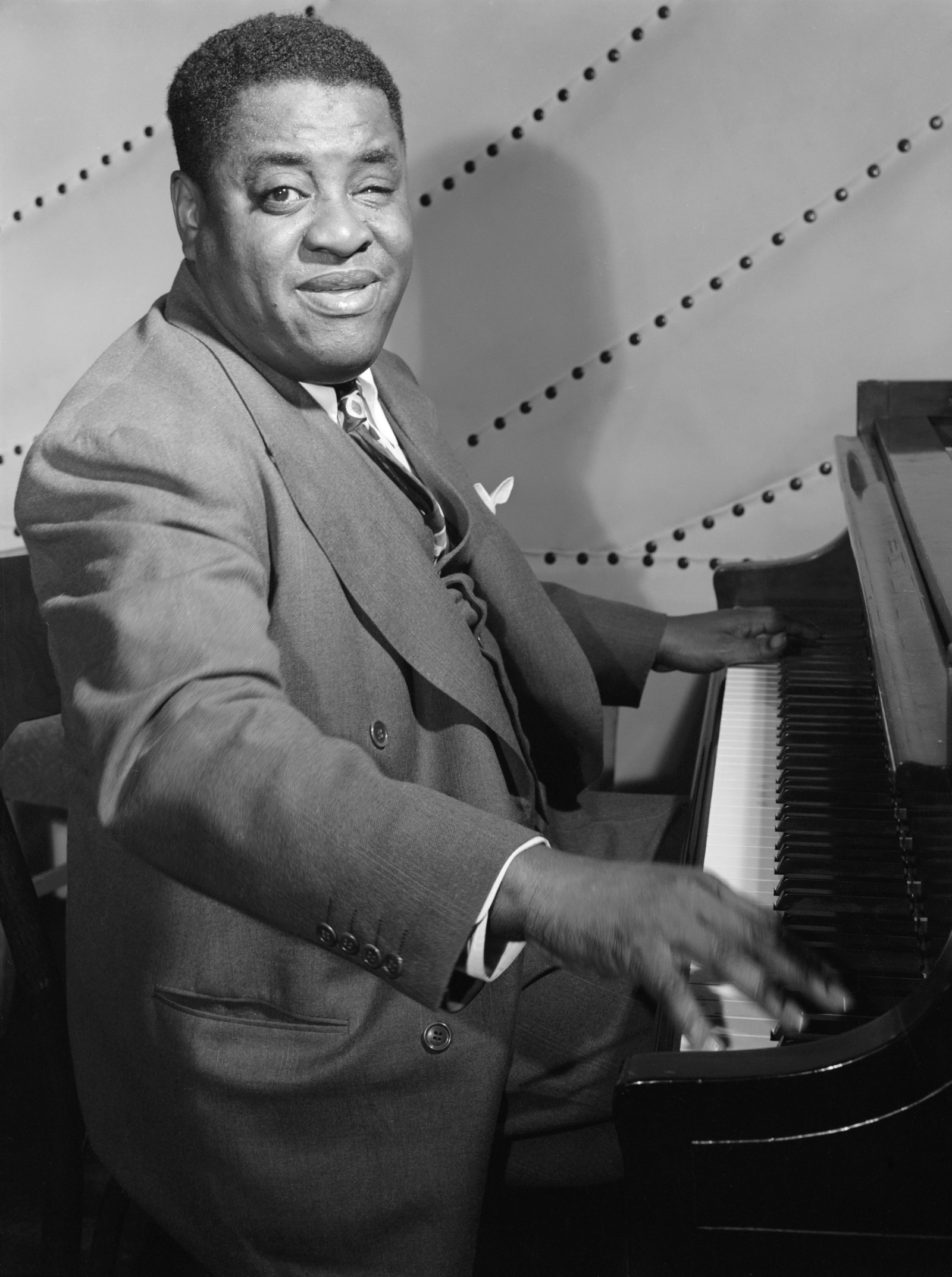
| 3 Quotes | |
| Born as | Arthur Tatum, Jr. |
| Occup. | Musician |
| From | USA |
| Born | October 13, 1909 Toledo, Ohio, U.S. |
| Died | November 5, 1956 Los Angeles, U.S. |
| Aged | 47 years |
| Cite | |
Citation Formats
APA Style (7th ed.)
Art tatum biography, facts and quotes. (2026, February 17). FixQuotes. https://fixquotes.com/artists/art-tatum/
Chicago Style
"Art Tatum biography, facts and quotes." FixQuotes. February 17, 2026. https://fixquotes.com/artists/art-tatum/.
MLA Style (9th ed.)
"Art Tatum biography, facts and quotes." FixQuotes, 17 Feb. 2026, https://fixquotes.com/artists/art-tatum/. Accessed 5 Mar. 2026.
Early Life and Background
Arthur Tatum, Jr. was born on October 13, 1909, in Toledo, Ohio, a Midwestern industrial city whose Black neighborhoods sustained a dense network of churches, lodges, rent parties, and theaters. The era was one of migration and constraint: opportunity pulled families north while Jim Crow logic still shaped housing, jobs, and public life. In that charged environment, music functioned as both wage and refuge, and the young Tatum absorbed it as a vernacular language long before it became a professional calling.From childhood he lived with severe visual impairment, a condition that made ordinary independence difficult but sharpened his inward orientation and his reliance on ear, memory, and touch. He learned to navigate rooms and keyboards by habit, listening for details other pianists missed - the exact weight of a chord, the micro-timing of a run, the way a bass note could imply an entire harmonic argument. Friends and family recalled a boy who could be sociable yet guarded, more comfortable proving himself at the piano than explaining himself in words.
Education and Formative Influences
Tatum studied at the Toledo School of Music and in local programs that gave him classical technique alongside the popular styles that paid the bills. He devoured records and radio, internalizing stride pianists such as Fats Waller and James P. Johnson, the harmonic daring of Earl Hines, and the refined voicings and tone ideals associated with Debussy and Ravel as they filtered into American pianism. Just as formative was the cutting-contest culture: pianists tested one another in after-hours rooms, where repertoire had to be vast, keys had to change on command, and a single stumble could cost your reputation.Career, Major Works, and Turning Points
By the late 1920s Tatum was a local phenomenon, working clubs and broadcasts in Ohio; a pivotal leap came when vocalist Adelaide Hall brought him to wider attention and he began recording and appearing nationally in the early 1930s. New York and Harlem were the crucible of jazz prestige, and Tatum entered them as an anomaly - a pianist whose stride foundation expanded into orchestral textures, chromatic reharmonizations, and dizzying right-hand filigree while keeping time with a dancer's certainty. Signature performances and recordings such as "Tea for Two", "Tiger Rag", "Willow Weep for Me" and "Yesterdays" turned standards into personal epics; later, his trio work with guitarist Tiny Grimes and bassist Slam Stewart highlighted swing propulsion beneath the virtuosity. In 1953-55, producer Norman Granz captured Tatum in a marathon of studio sessions that yielded the monumental "The Complete Pablo Solo Masterpieces", a late-career summation recorded with the urgency of someone who understood time was finite; he died in Los Angeles on November 5, 1956.Philosophy, Style, and Themes
Tatum's art was built on a paradox: maximal complexity presented with the ease of conversation. He treated a tune not as a fixed object but as a living chassis for invention, reharmonizing with substitute dominants, altered chords, and passing colors that anticipated bebop harmony while remaining rooted in song form. His touch could turn percussive stride into velvet, and then into a brass-section roar; the left hand did not merely accompany but argued, countermelodied, and redirected the entire harmonic narrative. This was not virtuosity for its own sake but a method of control, a way to make a precarious world feel navigable through pattern, precision, and humor.Psychologically, he projected both humility and defiance - a man who often sounded as if he were smiling at the impossibility of what he had just done. The private doubts were real: “I don't think I'm ready for New York”. Yet that caution coexisted with a competitive spark that could be almost mythic, as in the challenge attributed to him: “Look, you come in here tomorrow, and anything you do with your right hand I'll do with my left”. Underneath the bravura was a supple ethics of sound, a refusal to panic at surprise; his attitude is captured in the line, “There is no such thing as a wrong note”. - not a license for sloppiness, but a credo about responsibility: whatever happens, you must make it mean something by how you resolve it.
Legacy and Influence
Tatum became a north star for pianists across genres: Bud Powell, Oscar Peterson, Erroll Garner, Hank Jones, and later Herbie Hancock and others measured themselves against his harmonic imagination, time feel, and control of texture. He also shaped the way musicians thought about standards, proving that popular song could hold symphonic density without losing swing, and that improvisation could be simultaneously architectural and playful. In the longer view, his recordings preserve an inner life rendered audible: a mind turning constraint into abundance, and turning the American songbook into a laboratory where astonishment was not an accident but a discipline.Our collection contains 3 quotes written by Art, under the main topics: Witty One-Liners - Music - New Beginnings.
Other people related to Art: Charlie Parker (Musician), Norman Granz (Musician), George Shearing (Musician), Ben Webster (Musician)
Source / external links