
A$AP Rocky Biography Quotes 10 Report mistakes
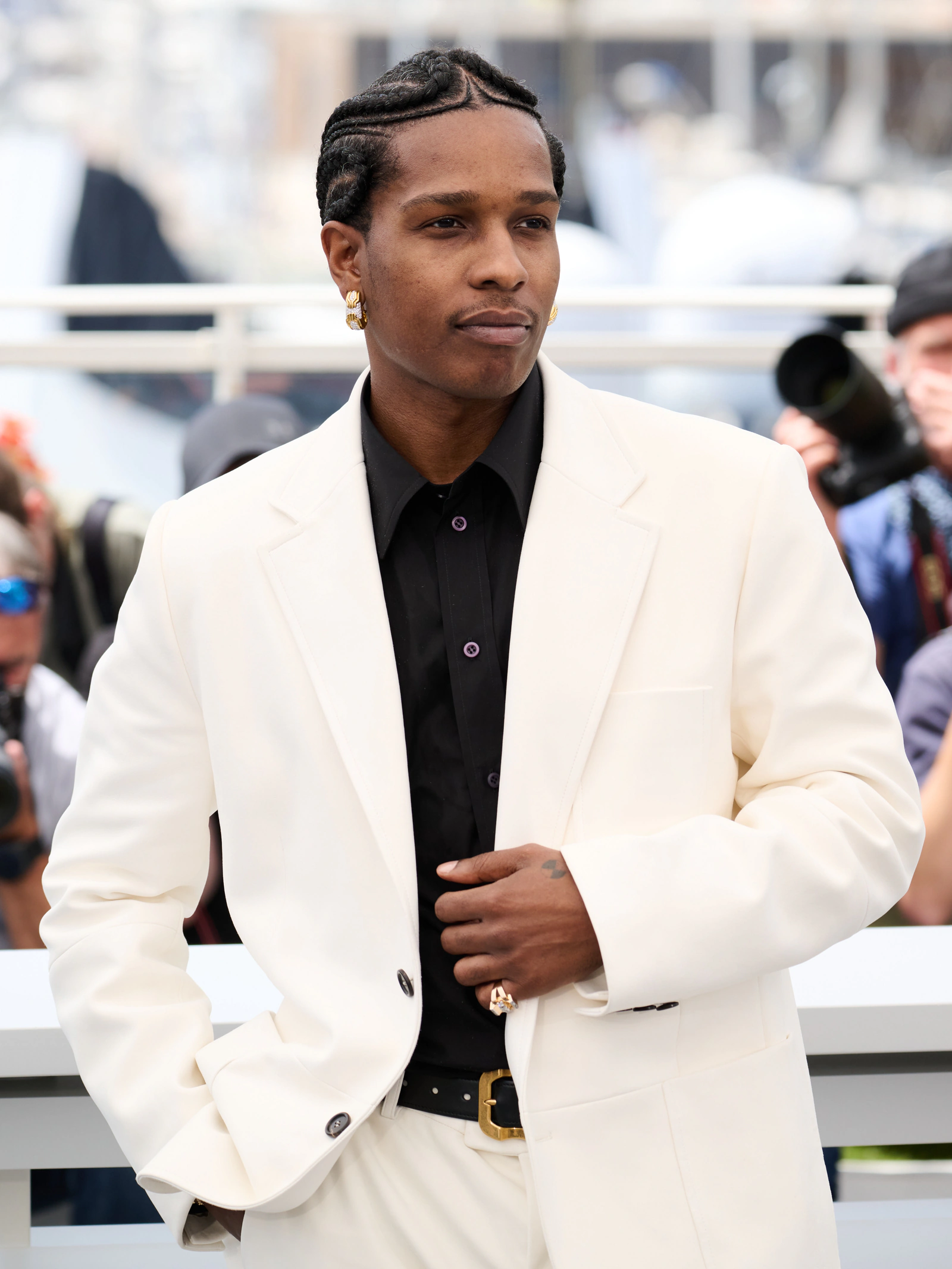
| 10 Quotes | |
| Born as | Rakim Athelaston Mayers |
| Known as | Lord Flacko |
| Occup. | Musician |
| From | USA |
| Born | October 3, 1988 Harlem, Manhattan, New York City, New York, USA |
| Age | 37 years |
| Cite | |
Citation Formats
APA Style (7th ed.)
A$ap rocky biography, facts and quotes. (2026, February 11). FixQuotes. https://fixquotes.com/artists/asap-rocky/
Chicago Style
"A$AP Rocky biography, facts and quotes." FixQuotes. February 11, 2026. https://fixquotes.com/artists/asap-rocky/.
MLA Style (9th ed.)
"A$AP Rocky biography, facts and quotes." FixQuotes, 11 Feb. 2026, https://fixquotes.com/artists/asap-rocky/. Accessed 22 Mar. 2026.
Early Life and Background
Rakim Athelaston Mayers was born on October 3, 1988, in Harlem, New York City, and raised between Harlem and the Bronx at a moment when the boroughs were both bruised by disinvestment and incandescent with hip-hop invention. His given name, borrowed from the rapper Rakim, read like a family prophecy, yet the reality of his childhood was less destiny than improvisation - moving through public housing, learning early how image, allegiance, and language could keep you safe or get you hurt.Violence and loss shaped his inner weather. His father was incarcerated during Rocky's youth, and in 2002 his older brother was killed in Harlem; Rocky has said the death propelled him toward seriousness, as if music could be a second spine. By his teens he was largely on his own, at points staying in shelters and supporting himself through hustling, while also absorbing the visual codes of New York street style that later became inseparable from his public persona.
Education and Formative Influences
Rocky attended a series of New York City schools but was pulled more strongly by the informal education of the city - mixtape culture, corner cyphers, and the constant cross-pollination of sound from uptown rap to Southern bass. He gravitated toward the Houston "chopped and screwed" aesthetic and the narcotic spaciousness of contemporary internet-era production, and he studied not only rappers but fashion photography and video language, building a sense that a song could be an atmosphere and a career could be a world.Career, Major Works, and Turning Points
After joining the Harlem collective A$AP Mob (founded by A$AP Yams, A$AP Bari, and others), he broke nationally with the 2011 single "Peso" and the mixtape Live.Love.A$AP, a critical watershed that fused New York swagger with Southern-leaning production and a melodic, high-fashion cool. His major-label arc ran through the album LONG.LIVE.A$AP (2013), whose success made him a face of a new rap cosmopolitanism, and AT.LONG.LAST.A$AP (2015), released amid grief after Yams' death and marked by darker texture and psychedelic drift. TESTING (2018) leaned into risk and abstraction, reflecting a star willing to be evaluated rather than merely consumed. Public narratives increasingly braided art with scrutiny - from high-profile relationships, including with Rihanna (with whom he later had children), to legal pressures such as his 2019 Sweden assault case, which became an international media story and underscored how quickly a touring artist can become a geopolitical headline.Philosophy, Style, and Themes
Rocky's core psychological engine is individuation - the refusal to be a replica, even when the market rewards replicas. "I'm not trying to be the next Jay-Z. I'm trying to be the first me" . That insistence is not mere branding; it reads like a defense against the instability of his early life, a way to locate control in self-definition when institutions failed. His ambition tends to aim past the narrow category of rapper toward the longer timeline of cultural memory: “I'd rather be called a legend than a rapper”. The line suggests a mind preoccupied with permanence, with outlasting trends that once dictated who got to live, thrive, or vanish.Aesthetically, he treats songs as environments - hazy synths, pitched vocals, and elastic flows that can pivot from menace to elegance in a bar. Fashion in his work functions less as decoration than as narrative shorthand for mobility: the kid from shelters learning to speak in luxury codes without surrendering Harlem grammar. Yet he repeatedly redirects attention back to craft and durability, wary of being reduced to a mannequin for taste: “I'm just trying to make timeless music”. Across albums and videos, his themes orbit survival, pleasure, paranoia, and reinvention - the tension between the street's hard lessons and an artist's desire to keep evolving without apology.
Legacy and Influence
A$AP Rocky helped define 2010s rap's shift toward globalized aesthetics, where New York identity could coexist with Houston textures, London fashion, and internet-speed genre mutation. He normalized the rapper as art director - a curator of sound, silhouette, and cinematic mood - influencing peers and successors who treat albums as visual-and-sonic installations. His most durable contribution may be the model of the rap star as self-authored character: not a fixed type but a moving target, testing how far style can travel while still returning, stubbornly, to the music.Our collection contains 10 quotes written by A$AP, under the main topics: Music - Kindness - Failure - Confidence - Self-Improvement.
Source / external links