
Barry White Biography Quotes 23 Report mistakes
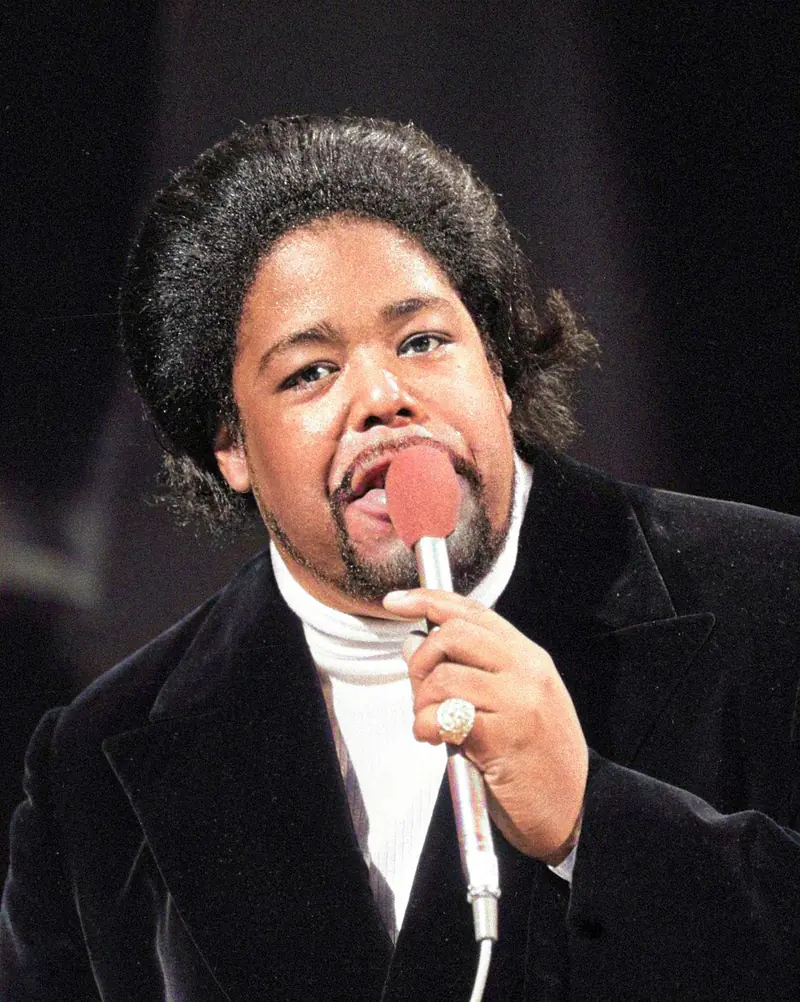
Attr: Fotograaf Onbekend / Anefo, CC0
| 23 Quotes | |
| Occup. | Musician |
| From | USA |
| Born | September 12, 1944 Galveston, Texas, USA |
| Died | July 4, 2003 Los Angeles, California, USA |
| Aged | 58 years |
Barry White was born in 1944 in Galveston, Texas, and was raised in South Central Los Angeles, where church, family, and neighborhood radio shaped his earliest sense of music. As a child he sang in church and taught himself piano by ear, gravitating to harmony and rich chords. The depth and resonance of his voice, which later became his signature, matured during his teens. He spoke openly about a youthful brush with the law and how the experience refocused him on music with renewed discipline and ambition.
First Steps as Producer and Songwriter
Before he was known to the world as a star vocalist, White built a reputation behind the scenes in Los Angeles. In the 1960s he wrote and produced for local acts, paying close attention to arrangement, dynamics, and the emotional arc of a song. He had an ear for a hook and a commitment to using strings and rhythm in ways that felt cinematic. Mentors and business allies such as Larry Nunes encouraged him to think bigger about both his sound and his career, and that guidance helped him move from small local releases to nationally distributed records.
Love Unlimited and Key Collaborators
A turning point came when he formed and produced the female trio Love Unlimited, featuring Glodean James, her sister Linda James, and Diane Taylor. Their sleek, romantic singles married his velvet arrangements with tender, conversational storytelling. The success of "Walkin' in the Rain with the One I Love" introduced White's aesthetic to a broader audience and subtly introduced his speaking voice to radio listeners. Within the studio, his partnership with arranger and conductor Gene Page proved crucial; Page's orchestrations expanded White's ideas into a vivid palette of strings, horns, and rhythm that would define the next decade of his work.
Solo Breakthrough
White's own voice moved to the foreground in the early 1970s. His debut solo recordings fused intimate spoken introductions with plush orchestration and insistent grooves. "I'm Gonna Love You Just a Little More Baby" and "Never, Never Gonna Give Ya Up" became signature hits, crystallizing a persona that was both romantic and authoritative. He followed with "Can't Get Enough of Your Love, Babe" and "You're the First, the Last, My Everything", the latter adapted from a melody by Peter Sterling Radcliffe and transformed by White into an exuberant celebration. These records positioned him as a singular figure: a singer, writer, producer, and sonic architect whose albums felt like complete experiences rather than collections of singles.
The Love Unlimited Orchestra
To fully realize his sound, White assembled the Love Unlimited Orchestra, a large ensemble that brought the sweep of film music into R&B. The instrumental hit "Love's Theme" announced that strings could carry a dance floor just as powerfully as guitars and drums. With Gene Page shaping the orchestral voicings and White controlling groove and texture, the orchestra became a platform for lush, extended arrangements that influenced soul, disco, and what later came to be called quiet storm.
Peak Years and Cultural Impact
Throughout the mid-1970s, White delivered a run of albums whose covers and track lists promised romance and delivered on it. Even as club culture accelerated and production techniques shifted, he kept faith with melody and arrangement. His records became staples at weddings, on late-night radio shows, and in film and television. The sensibility he championed was generous and grown-up: songs about devotion, reconciliation, and patience, sung in a voice that implied steadiness. With Glodean James as both creative partner and, later, spouse, and with Gene Page anchoring the orchestral concept, White led a small circle of collaborators who supported his exacting standards in the studio.
Transitions and Revival
The late 1970s and early 1980s brought changes in radio formats and a backlash against disco-adjacent sounds. White navigated label moves and shifting trends while continuing to tour and record. Though chart momentum slowed, his core audience remained loyal, and European listeners in particular embraced his singles and compilations. A generational revival arrived as hip-hop and R&B producers sampled his grooves and string lines, introducing his work to younger audiences. Television appearances, including a warmly remembered cameo on an animated series that played off his bass voice and gentle charisma, reshaped his public image for the 1990s.
The surge culminated in the 1994 album The Icon Is Love, on which he worked with younger producers such as Gerald Levert and Edwin "Tony" Nicholas. The single "Practice What You Preach" returned him to the top of R&B charts and proved that his themes and timbre were timeless. He followed with Staying Power in 1999, earning two Grammy Awards and cementing a late-career triumph that honored his roots while sounding contemporary. Collaborations with artists such as Lisa Stansfield further showed his ability to harmonize with new voices without losing his identity.
Personal Life
White's personal and professional spheres intertwined. His relationship with Glodean James was central: she was a member of Love Unlimited, a frequent studio presence, and a partner in shaping the romantic ethos that defined his catalog. Friends and colleagues often remarked on his meticulous work habits and kindness in the studio, as he mentored younger musicians and credited collaborators like Gene Page for their contributions. He was a devoted father and maintained close ties to family, drawing inspiration from domestic life as the emotional core of his music.
Illness and Death
Years of health challenges, including hypertension and kidney problems, began to affect his performance schedule in the early 2000s. He experienced a stroke while undergoing treatment for kidney failure and died in 2003 in Los Angeles. He was 58. The news prompted tributes from across the music world, reflecting not only his chart success but the intimacy of his songs and the warmth of his public presence.
Legacy
Barry White left a body of work that reshaped the vocabulary of soul and R&B. As a singer, his bass-baritone made tenderness sound powerful; as a producer, he fused rhythm-section urgency with orchestral splendor; as a songwriter, he distilled romance into plainspoken vows and reassurances. The circle around him, Glodean James, Gene Page, Diane Taylor and Linda James in Love Unlimited, and supportive figures like Larry Nunes, helped him translate a singular vision into records that remain standards. His influence echoes in quiet storm radio, in the sampling culture of hip-hop and modern R&B, and in the continuing life of songs that return to the charts and to popular culture decade after decade. Above all, he is remembered for music that made devotion feel both grand and deeply human, inviting listeners to slow down, listen closely, and believe in love's staying power.
Our collection contains 23 quotes who is written by Barry, under the main topics: Witty One-Liners - Wisdom - Music - Love - Funny.
Source / external links