
Billie Joe Armstrong Biography Quotes 31 Report mistakes
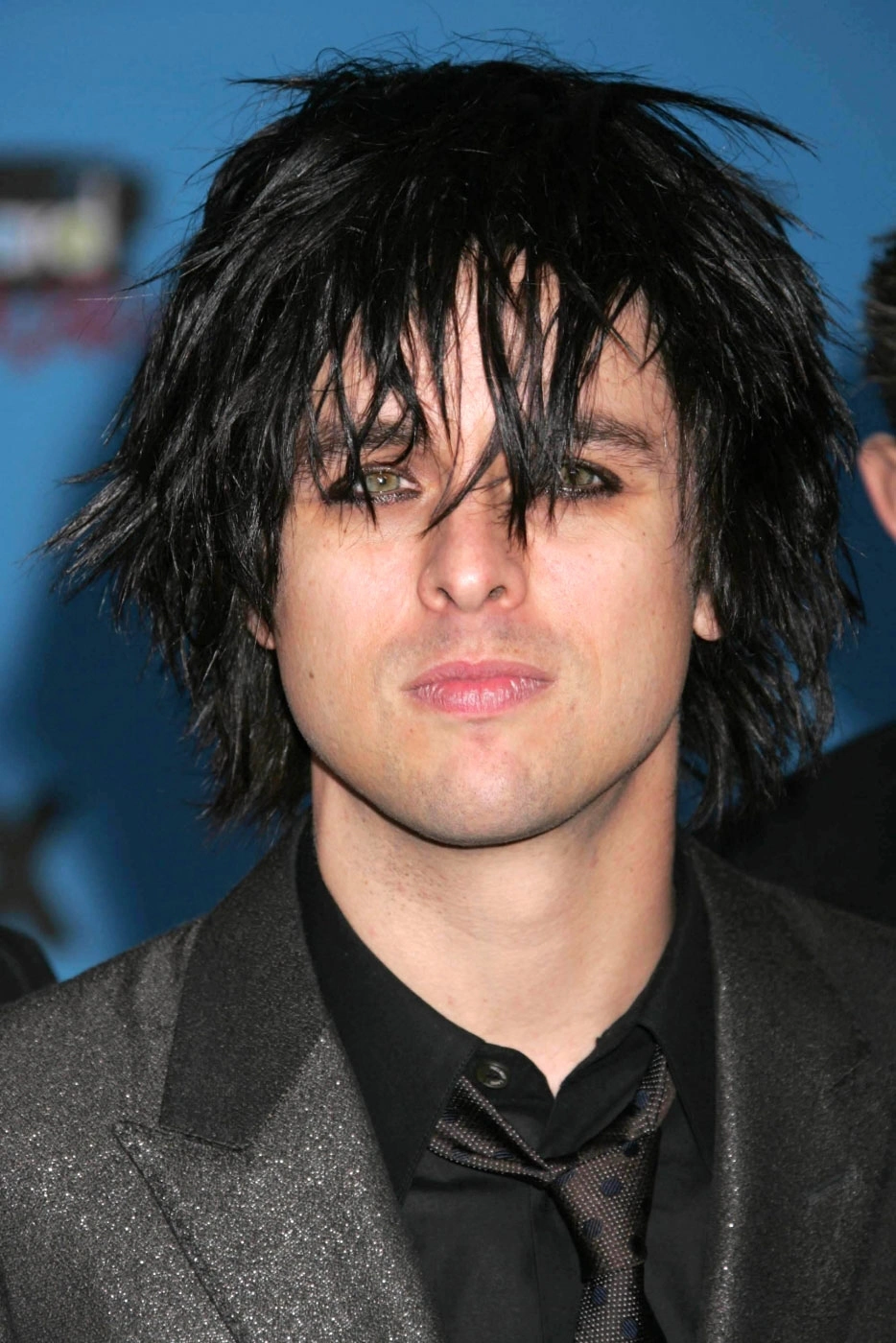
| 31 Quotes | |
| Occup. | Musician |
| From | USA |
| Born | February 17, 1972 Oakland, California, U.S. |
| Age | 54 years |
| Cite | |
Citation Formats
APA Style (7th ed.)
Billie joe armstrong biography, facts and quotes. (2026, February 11). FixQuotes. https://fixquotes.com/artists/billie-joe-armstrong/
Chicago Style
"Billie Joe Armstrong biography, facts and quotes." FixQuotes. February 11, 2026. https://fixquotes.com/artists/billie-joe-armstrong/.
MLA Style (9th ed.)
"Billie Joe Armstrong biography, facts and quotes." FixQuotes, 11 Feb. 2026, https://fixquotes.com/artists/billie-joe-armstrong/. Accessed 6 Mar. 2026.
Early Life and Background
Billie Joe Armstrong was born on February 17, 1972, in Oakland, California, and raised in nearby Rodeo, a refinery town on the Carquinez Strait where working-class routine and Bay Area turbulence met at the edge of the 1970s. The youngest of six children in an Irish-Italian Catholic family, he absorbed the sounds of AM radio and the communal pressure of a large household, learning early how quickly attention, grief, and humor can share the same room.A defining rupture came when his father, Andy Armstrong, a jazz drummer and truck driver, died of cancer when Billie Joe was ten. Loss and the attempt to keep moving became part of his inner weather: the impulse to shout rather than narrate, to turn private shock into choruses that other people could live inside. His mother, Ollie, worked to hold the family together, and Armstrong began to treat music less as a hobby than as a lifeline and an identity he could control.
Education and Formative Influences
Armstrong attended John Swett High School in Crockett but was pulled more strongly toward the East Bay punk ecosystem than toward classrooms, spending formative time in Berkeley and Oakland record stores and clubs as the post-hardcore and DIY scenes professionalized without losing their antagonism. Early influences ranged from the Ramones, the Clash, and Stiff Little Fingers to Hüsker Dü and the Replacements, a lineage that prized speed and candor but also melody and woundedness; that combination would become his signature. At a young age he met bassist Mike Dirnt, and their shared obsession with punk-as-escape turned friendship into vocation.Career, Major Works, and Turning Points
Armstrong co-founded Sweet Children in 1986 with Dirnt; by 1989 they were Green Day, part of the 924 Gilman Street milieu that demanded authenticity, community accountability, and refusal of rock-star distance. After early releases on Lookout! Records, Green Day broke globally with Dookie (1994), a pop-punk accelerant that made suburban dread and self-sabotage singable; the backlash from parts of the punk scene - accusing them of "selling out" - hardened Armstrong's sense that mass reach could still carry DIY values. Subsequent pivots included the darker, hook-heavy Insomniac (1995), the weary self-assessment of Nimrod (1997), the arena-scale melancholy of Warning (2000), and then a major reinvention with American Idiot (2004), a rock opera that fused post-9/11 anxiety with narrative ambition and eventually leapt to Broadway. Public turning points included his 2012 onstage breakdown and later treatment for substance abuse, after which his writing often foregrounded self-repair, family, and stamina; parallel projects like Pinhead Gunpowder, Foxboro Hot Tubs, and The Network kept his appetite for alter-egos and scene play alive.Philosophy, Style, and Themes
Armstrong's style is built on compression: brief, bright chord progressions carrying lyrics that toggle between confession and slogan, sarcasm and prayer. His voice - nasal, urgent, and surprisingly tender in slower registers - fits his core subject: the person who cannot stand still inside his own head. Across decades he returns to impatience with authority, suspicion of spectacle, and a craving for contact that can look like confrontation. Even at stadium scale, he writes as if the song is a note passed in class, a private message made loud enough to become communal.His interviews reveal a psychology driven by restlessness and a deliberate refusal to fossilize into "the artist" as brand. “I don't want to live in an ivory tower, being the songwriter who just turns inward”. That outward pull sits beside a punk ethic he treats as identity, not costume: “Punk has always been about doing things your own way. What it represents for me is ultimate freedom and a sense of individuality”. Yet the freedom is bounded by responsibility, especially after becoming a father; his public insistence on sobriety and domestic boundaries reads less like moralizing than self-defense against the old slide toward chaos: “I'm a father. It isn't just my life any more. I don't want my kid finding bottles in the house or seeing his father completely smashed”. In his best work, anger is never pure - it is a delivery system for vulnerability, and the joke is often a mask for fear.
Legacy and Influence
Armstrong helped define modern pop-punk while repeatedly escaping it, proving that three-chord immediacy could coexist with long-form narrative, political atmosphere, and theater-scale ambition. Green Day's success opened commercial doors for countless punk-adjacent acts in the 1990s and beyond, but his deeper influence is aesthetic: the permission to be melodic without being polite, to be childish without being shallow, to turn personal breakdown into public craft. In an era that increasingly monetized identity, Armstrong kept arguing - in songs, mistakes, and recoveries - that the point of punk is not purity but agency, and that the most durable rebellion is staying human in front of a crowd.Our collection contains 31 quotes written by Billie, under the main topics: Witty One-Liners - Motivational - Music - Sarcastic - Freedom.
Other people related to Billie: Tre Cool (Musician)
Source / external links