
Brenda Lee Biography Quotes 16 Report mistakes
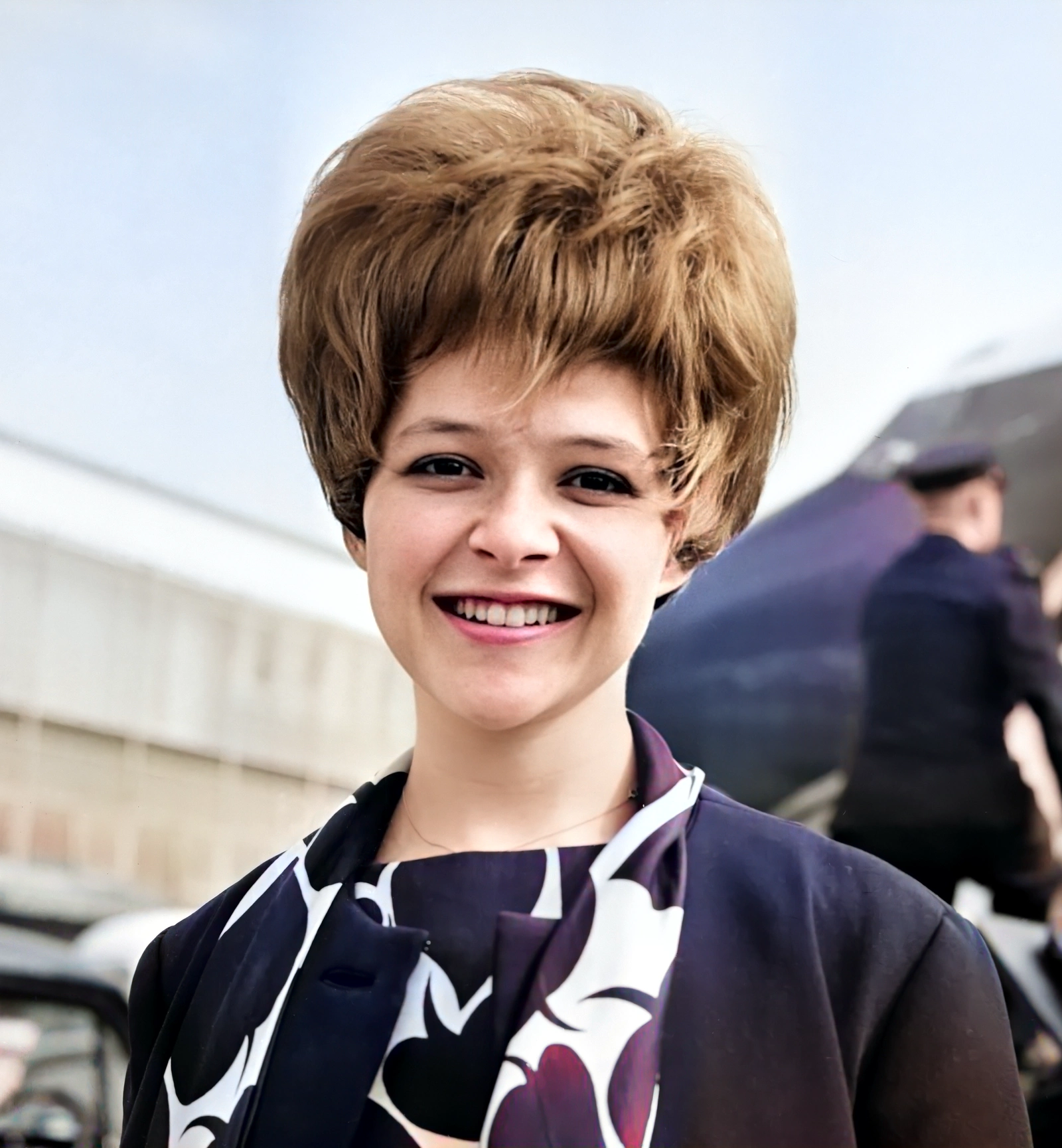
| 16 Quotes | |
| Born as | Brenda Mae Tarpley |
| Occup. | Musician |
| From | USA |
| Spouse | Ronnie Shacklett (1963) |
| Born | December 11, 1942 Atlanta, Georgia, US |
| Age | 83 years |
| Cite | |
Citation Formats
APA Style (7th ed.)
Brenda lee biography, facts and quotes. (2026, March 12). FixQuotes. https://fixquotes.com/artists/brenda-lee/
Chicago Style
"Brenda Lee biography, facts and quotes." FixQuotes. March 12, 2026. https://fixquotes.com/artists/brenda-lee/.
MLA Style (9th ed.)
"Brenda Lee biography, facts and quotes." FixQuotes, 12 Mar. 2026, https://fixquotes.com/artists/brenda-lee/. Accessed 25 Mar. 2026.
Early Life and Background
Brenda Mae Tarpley was born on December 11, 1944, in Atlanta, Georgia, and grew up in working-class poverty in Georgia and later around Augusta. Her father, a carpenter and sharecropper's son, died when she was young, and the family's instability sharpened both her hunger and her toughness. Small in stature, with a voice of startling force, she was singing in church and on local radio while still a child. The paradox that defined her career was visible almost at once: a girl barely over four feet tall who sounded emotionally older than most adults around her.
Country music, gospel, rhythm and blues, and the rough-and-ready culture of Southern radio all fed her early style. She won regional talent contests, appeared on local stations, and became a breadwinner before adolescence. In postwar America, when television, touring package shows, and independent labels were rapidly expanding, Brenda Lee entered entertainment not as a protected prodigy but as a family provider. That pressure gave her performances an unusual urgency - less imitation than survival converted into sound.
Education and Formative Influences
Her formal education was fragmented by travel, radio appearances, and constant work, so her real schooling came from stages, studios, and older musicians. Red Foley gave her an early national platform on Ozark Jubilee, where audiences saw the contrast between her childlike appearance and mature phrasing. She absorbed the vocal command of country singers, the emotional compression of pop, and the attack of rhythm and blues artists without treating genre as a boundary. By the mid-1950s she had signed with Decca, and under producer Owen Bradley in Nashville she learned microphone discipline, song structure, and how to turn a two-minute single into a complete dramatic event. That education - practical, accelerated, and unforgiving - made her one of the first truly hybrid pop-country voices of the rock era.
Career, Major Works, and Turning Points
Lee's national breakthrough came at the end of the 1950s with a run of hits that made her one of the defining female voices of early rock and pop: "Sweet Nothin's", "I'm Sorry", "I Want to Be Wanted", "Emotions", "Break It to Me Gently" and "All Alone Am I". "I'm Sorry" in 1960 was the crucial turning point - a controlled, adult heartbreak record sung by a teenager, proving that her emotional authority was not a novelty. Her 1958 recording of "Rockin' Around the Christmas Tree", initially modest, became one of the most durable recordings in American popular music and eventually a perennial seasonal standard. She toured relentlessly in the United States and abroad, was especially successful in Britain before the British Invasion, and navigated the industry's shift from rockabilly-inflected pop to orchestrated balladry and then to country. In the 1970s she returned decisively to the country charts with songs like "Nobody Wins", preserving her relevance when many early rock stars faded. Along the way she earned respect not just as "Little Miss Dynamite" but as a vocalist of rare technical control, able to compress grit, vulnerability, and command into a few bars.
Philosophy, Style, and Themes
Lee's singing was built on compression: she did not merely interpret longing, defiance, or resignation, she packed them into short, radio-ready forms without wasting a syllable. Her voice could crackle with teenage flirtation or darken into adult sorrow, and that duality came from biography as much as talent. She later admitted, “I gave up my childhood for a career”. That statement clarifies why even her brightest records often carry strain beneath sparkle. The child performer became expert at professionalism because there was little alternative; the emotional speed of her records reflects a life in which feeling had to be mastered quickly and turned outward.
At the same time, Lee's public manner was marked less by diva mythology than by endurance, gratitude, and self-command. “I'm not used to introspection. I've never lingered on my feelings. The show must go on”. That refusal of self-pity helps explain both her disciplined phrasing and her longevity. She also retained a grounded self-image despite fame: “I still don't look at myself as a star. I've always had a thankful heart”. Those remarks reveal a psychology forged by precarity - emotional economy, resilience, and suspicion of vanity. In stylistic terms, she bridged country sincerity and pop polish without losing the bite of Southern rhythm and blues; in thematic terms, her best work circles around desire, loss, self-possession, and the cost of growing up too fast.
Legacy and Influence
Brenda Lee's influence extends across pop, country, rockabilly revival, and holiday music. She helped establish Nashville as a place where country craft could generate international pop hits, and she demonstrated that female singers in the early rock era could be both commercially dominant and vocally formidable without conforming to one genre identity. Her induction into the Rock and Roll Hall of Fame and Country Music Hall of Fame reflected that dual inheritance. Generations of singers have drawn from her mix of power, clarity, and emotional concentration, while "Rockin' Around the Christmas Tree" has given her a rare form of cultural immortality: not just remembered, but replayed every year into new eras. Beneath the festive familiarity remains the deeper achievement - a career built from hardship, discipline, and a voice that made small records feel larger than life.
Our collection contains 16 quotes written by Brenda, under the main topics: Witty One-Liners - Music - Gratitude - Moving On - Husband & Wife.
Other people related to Brenda: Patsy Cline (Musician), Jerry Reed (Musician), Jackie DeShannon (Musician), Juice Newton (Musician), K. D. Lang (Musician)
Source / external links