
Bruce Springsteen Biography Quotes 36 Report mistakes
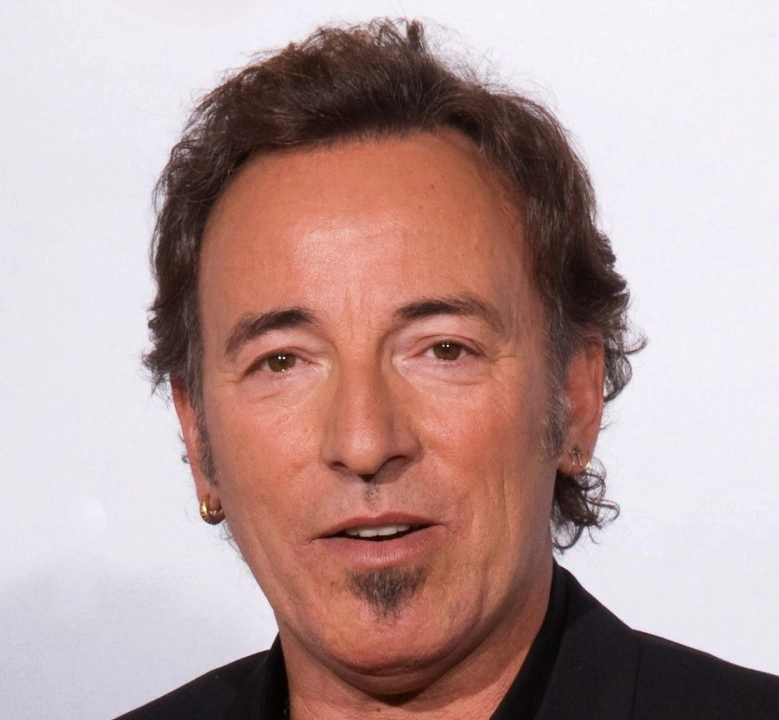
| 36 Quotes | |
| Occup. | Musician |
| From | USA |
| Born | September 23, 1949 |
| Age | 76 years |
| Cite | |
Citation Formats
APA Style (7th ed.)
Bruce springsteen biography, facts and quotes. (2026, February 11). FixQuotes. https://fixquotes.com/artists/bruce-springsteen/
Chicago Style
"Bruce Springsteen biography, facts and quotes." FixQuotes. February 11, 2026. https://fixquotes.com/artists/bruce-springsteen/.
MLA Style (9th ed.)
"Bruce Springsteen biography, facts and quotes." FixQuotes, 11 Feb. 2026, https://fixquotes.com/artists/bruce-springsteen/. Accessed 25 Mar. 2026.
Early Life and Background
Bruce Frederick Joseph Springsteen was born on September 23, 1949, in Long Branch, New Jersey, and raised in nearby Freehold, a small mill-and-milltown landscape where class lines were visible in paychecks, bars, and kitchens. His father, Douglas Springsteen, cycled through jobs and struggled with depression and alcoholism; his mother, Adele (nee Zerilli), worked as a legal secretary and became the household engine. That split - between a moody, pride-scarred male authority and a steady maternal faith in work - formed the emotional architecture of Springsteen's later songs about dignity, drift, and the search for a livable identity.Freehold in the 1950s and early 1960s was also a place where difference drew attention, and Springsteen grew up with a sense of social peril alongside a hunger for escape. “Basically, I was pretty ostracized in my hometown. Me and a few other guys were the town freaks- and there were many occasions when we were dodging getting beaten up ourselves”. That early vigilance - watching a room, reading a street, anticipating humiliation - would later convert into stagecraft and into characters who try to outrun the limits of birthplace without ever fully shedding its grip.
Education and Formative Influences
He attended St. Rose of Lima Catholic School and then Freehold Regional High School, where he gravitated toward music more than formal academics, absorbing the era's broadcast of possibility: Elvis Presley on television, the Beatles, and the surge of soul and folk that followed. After buying a guitar, he apprenticed in local bands such as the Castiles, learning the craft of arrangement and the social physics of playing for peers. The Jersey Shore circuit in the late 1960s and early 1970s - clubs, bar bands, long sets - gave him a practical education in endurance and in how to hold a crowd, while Vietnam-era anxieties and a changing working-class economy provided the darker weather behind the songs.Career, Major Works, and Turning Points
Springsteen signed with Columbia Records and debuted with "Greetings from Asbury Park, N.J". (1973) and "The Wild, the Innocent and the E Street Shuffle" (1973), records that mixed street poetry with boardwalk myth. The breakthrough came with "Born to Run" (1975), built for radio but rooted in local lives; the E Street Band became his central instrument, and his shows turned into marathon communal dramas. He pivoted to sparer realism on "Darkness on the Edge of Town" (1978) after a legal dispute with manager Mike Appel delayed recording, then fused anthem and indictment on "The River" (1980) and "Nebraska" (1982), the latter a home-recorded study of desperate Americans. "Born in the U.S.A". (1984) made him a global symbol while often being misunderstood politically; later phases included "The Ghost of Tom Joad" (1995), the post-9/11 elegy "The Rising" (2002), and the memoir "Born to Run" (2016), alongside ongoing reunions, reinventions, and advocacy that kept his public role as large as his catalog.Philosophy, Style, and Themes
Springsteen's inner life is a negotiation between the fear of vanishing into silence - the fate he watched in men worn down by labor and disappointment - and the need to build meaning that can be shared. “But I think that your entire life is a process of sorting out some of those early messages that you got”. His work repeatedly returns to those messages: masculinity as both armor and trap, Catholic guilt as an engine for moral drama, and the longing to be forgiven without being sentimental. The music is often physically exuberant, yet its emotional core is diagnostic: what happens to people when promises fail, when factories close, when love is asked to carry the weight of an economy.A signature Springsteen song is built like a short story - compressed lives, concrete detail, and a moral turn that arrives through motion, often in a car headed toward an uncertain horizon. He has said, “I like narrative storytelling as being part of a tradition, a folk tradition”. That folk impulse is not nostalgia; it is a method for public truth-telling, especially about power, propaganda, and civic responsibility. In his worldview, hope is earned rather than granted - not blind allegiance, but a hard-won stance against fatalism: “Talk about a dream, try to make it real”. The best performances enact that ethic in real time, turning private shame and public frustration into a temporary republic of belonging.
Legacy and Influence
Springsteen endures as an American musician who made stadium scale serve intimate, working-class psychology, influencing artists across rock, country, punk, and indie not only through sound but through a model of seriousness about audience and citizenship. His catalog helped reframe what mainstream rock could say about labor, war, race, and the costs of ambition, while his live shows set a benchmark for stamina and emotional reciprocity. From the boardwalk romances of his early years to the moral reportage of his later albums, he remains a biographer of ordinary lives under historical pressure - and a proof that popular music can carry both joy and diagnosis without surrendering either.Our collection contains 36 quotes written by Bruce, under the main topics: Motivational - Art - Music - Writing - Leadership.
Other people related to Bruce: Bob Dylan (Musician), Elvis Presley (Musician), Warren Zevon (Musician), Patti Smith (Musician), Courteney Cox (Actress), Jerry Lee Lewis (Musician), Edwin Starr (Musician), Peter Gabriel (Musician), Eric Alterman (Writer), Eddie Floyd (Musician)
Source / external links